

On Thursday, October 22, 2026, NASA’s Aerospace Safety Advisory Panel (ASAP) warned that the agency’s Artemis lunar landing plans face acute technical risks, citing deep concerns over the operational maturity of unproven in-space cryogenic propellant transfer.
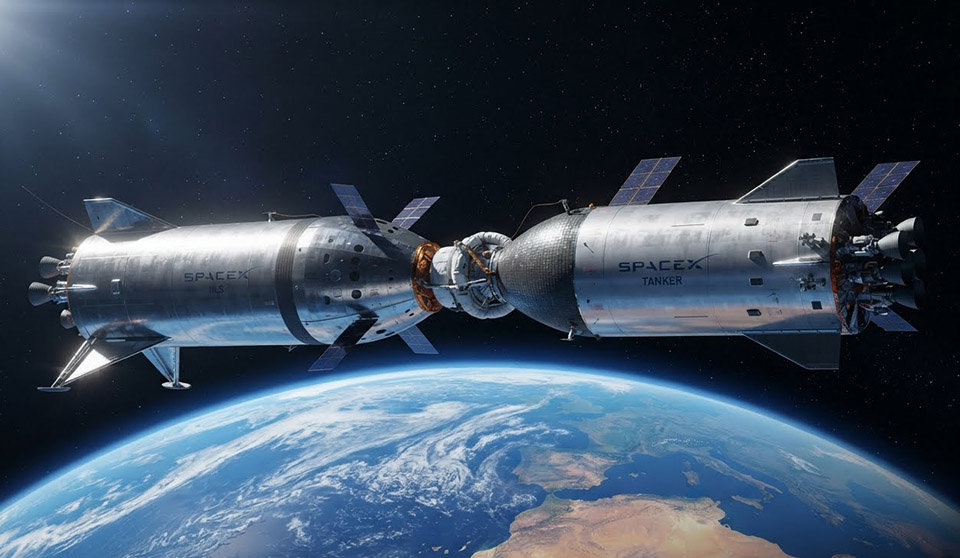
Speaking during the panel’s fourth-quarter public meeting, safety advisers announced plans to issue a formal recommendation urging the space agency to reassess its landing mission architecture ahead of upcoming lunar updates from NASA leadership.
Program Architecture and Mission Restructuring Context
The advisory warning arrives as NASA restructures its deep-space exploration timeline to balance technical risk across commercial lander development. Earlier this year, NASA overhauled the Artemis program by adding an Earth-orbit test mission for Artemis III in mid-2027, deferring the crewed lunar landing to Artemis IV in early 2028. That interim flight profile, further detailed when NASA outlined docking and software protocols for the revised Artemis III demonstration, evaluates automated rendezvous with SpaceX’s Starship Human Landing System (HLS) and Blue Origin’s Blue Moon lander in low Earth orbit before sending astronauts to the lunar south pole.
Cryogenic Tanker Cadence and Launch Estimates
The primary risk highlighted by safety advisers centers on the unprecedented launch cadence required to fuel commercial landers in orbit. Panel member and former astronaut Charlie Precourt emphasized that current NASA planning estimates indicate SpaceX may require around 22 Starship tanker launches to fully fuel an orbital propellant depot before the lander can depart for the Moon. While SpaceX Chief Executive Officer Elon Musk disputed that projection, asserting that the operational requirement will range between six and eight tanker flights, panel members stressed that executing dozens of rapid-turnaround cryogenic transfers introduces compounding failure modes into human lunar flights.
Formal Recommendations and Exploration Roadmap
The panel affirmed that it will submit a formal recommendation directing NASA to re-examine mission objectives and system architectures for Artemis IV to establish a more balanced risk posture. As NASA Administrator Jared Isaacman prepares to deliver an agency-wide Artemis update, program managers must resolve the refueling bottleneck to maintain schedule targets for the 2028 crewed landing.
