

On Sept. 22, 2026, satellite launch integration provider Exolaunch signed a launch services agreement with SpaceX for a dedicated Starfall mission aboard the Starship launch vehicle scheduled for 2029.
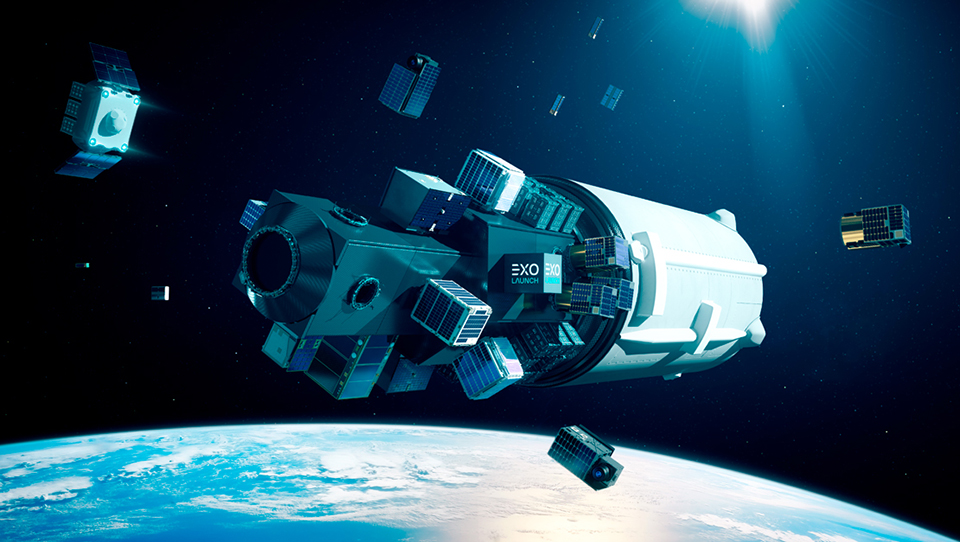
The agreement marks Exolaunch’s operational expansion from smallsat orbital deployment into microgravity research platforms, in-space manufacturing support, and commercial return-to-Earth payload recovery services.
Company Evolution and Integration History
Since its founding, Exolaunch has operated primarily as a launch integration prime and manufacturer of satellite deployment hardware, including CarboNIX separation systems and EXOpod cubeSat deployers. The firm has integrated hundreds of smallsats and secondary payloads across commercial Falcon 9 rideshare missions, including SpaceX Transporter and Bandwagon launch campaigns.
The dedicated Starfall agreement expands Exolaunch’s business model beyond traditional one-way orbital insertion flights. By procuring full Starship payload bay capacity, the company is establishing an end-to-end commercial framework for orbital research payloads requiring prolonged exposure to low Earth orbit microgravity followed by atmospheric reentry and soft surface recovery.
The transition reflects broader commercial demand from pharmaceutical, semiconductor, and advanced materials developers seeking access to orbital manufacturing environments. Traditional rideshare missions release payloads into permanent or long-term orbits, preventing the retrieval of processed biological crystals, fiber-optic preforms, or specialized alloys.
Mission Architecture and Payload Operations
The Starfall mission will utilize Starship’s heavy payload volume and return capacity to conduct automated orbital processing before bringing payloads back to Earth.
Under the operational concept, Exolaunch will manage payload integration, environmental housing, and customer interface software for internal automated experiment racks. The Starship vehicle will ascend to low Earth orbit, where onboard payloads will operate in microgravity for a planned duration to execute manufacturing protocols.
Unlike expendable upper stages, Starship’s atmospheric thermal protection system and controlled propulsive landing capability allow the vehicle to reenter Earth’s atmosphere with intact customer payloads. Upon landing, Exolaunch ground teams will execute payload extraction and return synthesized products, biological samples, and research hardware directly to commercial and institutional customers.
Market Rationale for Commercial Microgravity Services
Securing heavy-lift return capacity aboard Starship addresses structural limits facing existing microgravity research platforms. Historically, commercial orbital research relied on limited volume allotments aboard the International Space Station or specialized robotic reentry capsules, both of which present high per-kilogram transport costs and long scheduling lead times.
By leveraging Starship’s high payload mass capacity, Exolaunch can offer standardized experiment modules at lower price thresholds. This approach enables commercial biotech firms and materials science research institutes to scale pilot-scale manufacturing experiments into continuous production runs.
The introduction of dedicated return-to-Earth services aligns with growing private and defense interest in space-manufactured materials, including high-purity optical fibers, specialized semiconductors, and tissue-engineered constructs that cannot be synthesized within Earth’s gravity well.
Program Timeline and Flight Manifest
Exolaunch and SpaceX engineering teams will proceed with payload bay interface design, structural environmental testing, and mission safety reviews throughout 2027 and 2028. Payload integration for the dedicated 2029 Starfall mission will take place at Exolaunch’s cleanroom facilities ahead of final launch operations at SpaceX’s Starbase launch facilities.
