

On August 24, 2026, aerospace software developer Sedaro and defense technology firm Shield AI announced the completion of initial on-orbit flight tests pairing Shield AI’s Hivemind autonomy with Sedaro’s trusted edge software stack.
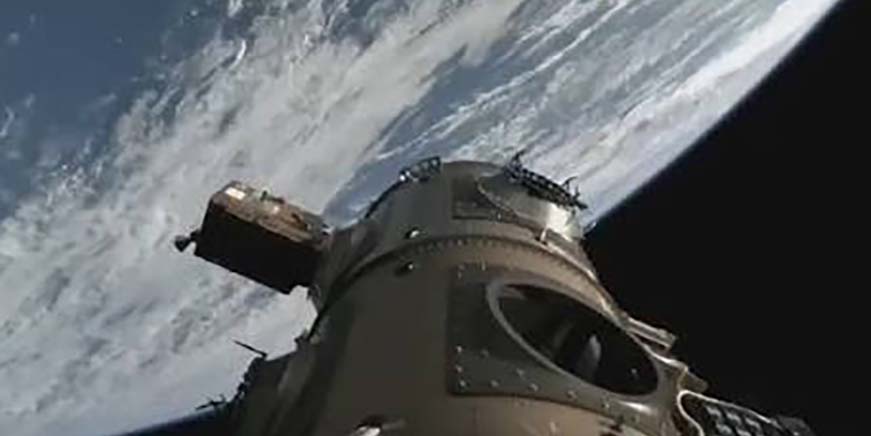
Executed aboard a NOVI Space satellite in low Earth orbit (LEO), the demonstration marks the first time Shield AI’s Hivemind pilot has operated in space to manage real-time satellite operations.
On-Orbit Experimental Results and Flight Metrics
The flight demonstration evaluated multi-objective autonomous optimization across consecutive 24-hour test windows. During orbital passes, the Hivemind AI pilot autonomously managed payload imaging tasking, spacecraft health diagnostics, battery state of charge, and pointing vectors without requiring real-time ground operator intervention.
Key operational metrics achieved during the flight demonstration include:
- Command Execution: The NOVI Space satellite executed 189 autonomous commands generated by Hivemind and validated by Sedaro’s SAFE edge safety framework.
- Link Optimization: In standalone evaluations, Sedaro’s SAFE framework and edge-deployable simulators improved the spacecraft’s Iridium contact initiation efficiency by 8 percentage points.
- Legacy System Integration: The software stack successfully orchestrated intelligence, surveillance, and reconnaissance (ISR) mission profiles on satellite hardware not originally designed for autonomous onboard decision-making.
Program History and Defense Contracting Architecture
The on-orbit flight demonstration was conducted under Sedaro’s Small Business Innovation Research (SBIR) Phase II contract, executed in collaboration with the Air Force Research Laboratory (AFRL) and Space Systems Command (SSC).
The software demonstration expands on Sedaro’s work with Space Systems Command to construct federated digital engineering platforms and cloud-native simulation environments for the Space Force Association. By porting Shield AI’s Hivemind platform—previously deployed on uncrewed aircraft and fighter jets—into LEO orbit, the companies validated software-defined mission orchestration across space-based assets.
Strategic Autonomy Outlook
The flight demonstration confirms that edge-deployable autonomy can be retrofitted onto existing and next-generation satellite constellations. Layering autonomous flight software onto orbital fleets reduces ground network bandwidth constraints and operator workloads, enabling satellite arrays to autonomously execute dynamic ISR tasking in communications-degraded or contested operational environments.
