

MIDDLETOWN, Conn. – August 3, 2026 – To address non-contact measurement requirements in high-temperature and high-pressure operational environments, KMM Precision Measuring announced on July 21, 2026, the availability of its specialized high-precision displacement sensor series.
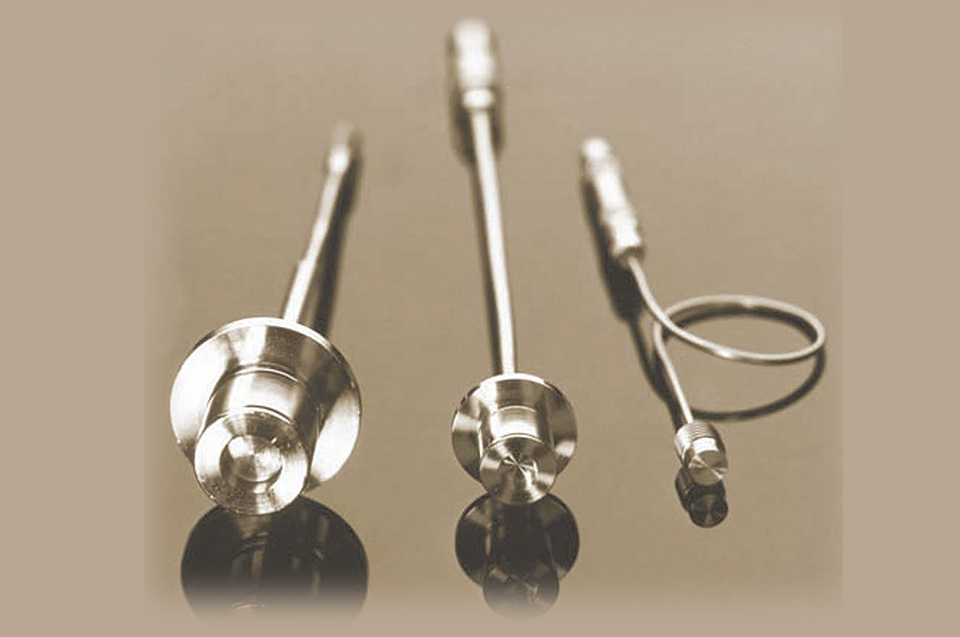
Originally engineered for NASA and nuclear energy applications, the non-contact Eddy current sensors are designed to measure conductive surface motion within extreme rocket engine turbopumps, nuclear power generators, and high-stress aerospace materials testing facilities.
Mechanical Construction and Signal Conditioning Specifications
The sensing line features laser-welded Inconel housings sealed hermetically to prevent environmental contamination, combined with metal-jacketed, mineral-insulated cabling to withstand severe vibration. The hardware operates across a continuous thermal range from -320°F to +1000°F, with short-term tolerances reaching +1200°F.
The product line includes three high-temperature models engineered for varying structural pressure thresholds. The KD-1925 model supports operational pressures up to 5,000 psi, while the KD-1950 and KD-1975 variants are rated for pressures up to 3,500 psi.
All three systems interface with KMM’s KDM-8206 signal conditioning electronics, available as single-channel NEMA-enclosed units with integrated digital panel meters or as bench-top Eurocard units supporting up to 12 measuring channels in a single rack assembly.
Propulsion Integration Rationale and Environmental Hardening
The development expands on Kaman Precision Products’ historical heritage in space flight sensor hardware, building on recent deployments of advanced magnetic sensor systems for launch propulsion across ground testing and flight systems.
By utilizing non-contact inductive measurement principles, the sensors track mechanical movement without physical surface wear, delivering accurate position metrics inside pressurized turbomachinery and cryogenic fuel manifolds.
Long-Term Outlook for High-Stress Diagnostic Testing
As commercial space operators increase launch cadences and require higher reuse durability from liquid propulsion systems, extreme-environment diagnostic monitoring remains crucial.
KMM Precision Measuring plans to support aerospace prime contractors and materials research facilities by integrating the sensor series into long-duration qualification testing for next-generation rocket engines and thermal protection systems.
