

In an expansion of Italy’s space-based Earth observation infrastructure, Thales Alenia Space announced on Wednesday, July 29, 2026, that it signed a contract with prime contractor OHB Italia to develop the satellite and supply the PRIMA-S platform for the Italian Space Agency’s PRISMA Second Generation mission.
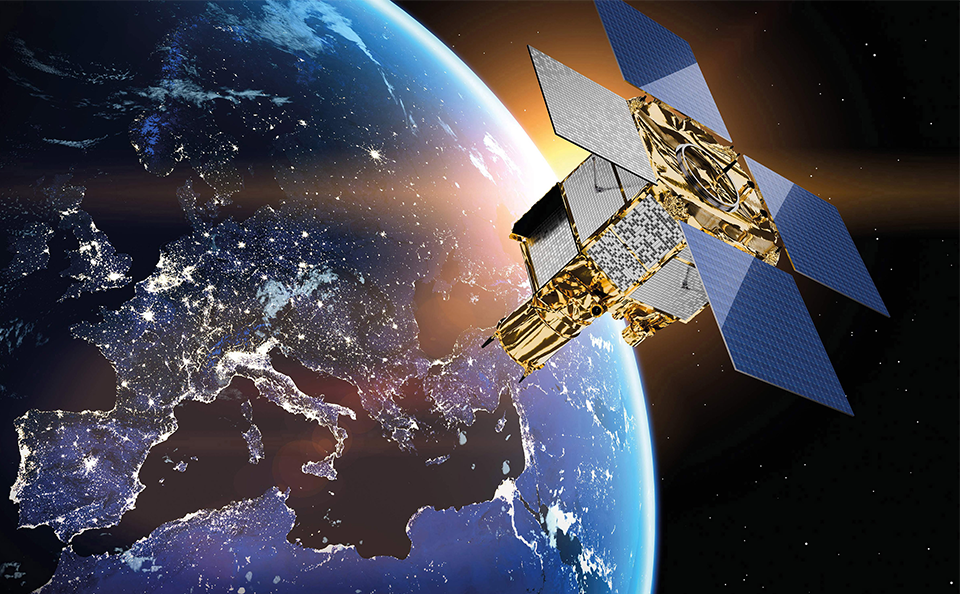
Scheduled for launch in 2031, the spacecraft will host an upgraded hyperspectral optical payload built by Leonardo to provide enhanced imaging of Earth’s land surfaces, vegetation, inland waters, and coastal environments.
Platform Architecture and Technical Performance Specifications
Thales Alenia Space will manufacture and deliver the PRIMA-S satellite bus, which hosts the hyperspectral sensor suite supplied by Leonardo as a Customer Furnished Item. Derived from the HE-R1000 product line, the PRIMA-S architecture belongs to Thales Alenia Space’s multi-mission Earth observation family, capable of supporting both optical and radar payloads across Low Earth Orbit and Medium Earth Orbit profiles.
Enhanced platform and instrument agility will increase spatial resolution to at least 10 meters per pixel, a substantial capability upgrade from the 30-meter resolution provided by the first-generation PRISMA spacecraft. The vehicle integrates Leonardo’s upgraded hyperspectral instrument, which is optimized to achieve higher signal-to-noise ratios and support frequent orbital revisit cycles across diverse spectral bands.
Consortium Structure and Program Lineage
Under the industrial structure established by the Italian Space Agency, OHB Italia serves as the prime contractor responsible for overall mission execution and end-to-end system integration. Thales Alenia Space handles satellite engineering and platform assembly, while Leonardo provides the core optical payload.
The second-generation agreement formalizes the hardware construction phase following earlier system design studies, including Thales Alenia Space’s feasibility study for PRISMA Second Generation. The mission’s operational output will complement national imagery streams, interfacing alongside assets like the IRIDE satellite constellation and COSMO-SkyMed radar satellites.
Executive Leadership Commentary
“This collaboration with the Italian Space Agency and OHB Italia represents a significant opportunity for Thales Alenia Space to advance its capabilities in Earth Observation, benefiting the scientific community and supporting practical applications for improved environmental resource management and better understanding of global phenomena,” said Giampiero Di Paolo, Deputy CEO and Senior Vice President of Observation, Exploration, and Navigation at Thales Alenia Space. “This contract reflects Thales Alenia Space’s proven experience in manufacturing Earth observation satellites such as Copernicus and COSMO-SkyMed First and Second Generation, among others. Today’s achievement confirms the strategic decisions we have made with the PRIMA-S platform, renowned for its flexibility and capacity to host different types of payloads, addressing both Low and Medium Earth Orbit missions.”
Operational Deployment Timeline
Manufacturing, integration, and platform testing will proceed toward a target launch date in 2031. Once operational in low Earth orbit, PRISMA Second Generation will generate continuous hyperspectral data streams to support environmental monitoring, agricultural land assessment, natural resource management, and climate research for Italian civil protection authorities, government agencies, and international scientific institutions.
