

Targeting the constraints of resource-limited space environments and long-duration missions, a research consortium comprising the Bioeconomy Science Institute Maiangi Taiao, the Cawthron Institute, and Helogen Corporation commenced ground-based microgravity simulation testing on Wednesday, July 22, 2026.
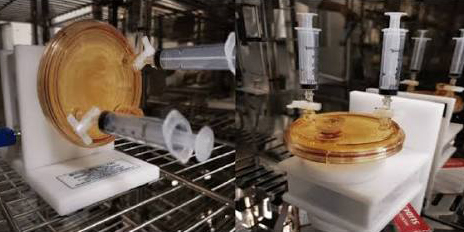
The $1 million project, funded by New Zealand’s Ministry of Business, Innovation and Employment (MBIE) Smart Ideas Endeavour Fund, seeks to produce bacterial nanocellulose (BNC) in low-gravity conditions using a symbiotic microbial co-culture.
Biomanufacturing Architecture and Simulator Parameters
The experimental architecture utilizes photosynthetic biological processes rather than traditional sugar-fed fermentation techniques:
- Symbiotic Co-Culture Model: Combines BNC-producing bacteria with microalgae, relying on sunlight and carbon dioxide to generate the necessary nutrients for material synthesis.
- Simulated Microgravity Apparatus: Utilizes High Aspect Ratio Vessel (HARV) bioreactors—rotating-wall vessels that keep self-contained biological samples in continuous free-fall to mimic orbital conditions during terrestrial phase testing.
- Material Output Characteristics: BNC exhibits high structural strength, elasticity, chemical purity, and biocompatibility, suitable for high-performance applications.
Industrial and Aerospace Rationale
Synthesizing biomaterials in microgravity can alter structural polymer alignment, potentially creating ultra-lightweight composites, advanced filtration membranes, and medical implants that cannot be replicated under normal Earth gravity. Furthermore, establishing self-sustaining, solar-driven biomanufacturing methods provides a baseline for in-situ resource utilization (ISRU) during deep-space exploration and orbital infrastructure development.
Executive Perspective on Space Biomanufacturing
“By combining the Bioeconomy Science Institute’s research leadership, Cawthron’s expertise in algae, and Helogen’s work at the intersection of biology and space, we’re building new approaches to producing high-value materials in microgravity,” stated Shishir Bankapur, Chief Executive of Helogen Corporation. “This is exactly what Helogen is about – using the unique conditions of space to unlock breakthroughs that have profound impact here on Earth.”
Autonomous Hardware Roadmap and Mission Manifest
Following the completion of ground bioreactor trials, researchers will integrate specialized sensing technology to monitor BNC formation inside a self-contained, autonomous miniature laboratory. The flight-ready payload is scheduled for launch in late 2027, marking the first orbital test of a symbiotic microbial co-culture for material manufacturing.
