

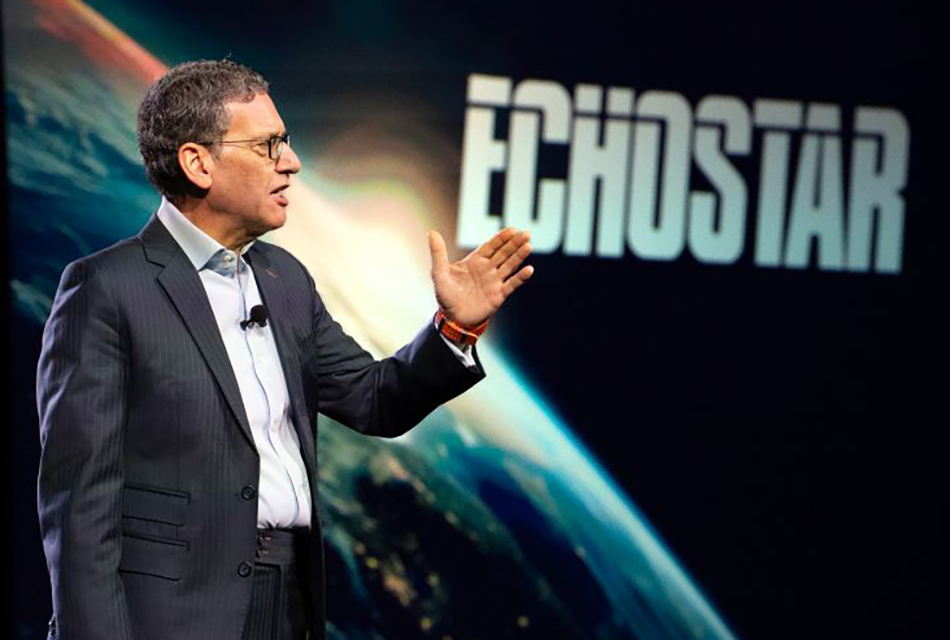
ENGLEWOOD, CO — In an unexpected shift in its executive tier, EchoStar Corporation announced that corporate president and chief executive officer Hamid Akhavan has stepped down from his leadership roles across both EchoStar and its subsidiary, Hughes Satellite Systems, effective immediately.
The resignation, formalized following board discussions on Monday, July 6, 2026, comes amid an overarching corporate realignment and a prepackaged restructuring program for the company’s telecommunications branches.
According to an official Form 8-K filed with the U.S. Securities and Exchange Commission, Akhavan will remain attached to the enterprise in a transitional consulting capacity through December 31, 2026, to ensure operational continuity. Following his departure, EchoStar Chairman Charlie Ergen will directly assume Akhavan’s former responsibilities as the principal chief executive of the Hughes business block.
Corporate Realignment and the Spectrum Capital Dispersal
The immediate exit of Akhavan marks the conclusion of a structured management framework initiated in late 2025. Following a series of massive asset sales designed to clear a heavy corporate debt load and settle multi-year regulatory buildout inquiries with the Federal Communications Commission, EchoStar established a dedicated branch named EchoStar Capital in November 2025, appointing Akhavan as its head. This specialized unit was set up to oversee active mergers, acquisitions, and reinvestment strategies derived from $42.6 billion in block spectrum divestitures.
The funding baseline for EchoStar Capital was secured via two landmark deals finalized in late 2025: a $23 billion spectrum license transfer to AT&T and a parallel $17 billion transaction with SpaceX. The SpaceX agreement transferred EchoStar’s AWS-4 and H-block mobile-satellite service allocations to Elon Musk’s firm to support its next-generation Starlink Direct to Cell satellite network, successfully canceling EchoStar’s capital-intensive plans to construct an independent low Earth orbit direct-to-device network. Simultaneously with Akhavan’s departure, EchoStar confirmed that the EchoStar Capital division will be entirely dissolved and folded back into the primary Corporate Development division overseen by Executive Vice President Tom Cullen.
Strategic Capital Shift Amid Telecommunications Restructuring
The dismantling of the capital unit and the change in executive direction are closely tied to deeper financial adjustments across EchoStar’s consumer wireless and broadcast assets. Just days prior to the management shuffle, the company’s wireless and satellite broadcast arms, including Dish DBS and Dish Wireless, formally submitted prepackaged Chapter 11 bankruptcy filings to stabilize their capital structures under a comprehensive debt reorganization plan.
With the massive proceeds from the SpaceX and AT&T spectrum sales successfully directed toward alleviating toxic long-term maturities, the board’s operational focus has shifted from active market expansion and venture investment toward defensive debt insulation and the optimization of its remaining core operations, which include Dish TV, Sling, and the legacy hardware lines of Hughes Network Systems.
Post-Restructuring Market Integration and Stock Adjustments
As part of the separation agreement finalized during the July 6th board meeting, Akhavan’s corporate employment contract was amended to accelerate the vesting timeline of his outstanding stock options, shifting the vesting window forward to the immediate resignation date from its original December 31, 2026, target.
Despite the immediate leadership vacancies and the parallel restructuring paths of the terrestrial cellular divisions, institutional market analysts remain optimistic regarding the core satellite and network infrastructure company’s underlying asset value. Following the filing, financial analysts at Citibank initiated public equity coverage on EchoStar with a distinct buy rating, establishing a long-term target price of $126 per share based on the company’s simplified balance sheet and its long-term commercial data agreement allowing Boost Mobile users to utilize SpaceX’s satellite direct-to-cell infrastructure.
