

WASHINGTON, D.C. — In an expansion of its public-private orbital framework, NASA has broadened its Commercial Satellite Data Acquisition (CSDA) initiative to streamline how commercial Earth observation data is ingested by civil agencies and scientific institutions.
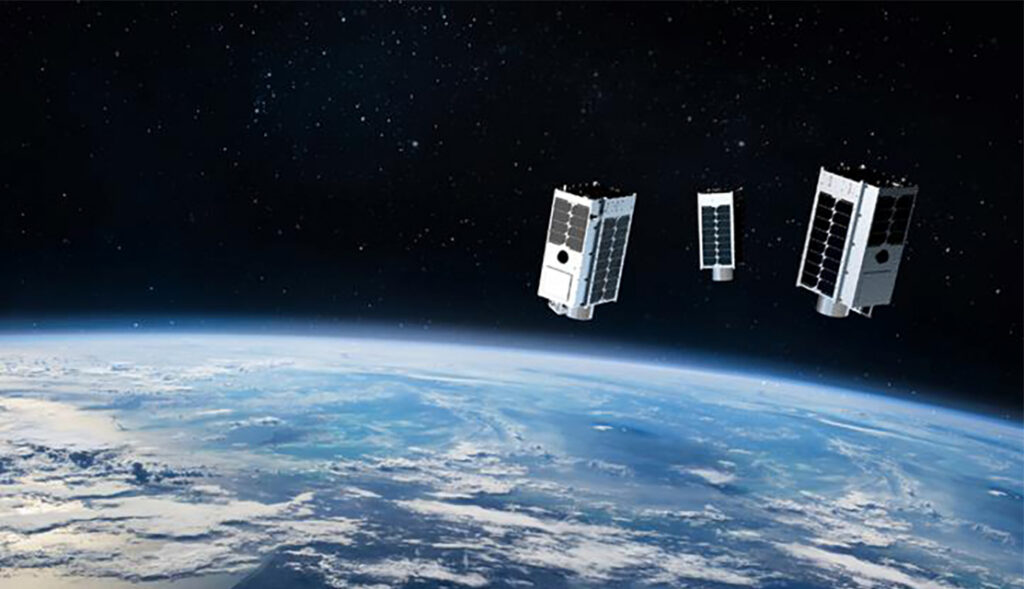
Under the program’s second “On-Ramp” solicitation, the agency has brought eight new specialized remote sensing companies onto the vehicle while simultaneously renewing data-product streams from six existing commercial providers.
The awards are executed under the CSDA Program On-Ramp 2 Multiple Award vehicle—a firm-fixed-price, Indefinite-Delivery/Indefinite-Quantity (IDIQ) contract. The vehicle carries a maximum cumulative valuation of $476 million, with an active operational performance period structured to run through November 15, 2028.
The New Data Ecosystem Architecture
The latest expansion signals a shift in how federal entities treat space-derived data. Rather than relying entirely on bespoke, multi-billion-dollar sovereign satellite flagships that require decades of procurement, the CSDA pipeline actively purchases commercial observation streams to fill immediate gaps at a significantly reduced capital cost.
The contract vehicle utilizes a rolling on-ramp mechanism that allows NASA to periodically reopen the solicitation process, integrating newly commercialized sensor technologies and constellation products that were unavailable during previous procurement cycles. The 14 corporate awardees validated under the combined ecosystem include prominent aerospace and imaging entities: Airbus DS Geo, GHGSat, Hydrosat, ICEYE US, ImageSat International, Kuva US, Muon Space, Orbital Sidekick, OroraTech USA, Planet Labs Federal, PlanetiQ, SATLANTIS US, Tomorrow.io, and Wyvern.
By adding these multi-spectral and radar assets, NASA introduces a diverse suite of spaceborne measurements. New contract holders provide distinct sensing methods—spanning high-resolution Synthetic Aperture Radar (SAR), greenhouse gas (GHG) emissions analytics, thermal infrared tracking, and hyper-frequent optical imaging. These commercial assets capture observations featuring fine spatial resolution, increased global revisit frequencies, and fully taskable targets that supplement NASA’s existing Earth-observing satellite assets.
SatCom Catalyst: Ground Cloudification and GSaaS
For SatCom network architects and operators, the core significance of the CSDA program lies within its underlying infrastructure play, which aligns directly with the industry-wide trend of Ground Segment Cloudification and IT Convergence.
Historically, accessing space data meant setting up proprietary, hardware-locked downlinks and siloed, regional tracking stations. Under the CSDA architecture, commercial data ingestion is completely decoupled from legacy physical boundaries, transitioning into a Ground-Station-as-a-Service (GSaaS) business model.
Following formal validation, all newly procured commercial data streams are funneled directly into the Satellite Data Explorer (SDX)—NASA’s centralized, web-based data discovery and access platform. The cloud-native hub unifies diverse incoming data feeds, enabling authorized scientists, interagency partners (such as NOAA, USGS, and the National Geospatial-Intelligence Agency), and international collaborators like the European Space Agency to search, task, and download environmental intelligence through a single software portal.
By anchoring its acquisition strategy to an interoperable, cloud-native clearinghouse, NASA is driving down data delivery lag. The resulting data pipeline enables civil protection units to access high-resolution environmental intelligence faster, improving real-time tactical modeling for disaster response teams combating active wildfires, estimating crop yields, mapping flash floods, and evaluating coastal land subsidence.
