

WASHINGTON, DC — Pushing forward national efforts to protect orbital infrastructure and human spaceflight, NASA has officially selected a new heliophysics mission concept to enter Phase B of development.
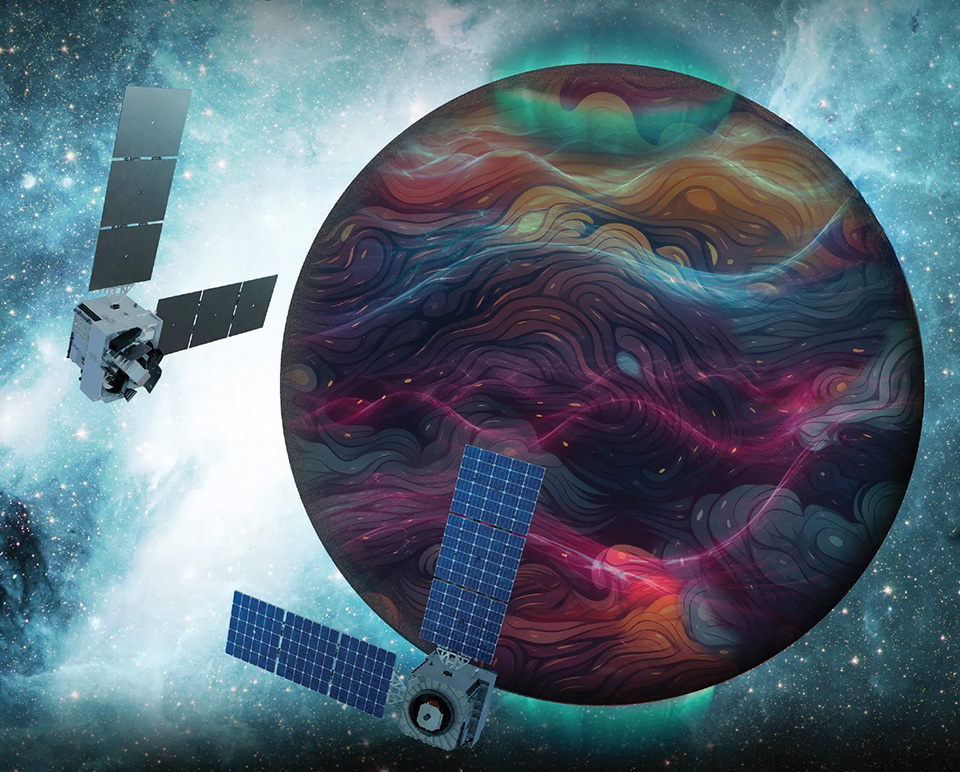
The project, named the Dynamic Atmosphere-Ionosphere Explorer (DAPHNE), will investigate how turbulence within Earth’s lower atmosphere ripples upward to disrupt the space environment.
By detailing how these terrestrial and solar forces collide, the mission aims to fundamentally improve forecasting models for space weather. These disruptions can degrade global positioning systems (GPS), compromise low-Earth orbit (LEO) satellite operations, and endanger astronauts exposing themselves to radiation past Earth’s magnetic shielding.
Phase B of development will focus entirely on refining flight architectures, finalizing instrument design, and mapping out mission operations.
Tracking the Ionized Frontier
For decades, heliophysics research focused primarily on a top-down model: tracking how solar flares, coronal mass ejections, and solar winds slam into the upper atmosphere. However, modern scientific assessments indicate that a significant portion of upper-atmosphere variability is actually driven from the bottom up, pushed by weather patterns, temperature fluctuations, and wind vectors originating closer to Earth’s surface.
The DAPHNE architecture addresses this scientific gap by deploying identical twin satellites to fly in tandem through very low-Earth orbit. Operating as a coordinated pair, the spacecraft will capture multi-point, simultaneous measurements within the thermosphere and ionosphere—the thin, highly volatile boundary shell where Earth’s neutral atmosphere transitions into the ionized plasma of space.
Each satellite will carry three specialized remote-sensing instruments:
- MIGHTI (Michelson Interferometer for Global High-resolution Thermospheric Imaging)
- FUVI (Far Ultraviolet Ionospheric Imager)
- PLATO (Plasma Analysis Telescope for Orbit)
Working in unison, this payload suite will deliver high-fidelity data on neutral winds, ambient temperature, and gas composition. Incorporating lower-atmospheric energy data into active space weather models will give researchers the clarity needed to track how energy moves upward through the orbital column.
High Heritage, Low Risk
The DAPHNE mission was originally proposed as a tailored concept study in response to NASA’s Dynamical Neutral Atmosphere-Ionosphere Coupling (DYNAMIC) opportunity. The program has been highlighted as a critical structural priority within the National Academy of Sciences’ Heliophysics Decadal Survey.
The initiative is led by Principal Investigator Aimee Merkel of the Laboratory for Atmospheric and Space Physics (LASP) at the University of Colorado Boulder. To ensure a streamlined development path, LASP is partnering with BAE Systems Space & Mission Systems in Boulder for spacecraft manufacturing and the Naval Research Laboratory in Washington, D.C., for core instrument integration.
“DAPHNE will fill this major gap in scientific understanding and help answer long-standing questions about how Earth interacts with our sun,” Merkel noted following the selection.
The program is structured as a low-risk, high-heritage project utilizing proven engineering frameworks to maximize data return per dollar spent. Following the completion of Phase B, the mission will face a formal NASA confirmation review in 2027 to assess development progress and allocate final flight funds. If confirmed, the total cost cap for the mission is strictly limited to $250 million in fiscal year 2023 dollars, excluding launch procurement, with a targeted launch window opening no earlier than 2029. Management oversight for the lifespan of the project will run through the Solar Terrestrial Probes program at NASA’s Goddard Space Flight Center in Greenbelt, Maryland.
