

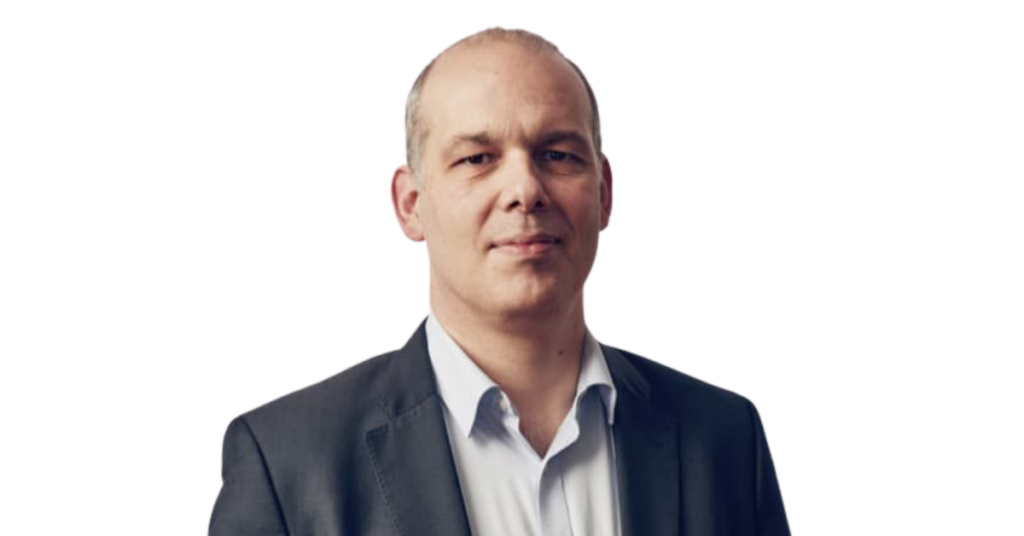
A single contract tripled the order backlog. Now the factory has to deliver.
Luis Gomes is the CEO of AAC Clyde Space, the Glasgow-headquartered smallsat manufacturer that operates across five countries. He joined the company in 2019 after more than 15 years in executive management roles in the space industry, most recently as CTO and Executive Director at Surrey Satellite Technology Ltd (SSTL), where he defined both technical and commercial strategy. Before that, he served as SSTL’s Commercial Director and Director of Earth Observation and Science. The career began where many European smallsat careers begin: as a mission design engineer at SSTL in the late 1990s. The trajectory from engineering bench to CEO of a publicly listed manufacturer traces the maturation of the European smallsat sector itself.
The company’s financials tell a growth story built on institutional demand. In January 2026, EUMETSAT finalized the EPS-Sterna constellation contract, a program developed under ESA’s Earth Watch initiative that demonstrated how low-cost, rapidly built microsatellites could deliver meteorological data comparable to larger missions. SatNews reported on the EUMETSAT EPS-Sterna constellation in January 2026, following the AWS demonstrator’s success. The contract lifted AAC Clyde Space’s order backlog to approximately SEK 1.1 billion. The company is guiding for 2026 revenue of SEK 475 million, a 61 percent increase over 2025, with a 10 percent EBITDA margin and positive operating cash flow. In March 2026, seven AAC Clyde Space satellites reached orbit aboard SpaceX’s Transporter-16 rideshare mission, and the company reported in October 2025 that it had begun integration of the first satellite in its VIREON Earth observation constellation.
The manufacturing challenge is the session topic. “The Flexible Factory: Mastering High-Mix, Serial Production for Diverse Manifests” addresses a structural tension in smallsat manufacturing: as satellite architectures diversify and mission requirements fragment, production lines must handle varied configurations at volume without sacrificing schedule or quality. SatNews covered this theme through AAC Clyde Space’s Transporter-16 launch, which carried satellites built for multiple customers with different mission profiles on a single manifest.
Gomes joins the panel alongside Open Cosmos CTO Jordi Barrera Ars, Aerospacelab’s Pierre Wilhelm, EnduroSat’s Simon van den Dries, and Tyvak International’s Dr. Marco Villa. The lineup spans the European smallsat manufacturing landscape from vertically integrated builders to platform-as-a-service providers.
The backlog is booked. The question is whether Europe’s flexible factories can scale production fast enough to match the manifests.
