

When ESA’s PROBA-3 Coronagraph spacecraft went silent in February 2026, the team responsible for recovering it reported to the same directorate that oversees engineering and quality for every mission the agency flies.
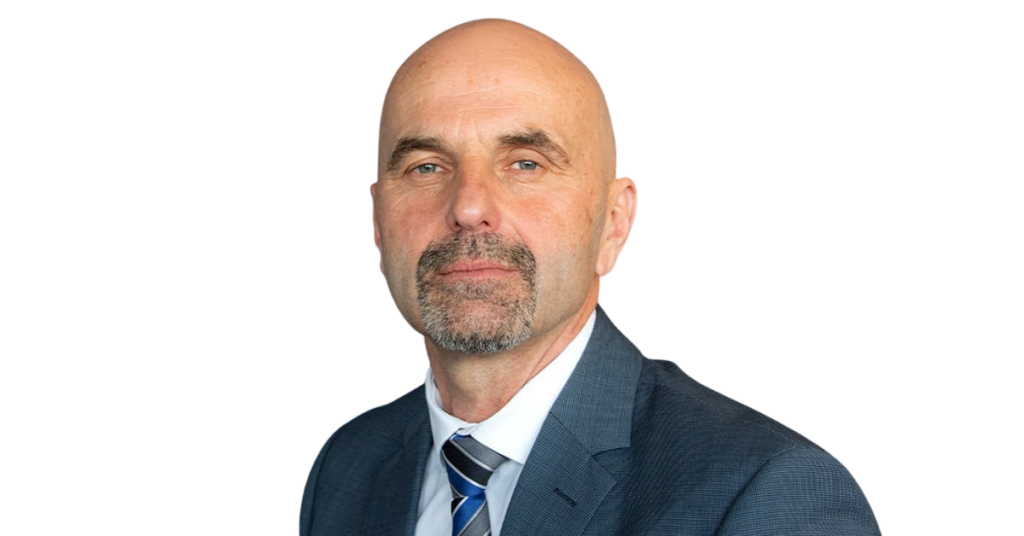
Dr. Dietmar Pilz is the Director of Technology, Engineering and Quality at the European Space Agency and Head of ESTEC, the agency’s technical center in Noordwijk, the Netherlands. He leads more than 950 staff and 200 contractors responsible for engineering support across all ESA missions, the agency’s R&D technology programs including GSTP and Discovery, and the European Cooperation for Space Standardization. Pilz took up the role on May 1, 2023, after more than 20 years in the European aerospace industry. At Airbus Defence & Space, he served as Head of Space Chief Engineering and Products and Head of Site for the Friedrichshafen facility, involved in all Airbus Space programs. The career arc traces a line from industrial program management to the institutional center of European space technology.
The past year tested the directorate’s operational depth. On February 14, 2026, an anomaly aboard the PROBA-3 Coronagraph triggered a chain reaction that caused progressive loss of attitude and prevented safe mode entry. Engineers later traced the cause to an extremely low-probability software issue during reaction wheel desaturation. By mid-March, ESA teams had located the tumbling spacecraft using optical and radar data. On March 18, they reestablished contact. By April, the Coronagraph had regained three-axis stabilization and the ASPIICS solar coronagraphy instrument was confirmed healthy. At the 4S Symposium in May 2026, Pilz framed the recovery alongside ESA’s Vision 2040 strategy and a broader argument that Europe needs to “sell better”: to make the continent’s technology strengths visible to the institutions that procure space systems.
In January 2026, Pilz introduced the Industrialisation Centre of Competence at the European Space Conference in Brussels, an initiative aimed at closing the gap between technology readiness and serial production capability. That gap defines the broader European launch question. SatNews reported in February 2026 on the global shift toward sovereign launch, tracking how U.S. allies are building independent access to orbit as the commercial market concentrates. The same month, Europe marked a milestone: the maiden launch of the Ariane 64. Meanwhile, ArianeGroup and ESA are preparing the first hop test of the Themis reusable launcher demonstrator.
At SmallSat Europe, Pilz joins a defense-stage panel titled “Launch panel – European access to space for defense,” alongside SpaceNews’ Jeff Foust and PLD Space’s Daniele Dallari. The discussion addresses independent access to space for Europe’s security posture, the role of launch startups, and resilience amid geopolitical uncertainty.
Europe builds the spacecraft. The question is whether it can build the launch infrastructure to deliver them on a defense timeline.
