

• Skip to primary navigation
  • Skip to main content
  • Skip to primary sidebar
  • Skip to secondary sidebar
  • Skip to footer
  • NEWS:
  • SatNews
  • SatMagazine
  • MilSatMagazine
  • SmallSat News
  • |     EVENTS:
  • SmallSat Symposium
  • Satellite Innovation
  • MilSat Symposium
  • SmallSat Europe

SatNews

Satellite Industry Intelligence Since 1983

Subscribe
  • LATEST
  • Missions & Constellations
    • Exploration & Science Missions
    • In-Orbit Servicing & Orbital Operations
    • LEO Constellations
    • Mission Autonomy & Onboard Systems
    • Mission Deployments & Manifests
    • Navigation & PNT
    • SmallSat
    • Spacecraft & Payload Technology
    View All in Missions & Constellations →
    CAS Space Successfully Launches Kinetica-2, Aiming for Global Cost LeadershipCAS Space Successfully Launches Kinetica-2, Aiming for Global Cost Leadership
    Can SMEs Compete in Starlink-Dominated Space?Can SMEs Compete in Starlink-Dominated Space?
    Liftoff: NASA Successfully Launches Artemis II to the MoonLiftoff: NASA Successfully Launches Artemis II to the Moon
    Spire Global Successfully Deploys Satellite for NGA MagQuest Geomagnetic ChallengeSpire Global Successfully Deploys Satellite for NGA MagQuest Geomagnetic Challenge
  • Business
    • Contracts & Commercial Deals
    • Earnings & Financial Reporting
    • Events & Conferences
    • Funding & Venture Capital
    • Market Forecasts
    • Mergers & Acquisitions
    • Personnel Moves & Appointments
    View All in Business & Finance →
    L3Harris Taps Mercury Systems for High-Capacity Data Storage on SDA Tranche 3 SatellitesL3Harris Taps Mercury Systems for High-Capacity Data Storage on SDA Tranche 3 Satellites
    Antaris Secures $28M Series A to Advance AI-Powered Satellite Mission PlatformAntaris Secures $28M Series A to Advance AI-Powered Satellite Mission Platform
    Amazon in Reported Talks to Acquire Globalstar in $9 Billion Move to Challenge StarlinkAmazon in Reported Talks to Acquire Globalstar in $9 Billion Move to Challenge Starlink
    Fortastra Expands Leadership Team with Defense and Intelligence Veterans to Drive National Security MissionFortastra Expands Leadership Team with Defense and Intelligence Veterans to Drive National Security Mission
  • Defense
    • Counterspace & ASAT
    • Defense Budgets & Procurement
    • ISR & Reconnaissance
    • MILSATCOM
    • Missile Warning & Defense
    • National Security Programs
    • Space Domain Awareness
    View All in Military & Defense →
    The Downlink Deficit: The Pentagon’s Optical Mesh Network and the Terrestrial BottleneckThe Downlink Deficit: The Pentagon’s Optical Mesh Network and the Terrestrial Bottleneck
    Declassified National Reconnaissance Office Documents Reveal Early Tensions with Space Shuttle ProgramDeclassified National Reconnaissance Office Documents Reveal Early Tensions with Space Shuttle Program
    SPARC AI Appoints On-Ground Referral Agent in Ukraine to Accelerate Defense EngagementSPARC AI Appoints On-Ground Referral Agent in Ukraine to Accelerate Defense Engagement
    Indra Showcases Sovereign Space and Defense Technologies at FIDAE 2026Indra Showcases Sovereign Space and Defense Technologies at FIDAE 2026
  • Gov
    • Export Controls & Compliance
    • International Space Agreements
    • National Space Policy
    • Space Law & Treaties
    • Space Sustainability & Debris Policy
    • Space Traffic Management / Debris Removal
    View All in Government & Regulation →
    FCC Seeks Comment on Expanding Spectrum Access for “Weird Space Stuff”FCC Seeks Comment on Expanding Spectrum Access for “Weird Space Stuff”
    The FCC Must Choose: Enforce the Rules or Preserve LEO CompetitionThe FCC Must Choose: Enforce the Rules or Preserve LEO Competition
    Space Force Reassigns Final GPS III Mission to SpaceX Following Vulcan AnomalySpace Force Reassigns Final GPS III Mission to SpaceX Following Vulcan Anomaly
    NASA Realignment ‘Ignition’ Accelerates Shift Toward Commercial Lunar EconomyNASA Realignment ‘Ignition’ Accelerates Shift Toward Commercial Lunar Economy
  • Launch
    • Launch Providers
    • Launch Schedule & Calendars
    • Launch Sites & Infrastructure
    • Rocket Technology & Vehicles
    View All in Launch →
    CAS Space Successfully Launches Kinetica-2, Aiming for Global Cost LeadershipCAS Space Successfully Launches Kinetica-2, Aiming for Global Cost Leadership
    Liftoff: NASA Successfully Launches Artemis II to the MoonLiftoff: NASA Successfully Launches Artemis II to the Moon
    AAC Clyde Space Expands Orbital Presence with Transporter-16 LaunchAAC Clyde Space Expands Orbital Presence with Transporter-16 Launch
    Built by Thales Alenia Space for ESA’s Celeste mission, IOD-2 Satellite lifts off today from New ZealandBuilt by Thales Alenia Space for ESA’s Celeste mission, IOD-2 Satellite lifts off today from New Zealand
  • Software
    • Autonomous Ground Operations
    • Data Processing & AI/ML
    • Digital Twins & Modeling
    • Ground Segment & Teleports
    • Mission Planning & Simulation
    • Space Systems Software Engineering
    • Spectrum & Licensing
    View All in Software Automation & Ground Systems →
    The Downlink Deficit: The Pentagon’s Optical Mesh Network and the Terrestrial BottleneckThe Downlink Deficit: The Pentagon’s Optical Mesh Network and the Terrestrial Bottleneck
    NexSat Space Systems Debuts with ACE ‘Invisible’ Aero-Conformal AntennaNexSat Space Systems Debuts with ACE ‘Invisible’ Aero-Conformal Antenna
    Laser Communications and the Rise of Orbital Data CentersLaser Communications and the Rise of Orbital Data Centers
    ThinKom Showcases Modular MILSATCOM Architecture for Contested EnvironmentsThinKom Showcases Modular MILSATCOM Architecture for Contested Environments
  • Services & Apps
    • Climate & Environmental Monitoring
    • Disaster Response & Security Mapping
    • Earth Observation & Imaging
    • Maritime & Aviation Satcom
    • Satellite Communications
    View All in Services & Applications →
    The Downlink Deficit: The Pentagon’s Optical Mesh Network and the Terrestrial BottleneckThe Downlink Deficit: The Pentagon’s Optical Mesh Network and the Terrestrial Bottleneck
    Cinemo Reimagines the Vehicle as a Software-Defined Entertainment HubCinemo Reimagines the Vehicle as a Software-Defined Entertainment Hub
    IEC Telecom Wins CSR Initiative of the Year at the Oil & Gas Middle East Awards 2026IEC Telecom Wins CSR Initiative of the Year at the Oil & Gas Middle East Awards 2026
    Can SMEs Compete in Starlink-Dominated Space?Can SMEs Compete in Starlink-Dominated Space?
  • SatNews Events
  • Magazines
  • Calendar

Astronomers Flag Amazon’s Kuiper Constellation for Exceeding Satellite Brightness Limits

January 28, 2026

Targeting a growing gap between commercial LEO deployment and space sustainability, a new study led by the International Astronomical Union (IAU) has found that Amazon’s Project Kuiper (Amazon Leo) satellites currently exceed brightness recommendations intended to protect ground-based astronomy.
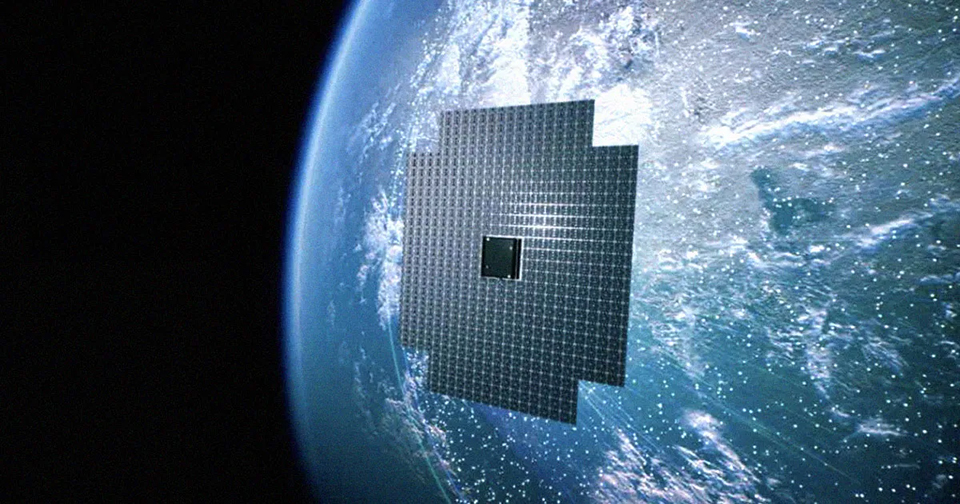
Analyzing nearly 2,000 observations as of January 2026, researchers concluded that 92% of the satellites in their operational phase are brighter than the IAU’s “research limit”.

The IAU Research Limit and Ground-Based Impact

The IAU’s Centre for the Protection of the Dark and Quiet Sky (CPS) established a standardized formula for satellite luminosity: $MV > 7.0 + 2.5 \cdot \log_{10}(\text{altitude} / 550)$. For Amazon’s fleet operating at 630 km (391 miles), this places the acceptable “research limit” at approximately magnitude 7.15.

However, the study found a mean apparent magnitude of 6.28, with approximately 25% of observations recording satellites bright enough to be seen with the unaided eye in dark-sky locations. This level of brightness is particularly disruptive to wide-field surveys like those conducted by the Vera C. Rubin Observatory, where satellite streaks can saturate sensitive digital sensors and permanently corrupt data.

Technical Mitigation: Mirror Films vs. Earth’s Shadow

Amazon has engaged with the astronomical community early in its design phase, employing several mitigation strategies:

  • Dielectric Mirror Films: The underside of the spacecraft is coated with a mirror-like film designed to reflect sunlight away from Earth rather than scattering it toward the ground.
  • Component Orientation: Adjusting the attitude of the satellite to minimize the surface area of sunlit components visible from the ground.

In contrast, while Starlink satellites are physically larger and orbit at lower altitudes (~550 km), they benefit from being in the Earth’s shadow for a larger portion of their orbit. Amazon’s higher altitude keeps its satellites illuminated for longer periods during twilight—the most critical window for astronomical observations.

Rationale: Regulatory Warfare and Sustainability

As the “Regulatory Warfare” trend intensifies, these findings provide ammunition for groups seeking stricter FCC and international licensing requirements for large-scale constellations. While Amazon’s engineers have successfully reduced reflectivity compared to early prototypes, the sheer volume of the planned 3,236-satellite fleet remains a point of contention for environmental stewardship.

Outlook: Altitude Shifts and Future Visibility

Amazon plans to lower the altitude of future Kuiper satellites to approximately 590 km (366 miles). While lower altitudes decrease the time a satellite is visible during a single pass, they paradoxically increase the apparent brightness for observers directly beneath the orbital path. The IAU and NSF NOIRLab are expected to continue monitoring the constellation as Amazon ramps up its launch cadence toward the FCC’s mid-2026 deployment milestone.

Filed Under: Services & Applications

Primary Sidebar

Coverage

  • Missions & Constellations
  • Business & Finance
  • Military & Defense
  • Launch
  • Software Automation & Ground Systems
  • Government & Regulation
  • Services & Applications

Most Read Stories

  • Rheinmetall Withdraws From Mynaric Bidding Process; Rocket Lab Acquisition Clears Major Competitive Hurdle
  • L3Harris Unveils XL-300P: The First P25 Handheld with 5G and Satellite Direct-to-Device Connectivity
  • Rheinmetall Walked Away. Germany Should Take the Hint.
  • Guardians in the Kill Chain: How the Space Force Led the Opening Salvo of Operation Epic Fury
  • Rocket Lab Emerging as Potential Bus Provider for 2,800-Satellite Equatys Constellation

Secondary Sidebar

Footer


Satnews is a leading provider of satellite news, events, publications, research and other satellite industry information in both commercial and military enterprises worldwide.

Stories By Category

  • Business & Finance
  • Government & Regulation
  • Launch
  • Military & Defense
  • Missions & Constellations
  • Services & Applications
  • Software Automation & Ground Systems
  • Spectrum & Licensing
  • Startups & NewSpace Business

About Us

  • Leadership & Editorial Team
  • SatNews History
  • Free Satnews Subscription
  • SatNews Events
  • Magazines

Navigation

  • Latest Stories
  • Magazines
  • Events
  • Contact
  • Cookie & Privacy Policy for Satnews

We use cookies to ensure that we give you the best experience on our website. If you continue to use this site we will assume that you are happy with it.
x
Sign up Now (For Free)
Access daily or weekly satellite news updates covering all aspects of the commercial and military satellite industry.
Invalid email address
Notify Me Regarding ( At least one ):
We value your privacy and will not sell or share your email or other information with any other company. You may also unsubscribe at anytime.

Click Here to see our full privacy policy.
Thanks for subscribing!