


• Skip to primary navigation
  • Skip to main content
  • Skip to primary sidebar
  • Skip to secondary sidebar
  • Skip to footer
  • NEWS:
  • SatNews
  • SatMagazine
  • MilSatMagazine
  • SmallSat News
  • |     EVENTS:
  • SmallSat Symposium
  • Satellite Innovation
  • MilSat Symposium
  • SmallSat Europe

SatNews

Satellite Industry Intelligence Since 1983

Subscribe
  • LATEST
  • SatNews Events
  • Magazines
  • Calendar
  • Subscribe
  • Missions & Constellations
    • Exploration & Science Missions
    • In-Orbit Servicing & Orbital Operations
    • LEO Constellations
    • Mission Autonomy & Onboard Systems
    • Mission Deployments & Manifests
    • Navigation & PNT
    • SmallSat
    • Spacecraft & Payload Technology
    View All in Missions & Constellations →
    NASA Shuts Off Instrument on Voyager 1 to Extend Interstellar MissionNASA Shuts Off Instrument on Voyager 1 to Extend Interstellar Mission
    Starlink Outages Disrupt Navy Drone Tests as Pentagon Dependency GrowsStarlink Outages Disrupt Navy Drone Tests as Pentagon Dependency Grows
    Iridium Unveils Core Role in Artemis II and Next-Gen PNT at Space Symposium 2026Iridium Unveils Core Role in Artemis II and Next-Gen PNT at Space Symposium 2026
    Boeing and Millennium Unveil Resolute Mid-Class Satellite PlatformBoeing and Millennium Unveil Resolute Mid-Class Satellite Platform
  • Business
    • Contracts & Commercial Deals
    • Earnings & Financial Reporting
    • Events & Conferences
    • Funding & Venture Capital
    • Market Forecasts
    • Mergers & Acquisitions
    • Personnel Moves & Appointments
    View All in Business & Finance →
    SmallSat Europe Speaker Focus: Gen. Michel Friedling, Look Up SpaceSmallSat Europe Speaker Focus: Gen. Michel Friedling, Look Up Space
    Geographic Hotspots: Where Demand Is AcceleratingGeographic Hotspots: Where Demand Is Accelerating
    Amazon+Globalstar. Turbocharging the industryAmazon+Globalstar. Turbocharging the industry
    SmallSat Europe Speaker Focus: Martin Langer, OroraTechSmallSat Europe Speaker Focus: Martin Langer, OroraTech
  • Defense
    • Counterspace & ASAT
    • Defense Budgets & Procurement
    • ISR & Reconnaissance
    • MILSATCOM
    • Missile Warning & Defense
    • National Security Programs
    • Space Domain Awareness
    View All in Military & Defense →
    Saltzman Unveils 2040 Blueprint to Scale Space Force for Great Power CompetitionSaltzman Unveils 2040 Blueprint to Scale Space Force for Great Power Competition
    The Rise of Grey Zone Satellites: Ambiguity as a Tactical AdvantageThe Rise of Grey Zone Satellites: Ambiguity as a Tactical Advantage
    SmallSat Europe Speaker Focus: Col. Marcin Mazur, Polish Space AgencySmallSat Europe Speaker Focus: Col. Marcin Mazur, Polish Space Agency
    US Space Force Awards $68.6M Modification to Lockheed Martin for Next-Gen OPIRUS Space Force Awards $68.6M Modification to Lockheed Martin for Next-Gen OPIR
  • Gov
    • Export Controls & Compliance
    • International Space Agreements
    • National Space Policy
    • Space Law & Treaties
    • Space Sustainability & Debris Policy
    • Space Traffic Management / Debris Removal
    View All in Government & Regulation →
    SmallSat Europe Speaker Focus: Chris Quilty, Quilty SpaceSmallSat Europe Speaker Focus: Chris Quilty, Quilty Space
    NRL to Showcase Sovereign Space Capabilities at 41st Space SymposiumNRL to Showcase Sovereign Space Capabilities at 41st Space Symposium
    FCC Modernizes Satellite Spectrum Rules to Unleash Next-Generation BroadbandFCC Modernizes Satellite Spectrum Rules to Unleash Next-Generation Broadband
    SmallSat Europe Speaker Focus: Daniel Bock, Morpheus SpaceSmallSat Europe Speaker Focus: Daniel Bock, Morpheus Space
  • Launch
    • Launch Providers
    • Launch Schedule & Calendars
    • Launch Sites & Infrastructure
    • Rocket Technology & Vehicles
    View All in Launch →
    Blue Origin Achieves First Booster Reuse but Satellite Enters Off-Nominal OrbitBlue Origin Achieves First Booster Reuse but Satellite Enters Off-Nominal Orbit
    Ensign-Bickford Hardware Supports Successful Artemis II Lunar MissionEnsign-Bickford Hardware Supports Successful Artemis II Lunar Mission
    China Accelerates Orbital Internet Deployment with Successful Smart Dragon-3 Sea LaunchChina Accelerates Orbital Internet Deployment with Successful Smart Dragon-3 Sea Launch
    What the SpaceX IPO Changes for Every Satellite OperatorWhat the SpaceX IPO Changes for Every Satellite Operator
  • Software
    • Autonomous Ground Operations
    • Data Processing & AI/ML
    • Digital Twins & Modeling
    • Ground Segment & Teleports
    • Mission Planning & Simulation
    • Space Systems Software Engineering
    • Spectrum & Licensing
    View All in Software Automation & Ground Systems →
    Blue Origin Unveils Project Quartz Global Ground Station NetworkBlue Origin Unveils Project Quartz Global Ground Station Network
    Cloudcomputing Targets 1.5M Identities in Spain and Finalizes Innovate IT AcquisitionCloudcomputing Targets 1.5M Identities in Spain and Finalizes Innovate IT Acquisition
    Archangel Lightworks Secures £10M Series A to Scale Optical Ground InfrastructureArchangel Lightworks Secures £10M Series A to Scale Optical Ground Infrastructure
    Keysight and Sateliot Win ESA and GSMA Foundry Challenge for 6G InnovationKeysight and Sateliot Win ESA and GSMA Foundry Challenge for 6G Innovation
  • Services & Apps
    • Climate & Environmental Monitoring
    • Disaster Response & Security Mapping
    • Earth Observation & Imaging
    • Maritime & Aviation Satcom
    • Satellite Communications
    View All in Services & Applications →
    SmallSat Europe Speaker Focus: Jaume Sanpera, SateliotSmallSat Europe Speaker Focus: Jaume Sanpera, Sateliot
    NASA Targets Commercial Relays to Replace Aging TDRSS InfrastructureNASA Targets Commercial Relays to Replace Aging TDRSS Infrastructure
    OQ Technology Awarded ESA Contract to Adapt 5G Beamforming for SpaceOQ Technology Awarded ESA Contract to Adapt 5G Beamforming for Space
    Kraken Robotics Integrates KATFISH Sonar on SEFINE RD-22 USV Following Multi-Naval DemonstrationsKraken Robotics Integrates KATFISH Sonar on SEFINE RD-22 USV Following Multi-Naval Demonstrations

Sandia + Los Alamos: Space-based nuclear detonation detection mission endures

September 22, 2025

Roughly 12,550 miles above Earth, a constellation of U.S. global positioning satellites orbits the planet. GPS satellites also carry a sophisticated system designed to detect above ground nuclear detonations anytime, anywhere.
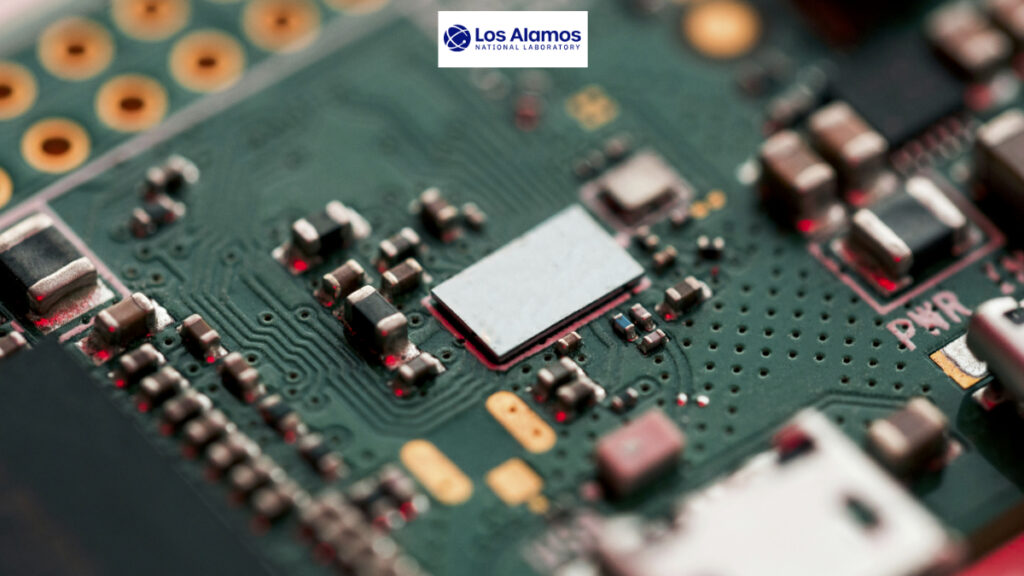
The Global Burst Detection system, developed by Sandia and Los Alamos national laboratories, carries a suite of sensors and instruments capable of identifying signals from nuclear detonations and providing real-time information to the U.S. military and government.
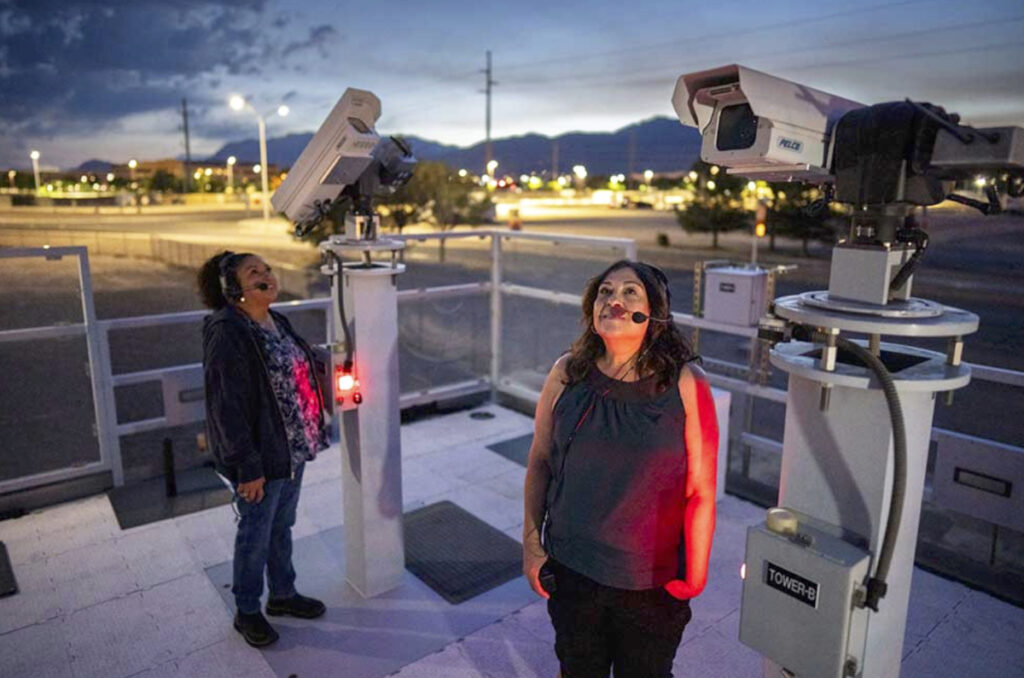
Visual safety observers Debra Yzquierdo, left, and Naomi Baros watch the skies for aircraft atop an observation platform. Photo by Craig Fritz

The final system in the current block of eight systems launched into space in May of 2025. Meanwhile, the next series, scheduled for initial deployment in 2027, already has several units completed and will soon be ready for integration with the host satellites.

This mission has endured for more than 60 years at the Labs. Teams of engineers, scientists and technologists work a decade ahead to develop new complex technologies that can withstand the harsh space environment while countering evolving threats.

The Global Burst Detection system serves as part of the space-based component of the U.S. Nuclear Detonation Detection System. This network of satellites, sensors and ground stations can detect, time-stamp and record electromagnetic pulse energy in specific bands, and X-ray and optical signals. This information helps the U.S. Air Force precisely determine the location, time and yield of a nuclear detonation.
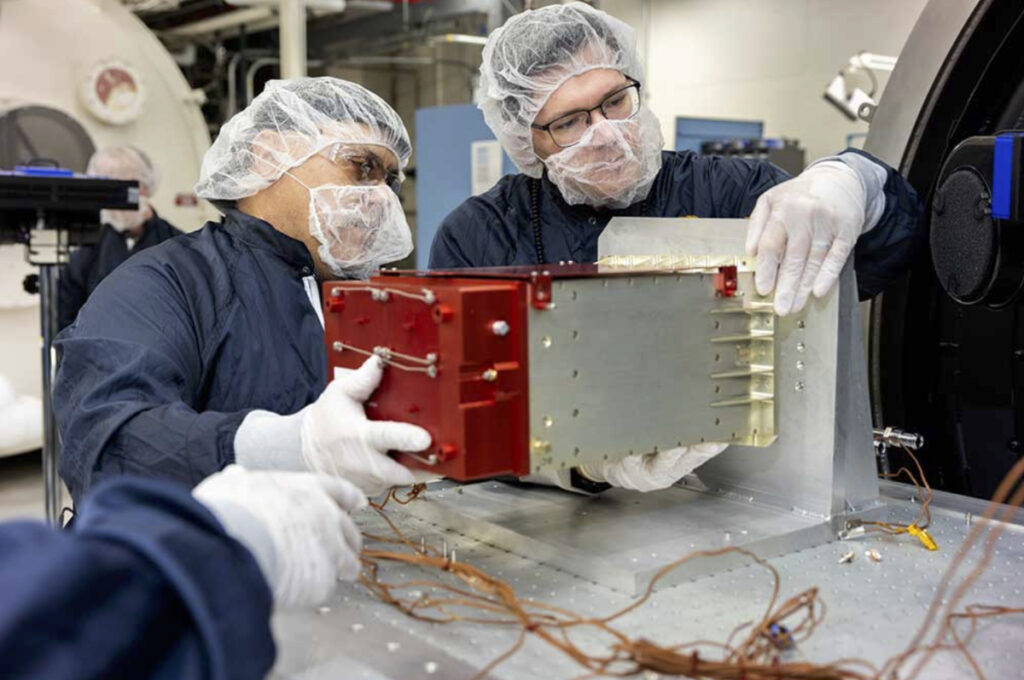
Engineering technologist Adolfo Salazar, left, and systems engineer Sean Walker prepare a sensor from the IIIF Global Burst Detector for thermal vacuum testing. Photo by Bret Latter

Funded by the National Nuclear Security Administration (NNSA), the sensors undergo rigorous testing and mission assurance processes to ensure they perform reliably during their 15-plus-year mission. Sandia performs a series of qualification tests, including shock, thermal, thermal vacuum, vibration and prompt X-ray tests, to demonstrate the system’s ability to survive launch, deployment and operation in space. Sandia and Los Alamos design and produce the system’s five subsystems, with Sandia integrating them into a complete detection system.

The last IIIA series Global Burst Detector launched into space from Cape Canaveral on May 30. Teams from Sandia, Los Alamos and the U.S. Space Force calibrated the system in June and conducted early on-orbit testing to verify functionality. For the final phase, the team will share the configuration and setting information with the U.S. Nuclear Detonation Detection System team for integration into the current satellite network.

In 2024, Sandia and Los Alamos delivered the first two flight systems for the next generation of detectors, the IIIF, to Lockheed Martin for installation on GPS satellites. The first unit is scheduled to launch in 2027.
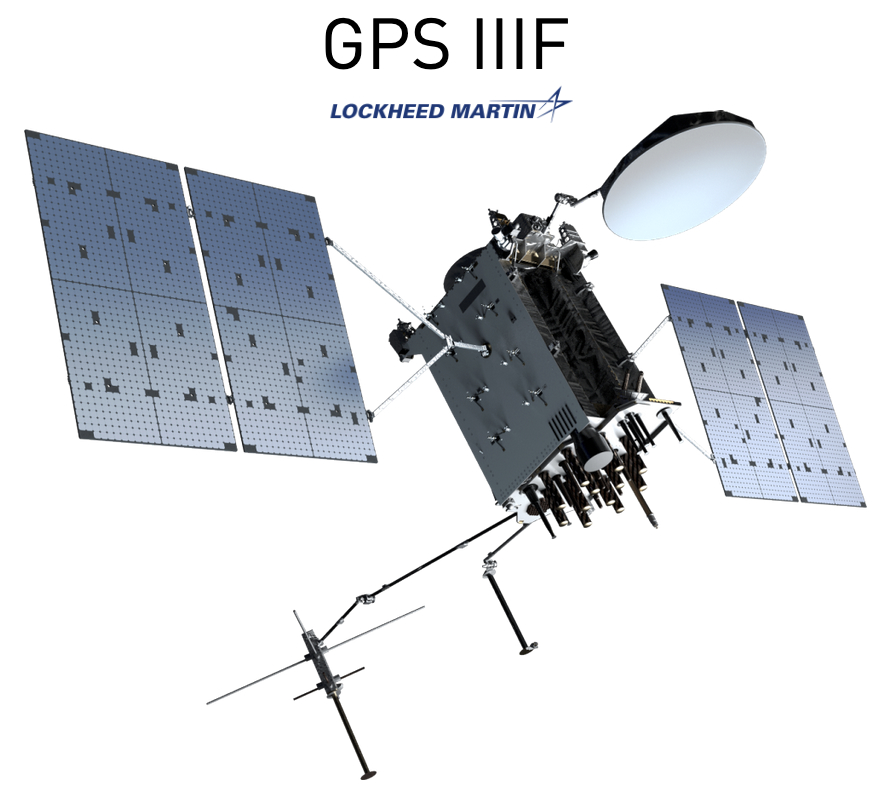
Teams from Sandia and Los Alamos worked together for 12 years to design and qualify the new system.
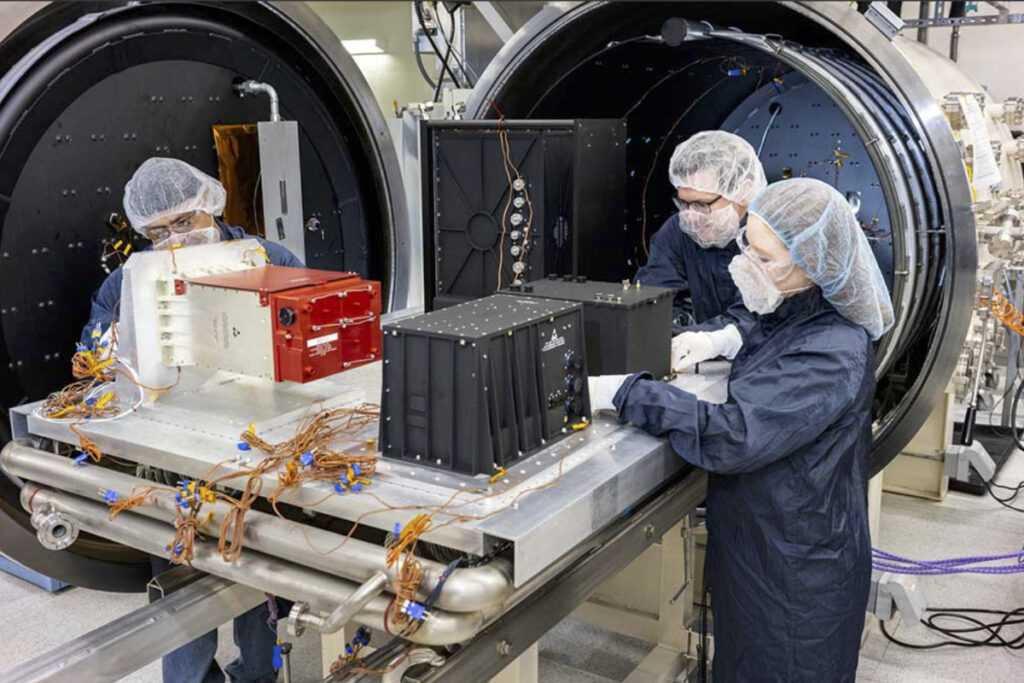
From left, engineering technologist Adolfo Salazar, systems engineer Sean Walker and systems engineer Lauren Ratliff prepare sensors from the next generation of detectors to undergo thermal vacuum testing at Sandia. Photo by Bret Latter

A key component of the IIIF series, the Spectral Imaging Geolocation Hyper-Temporal Sensor, or SIGHTS, has roots in Sandia’s Laboratory Directed Research and Development program. More than a decade ago, researchers conducted basic science to push the boundaries of remote sensing. That work laid the foundation for a new megapixel-density optical sensor, capable of capturing tens of thousands of frames per second. This enables the sensor to better differentiate between legitimate signals and false positives.

Over the next decade, Sandia and Los Alamos plan to deliver, integrate and launch more IIIF Global Burst Detector systems to continue the mission.

The launch of the final IIIA series Global Burst Detector marks an important milestone in our efforts to enhance nuclear detection capabilities,” Sandia manager Andrew Stuart said. “The collaboration between Sandia National Laboratories and Los Alamos National Laboratory has been key to developing this advanced system, which will significantly contribute to our national security by improving our ability to detect nuclear detonations from space.”

Marc Kippen, program manager for Space Systems and Science at Los Alamos, said, “The May launch is a testament to the decades of effort that it takes to maintain uninterrupted national security space capability. Los Alamos National Laboratory is proud to contribute to this important and enduring mission.”

Filed Under: Military & Defense, Navigation & PNT

Primary Sidebar

Coverage

  • Missions & Constellations
  • Business & Finance
  • Military & Defense
  • Launch
  • Software Automation & Ground Systems
  • Government & Regulation
  • Services & Applications

Most Read Stories

  • SpaceX Loses Contact With Starlink Satellite
  • Rocket Lab Emerging as Potential Bus Provider for 2,800-Satellite Equatys Constellation
  • SpaceX Accelerates Record-Breaking IPO Following Trillion-Dollar xAI Merger
  • Planet Labs Imposes Indefinite Blackout on Iran Satellite Imagery at U.S. Request
  • Amazon in Reported Talks to Acquire Globalstar in $9 Billion Move to Challenge Starlink

Secondary Sidebar

Footer


Satnews is a leading provider of satellite news, events, publications, research and other satellite industry information in both commercial and military enterprises worldwide.

Stories By Category

  • Business & Finance
  • Government & Regulation
  • Launch
  • Military & Defense
  • Missions & Constellations
  • Services & Applications
  • Software Automation & Ground Systems
  • Spectrum & Licensing
  • Startups & NewSpace Business

About Us

  • Leadership & Editorial Team
  • SatNews History
  • Free Satnews Subscription
  • SatNews Events
  • Magazines

Navigation

  • Latest Stories
  • Magazines
  • Events
  • Contact
  • Cookie & Privacy Policy for Satnews

We use cookies to ensure that we give you the best experience on our website. If you continue to use this site we will assume that you are happy with it.
x
Sign up Now (For Free)
Access daily or weekly satellite news updates covering all aspects of the commercial and military satellite industry.
Invalid email address
Notify Me Regarding ( At least one ):
We value your privacy and will not sell or share your email or other information with any other company. You may also unsubscribe at anytime.

Click Here to see our full privacy policy.
Thanks for subscribing!