

By Chris Forrester
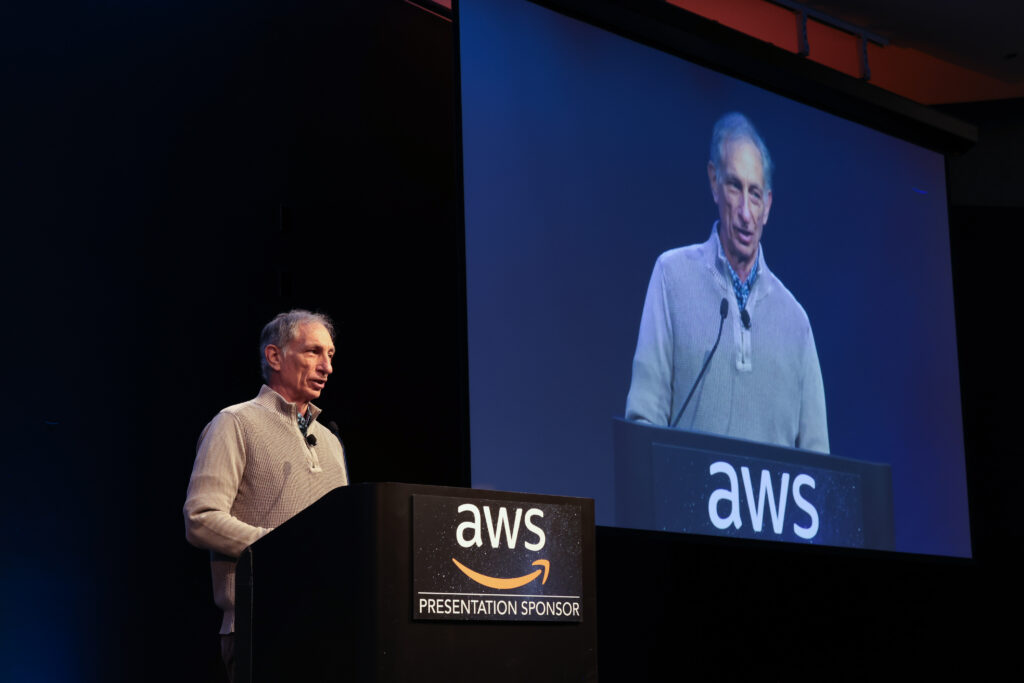
Mark Dankberg, Chairman of the Board, CEO, Co-founder, Viasat Inc., and was welcomed as a “real treat” by organiser Silvano Payne of SatNews. Dankberg, addressing delegates at the Silicon Valley Space Week, said he was focusing in his presentation on new concepts in D2D and usage and interoperability by non-terrestrial networks.
Dankberg introduced the new Mobile Satellite Services Association (MSSA), of which Viasat was a founder member, but said that infrastructure now being developed needed standards. “As with terrestrial where such standards exist, but satellite is a very different architecture, and where are the business models?”
Dankberg said that standards are vital if national sovereignty amongst the world’s operators was to be managed successfully, and interoperability had to be managed – and this has never been managed before in the satellite industry.
The promise of what is coming, he said, is dependent on dynamic cooperation between the D2D players, and then to build a new industry. “The MSSA members have pre-agreed some standards and ways of working which would enable a worldwide market to emerge and not to challenge a nation’s sovereignty.”
“We see D2D as being an augmentation to terrestrial, not a replacement of terrestrial. But where would these services be introduced, and when? Would city and urban dominate and exceed what we can handle efficiently?”
“Remember, we need to plan for potentially millions of devices. How will services evolve and how will services be priced? Key, however, is to enable interoperability. The MSSA does not insist on conformity, but we recognise that interoperability is beneficial to everyone.”
Spectrum, and coordination amongst and between operators is vital. “We all want seamless handover, but what can we manage? Airtime pricing is a headache, and the MSSA will be conducting research and testing. How will an operator manage its service when the device is in a vehicle?” he asked.
“The other thing that we are thinking about is non-exclusive roaming and augmentation of their services, and there’s talk of hundreds of millions of dollars in potential revenues. Perhaps, but we don’t want terrestrial players to take spectrum out of the option. We want terrestrial operators to augment D2D not to limit access. We need roaming ability: None of the existing satellite suppliers work with their rival’s equipment. The end user should see a seamless and operator agnostic, but the challenge then is to create a business model that is value enhancing. The devices need to be interoperable within and across satellites and constellations,” said Dankberg.
