

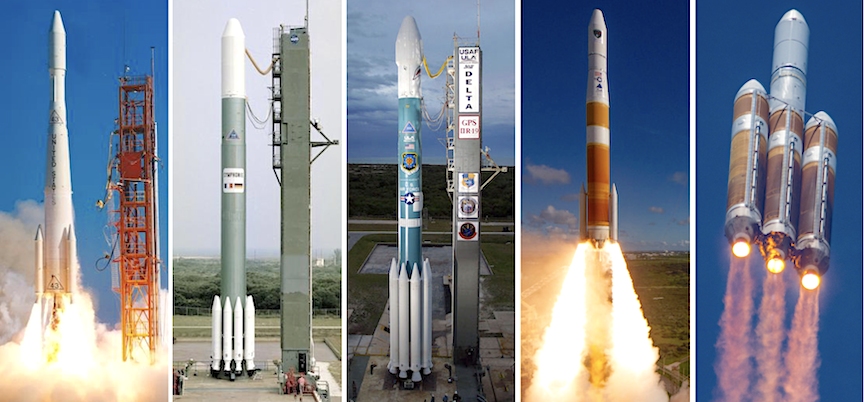
As preparations continue for the final launch of the Delta rocket, United Launch Alliance (ULA) salutes the generations of current and former Delta teammates who designed, built, assembled and launched this storied family of rockets for the past 63 years.
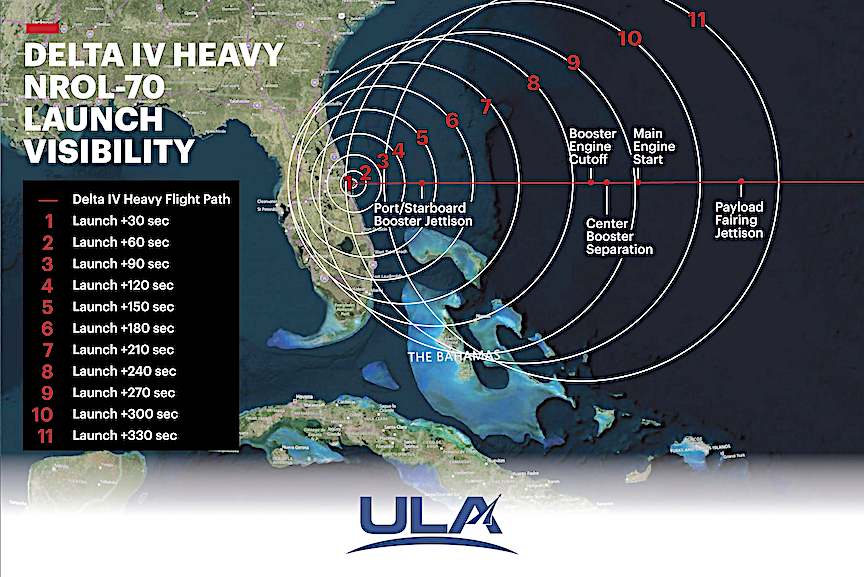
Everything continues to progress towards the ULA Delta IV Heavy launch carrying the NROL-70 mission for the National Reconnaissance Office. The mission is planned to lift off on Thursday, March 28 from Space Launch Complex-37 at Cape Canaveral Space Force Station in Florida. The launch is planned for 1:40 p.m. EDT. Today’s forecast shows a 30 percent chance of favorable weather conditions for launch.
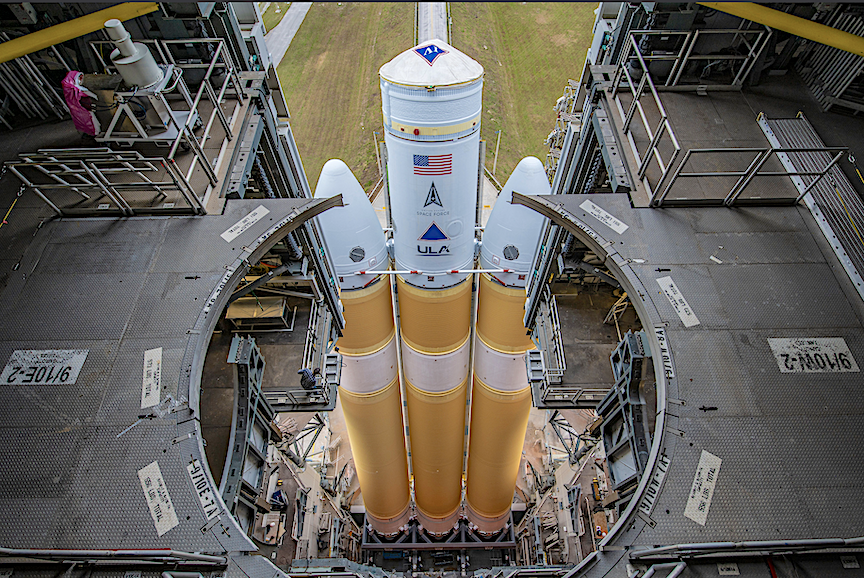
A United Launch Alliance (ULA) Delta IV Heavy rocket is raised vertically at the Space Launch Complex-37 pad in preparation to launch the NROL-70 mission for the National Reconnaissance Office. Photo credit: United Launch Alliance
Launch Forecast Summary:
Overall probability of violating weather constraints: 70%
Primary concerns: Ground Winds and Cumulus Cloud Rule
Overall probability of violating weather constraints for 24-hour delay: 40%
Primary concern: Ground Winds
As preparations continue for the final launch of the Delta rocket, United Launch Alliance (ULA) salutes the generations of current and former Delta teammates who designed, built, assembled and launched this storied family of rockets for the past 63 years.
Delta is completing its mission as ULA transitions to the new Vulcan rocket that incorporates some of the best attributes of both Delta and the Atlas fleets to continue assured access to space for the next era.
“While we near the final liftoff, the Delta legacy will live on through Vulcan,” said Gary Wentz, ULA vice president of Government and Commercial Programs. “We also take this moment to celebrate the thousands of men and woman who made the Delta program such a success over the decades. We carry their lessons and wisdom with us into the future.”
Launch of the Delta IV Heavy rocket carrying the NROL-70 national security mission is planned for March 28 at 1:40 p.m. EDT (1740 UTC) from Space Launch Complex (SLC)-37 at Cape Canaveral Space Force Station, Florida.
The Delta IV Heavy rocket is the pinnacle in our Delta family evolution. In more than six decades of use, Delta launch systems have succeeded through evolutionary design upgrades to meet the growing needs of the user community while maintaining high reliability.
Initiated in the late 1950s by NASA, the Delta program was derived from the Thor intermediate-range ballistic missile and used Vanguard components as the second and third stages to deliver a payload of 120 pounds (54 kg) to geosynchronous transfer orbit and 400 pounds (181 kg) to low-Earth orbit.
When the first Delta rocket was launched, on May 13, 1960, from SLC-17 at Cape Canaveral, Dwight Eisenhower was president, the No. 1 song in the nation was “Stuck on You” by Elvis Presley and a loaf of bread cost approximately 20 cents.
While the inaugural launch was not a success, Delta quickly began establishing a record of excellence by launching the world’s first communications satellite, the first weather observatory and NASA’s Pioneer and Explorer scientific spacecraft.
The Delta legacy grew with launches of the Tiros and Geostationary Operational Environmental Satellites (GOES) satellites that revolutionized weather forecasting. Delta launches of the first Telstar and Intelsat communications satellites enabled the now-famous TV phrase, “live, via satellite!” The Explorer research satellites provided data about energy fields and particles that could affect communications satellites, while NASA’s Pioneer probes undertook a long series of space exploration missions.
The rocket family has a remarkable success rate over six decades of flights, which numbers 388 launches to date. There have been 293 from the East Coast and 95 from Vandenberg Space Force Base, California.
Through the years, Delta became bigger, more advanced and capable of carrying heavier satellites into Earth orbit and around the solar system. Design changes included larger first stage tanks, addition of strap-on solid rocket boosters, increased propellant capacity, an improved main engine, adoption of advanced electronics and guidance systems, and development of upper stage and satellite payload systems.
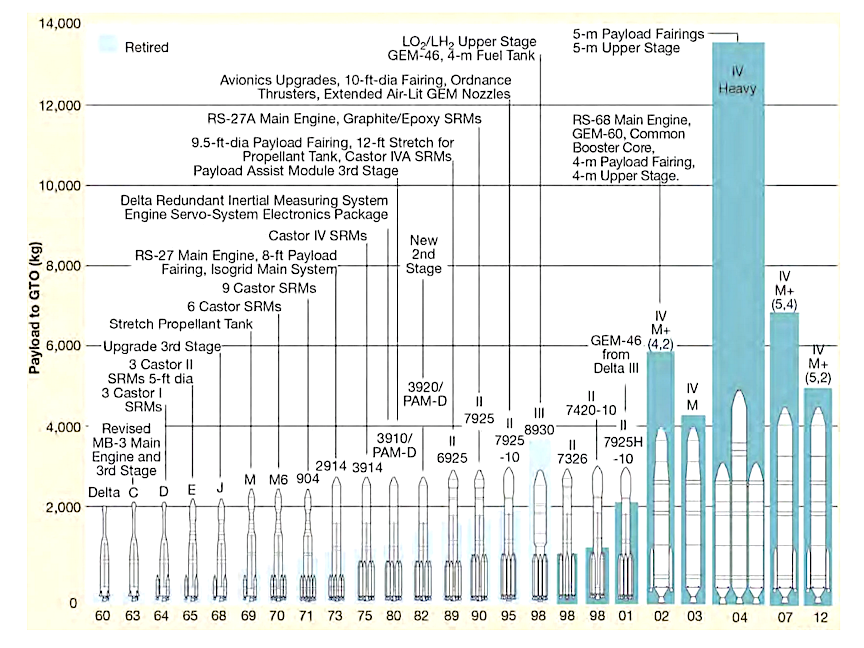
Delta rockets have grown from 90 feet (27.4 m) in height and a mass of 112,000 pounds (50,800 kg) in the early days to today’s towering Delta IV Heavy at 235 feet (71.6 m) tall and weighing 1.6 million pounds (725,750 kg) at launch. Liftoff thrust also increased dramatically from 150,000 pounds (667 kiloNewtons) in 1960 to 2.1 million pounds (9,341 kiloNewtons) today.
The introduction of the Delta II on Valentine’s Day 1989 began the Global Positioning System (GPS) era by creating the operational constellation of navigation satellites in space. GPS created a worldwide utility that today touches the lives of people around the globe. Delta II launched four dozen GPS satellites in 20 years of launches to assemble and maintain the network and Delta IV launched seven advanced models in later years.
The beloved Delta II earned its place in history with 155 flights including eight missions to Mars for NASA. The plucky Spirit and Opportunity rovers got their starts by launching to the Red Planet atop a Delta.
Delta II also extended scientific pursuits to the planet Mercury with NASA’s MESSENGER orbiter, to small worlds in our solar system like the NEAR-Shoemaker that landed on the tiny asteroid called Eros, the Dawn spacecraft that explored Vesta and Ceres and Deep Impact that smashed into comet Tempel 1 to study its interior. The twin STEREO probes observed the Sun, the Stardust and Genesis missions returned samples of comet dust and the solar wind to Earth, the Kepler observatory discovered exoplanets in the galaxy and the Spitzer Space Telescope used infrared vision to scan the universe.
The Delta program’s commitment to vehicle improvement to meet customer needs culminated in the Delta IV family of launch vehicles, with a wide range of increasing capability.
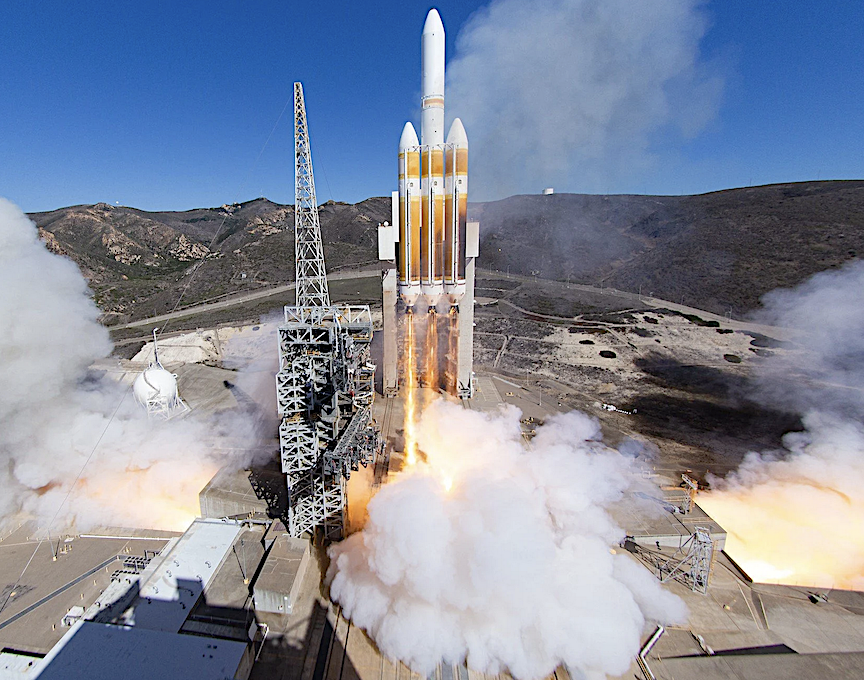
The Delta IV family of medium-to-heavy launch vehicles became operational in 2002. The first Delta IV launch, of Eutelsat’s W5 commercial satellite, took place on Nov. 20, 2002, and the first payload delivered for the U.S. Air Force’s Evolved Expendable Launch Vehicle (EELV) program was the DSCS A3 communications satellite on March 10, 2003. ULA successfully launched the first operational Delta IV Heavy on Nov. 10, 2007, carrying a Defense Support Program satellite.
The Delta IV is the final chapter of the Delta family’s success story. There have been 44 Delta IV launches thus far, all successful, for the Air Force, Space Force, National Reconnaissance Office, NASA and commercial customers. The triple-barreled Delta IV Heavy became America’s trusted heavy-lifter, launching NASA’s first Orion spacecraft on an uncrewed flight test and sent the Parker Solar Probe to surf the atmosphere of the Sun.
Countdown to launch as ULA Delta IV Heavy NROL-70 Mission readies
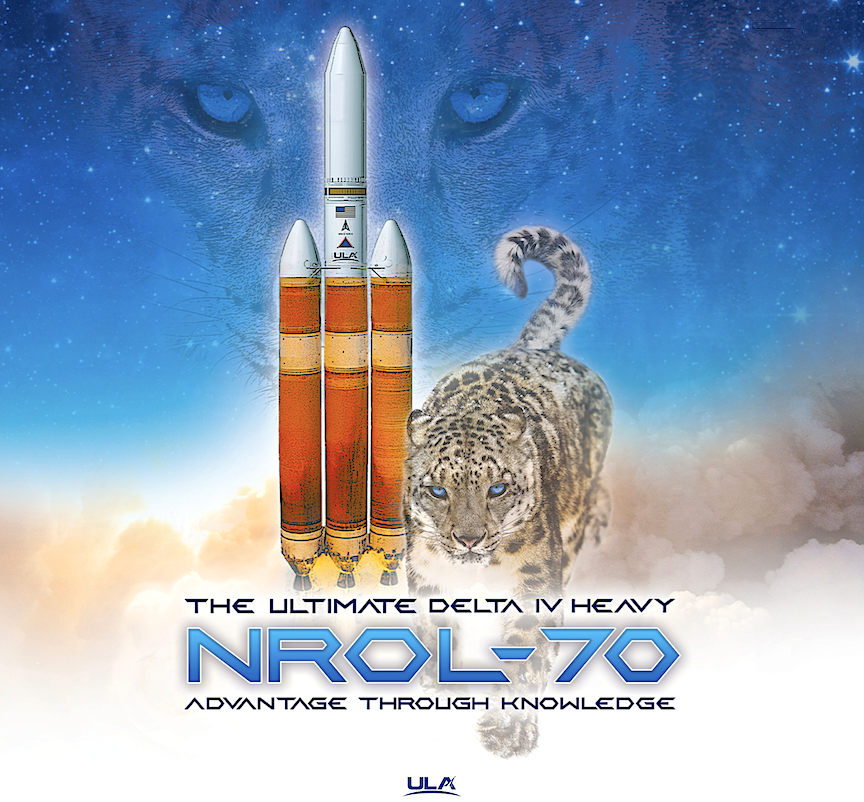
Everything continues to progress towards the ULA Delta IV Heavy launch carrying the NROL-70 mission for the National Reconnaissance Office. The mission is planned to lift off on Thursday, March 28 from Space Launch Complex-37 at Cape Canaveral Space Force Station in Florida. The launch is planned for 1:40 p.m. EDT. Today’s forecast shows a 30 percent chance of favorable weather conditions for launch.
Mission Overview
A United Launch Alliance (ULA) Delta IV Heavy rocket is launching the NROL-70 mission for the National Reconnaissance Office (NRO). Liftoff will occur from Space Launch Complex-37 at Cape Canaveral Space Force Station, Florida. This is the 16th and final launch of a Delta IV Heavy rocket.
The NRO develops and operates the world’s most capable and innovative overhead reconnaissance systems to collect intelligence for U.S. national security, and to support disaster relief and humanitarian efforts.
The NROL-70 mission will strengthen the NRO’s ability to provide a wide-range of timely intelligence information to national decision makers, warfighters, and intelligence analysts to protect the nation’s vital interests and support humanitarian efforts worldwide.
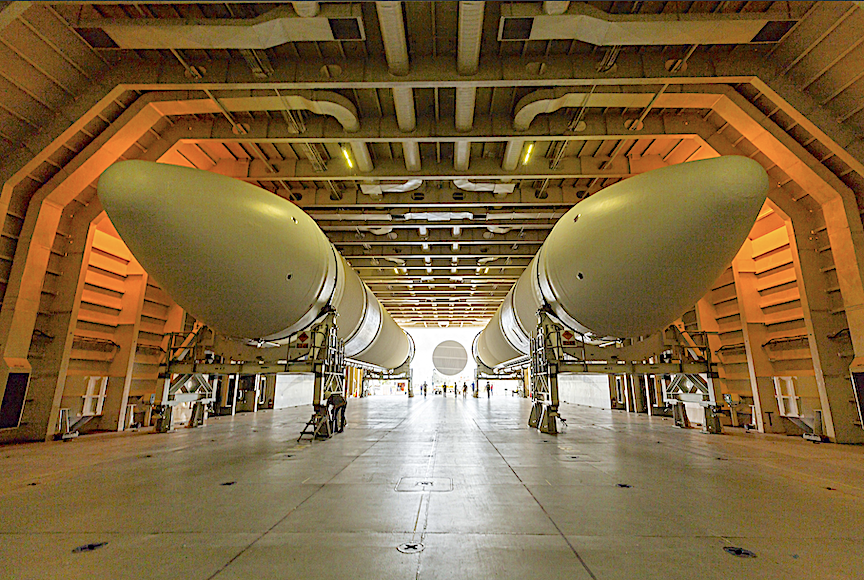
Stages of the United Launch Alliance (ULA) Delta IV Heavy rocket for NROL-70 are delivered by the R/S RocketShip from the factory to Cape Canaveral, Florida, and taken to the Horizontal Integration Facility (HIF) for pre-launch processing. Photo credit: United Launch Alliance
Launch Forecast Summary:
Overall probability of violating weather constraints: 70%
Primary concerns: Cumulus Cloud Rule, Disturbed Weather Rule, Ground Winds
Overall probability of violating weather constraints for 24-hour delay: 40%
Primary concern: Ground Winds
Launch Vehicle
Payload Fairing
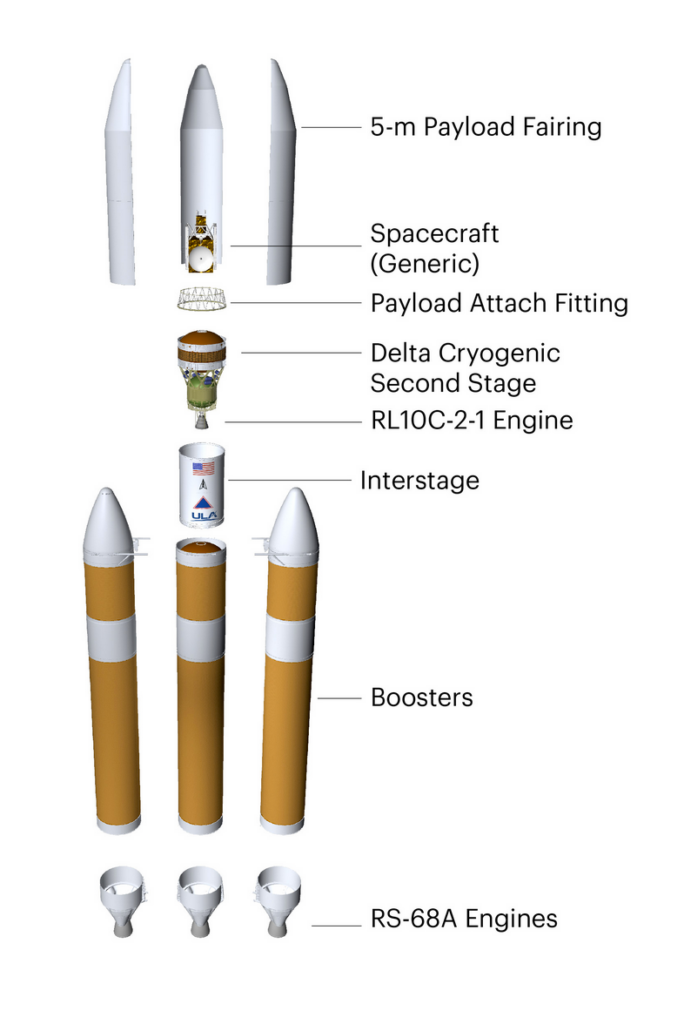
The payload fairing (PLF) is a metallic trisector (three-piece shell), 5-meter diameter fairing. The PLF encapsulates the spacecraft to protect it from the launch environment on ascent. The vehicle’s height, with the 65-ft (19.8-m) long PLF, is approximately 235 ft (71.6 m).
Delta Cryogenic Second Stage (DCSS)
The Delta Cryogenic Second Stage is a cryogenic liquid hydrogen/liquid oxygen-fueled vehicle, powered by a single RL10C-2-1 engine that produces 24,750 lbs (110.1 kilo-Newtons) of thrust. The DCSS propellant tanks are structurally rigid and constructed of formed aluminum plate, spun-formed aluminum domes and aluminum ring forgings. The tanks are insulated with a spray-on insulation and helium-purged insulation blankets. An equipment shelf attached to the aft dome of the DCSS liquid oxygen tank provides the structural mountings for vehicle electronics.
Booster
The three Delta IV Heavy common booster core (CBC) tanks are structurally rigid and constructed of isogrid aluminum barrels, spun-formed aluminum domes and machined aluminum tank skirts. Delta IV booster propulsion is provided by the throttleable RS-68A engine system which burns cryogenic liquid hydrogen and liquid oxygen, with each of the three booster engines delivering 705,250 lbs (312.3 kilo-Newtons) of thrust at sea level. The booster’s cryogenic tanks are insulated with a combination of spray-on and bond-on insulation and helium-purged insulation blankets. The booster is controlled by the DCSS avionics system, which provides guidance, flight control.
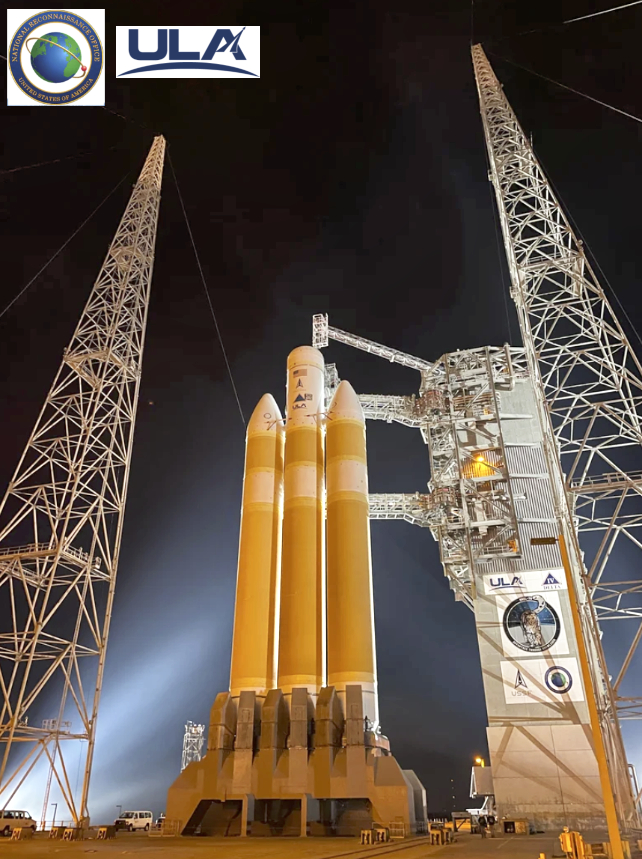
United Launch Alliance
The U.S. Space Force’s Space Systems Command (SSC), the National Reconnaissance Office (NRO), and United Launch Alliance (ULA) are preparing to launch the NROL-70 mission aboard the final Delta IV Heavy rocket no earlier than March 28th from Space Launch Complex (SLC)-37B at Cape Canaveral Space Force Station (CCSFS), Florida.
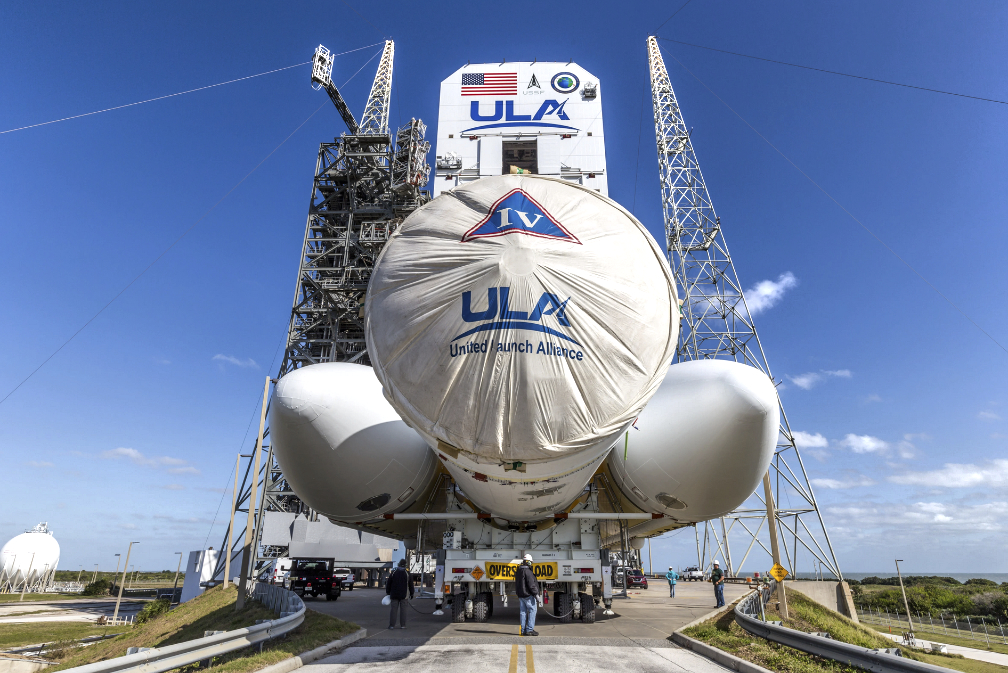
The Delta family of launch vehicles have launched numerous payloads including military, government, and commercial weather, communications, and science satellites, robotic probes for exploration, eight Mars rovers, and one telescope, all of which have significantly contributed to our national defense, and a better understanding of our planet, solar system, and universe.
With this final launch of a Delta IV Heavy, the U.S. Space Force is ending a long and successful era of Delta family of space launch vehicles as the combined ULA, NRO, and Space Force team transitions to the more flexible and efficient ULA Vulcan rocket. NROL-70 will be the first of two final USSF missions for the NSSL Atlas V and Delta IV team.
Assured Access to Space (AATS) is the program executive office within Space Systems Command that is responsible for delivering next-generation launch and on-orbit capabilities in support of the warfighter, combatant commands, intelligence agencies, civil services, allied nations, and the commercial space industry. AATS is also responsible for range sustainment programs supporting launch and test customers. Innovation focus areas include sub-orbital rapid strategic mobility, on-orbit servicing and maneuvering, mission lifecycle management and tactically responsive launch.
In addition to working closely with industry to develop the next generation of space access capabilities and key technologies, AATS is leading the way to develop, maintain, integrate, and implement space mobility plans, policy, requirements, and capabilities to rapidly launch, sustain and reconstitute U.S. Space Force space assets. AATS manages 10,000+ personnel across two services, nine operating locations, two space and launch ranges and three tracking sites, supporting 100+ mission partner organizations.
“Everything’s looking great and we’re on track to launch another vitally important national security capability into space. We’ve worked alongside ULA and in close coordination with our NRO partners to prepare this Delta IV Heavy, our last Delta ever, and in just a few days the team’s hard work will culminate in this highly anticipated and historic launch,” said Col. Jim Horne, senior materiel leader for SSC’s Launch Execution Delta. “These launches place critical capabilities into orbit for our nation and our allies in what are dynamic times for the space community. Every member of our launch team understands what’s at stake and works with care and efficiency to prepare for what’s going to be a tremendous launch.”
“I am very proud of the team’s dedication to our Delta and Atlas missions,” said Lt. Col. Alexander Jehle, SSC’s Atlas V/Delta IV Materiel Leader. “We are laser focused on ensuring a successful launch of the last Delta and last Atlas launches for National Security this year.”
Space Systems Command is the U.S. Space Force’s field command responsible for acquiring, developing, and delivering resilient capabilities to protect our nation’s strategic advantage in, from, and to space. SSC manages a $15.6 billion space acquisition budget for the Department of Defense and works in partnership with joint forces, industry, government agencies, academic and allied organizations to outpace emerging threats. Our actions today are making the world a better space for tomorrow.
The launch may be watched at this link
