

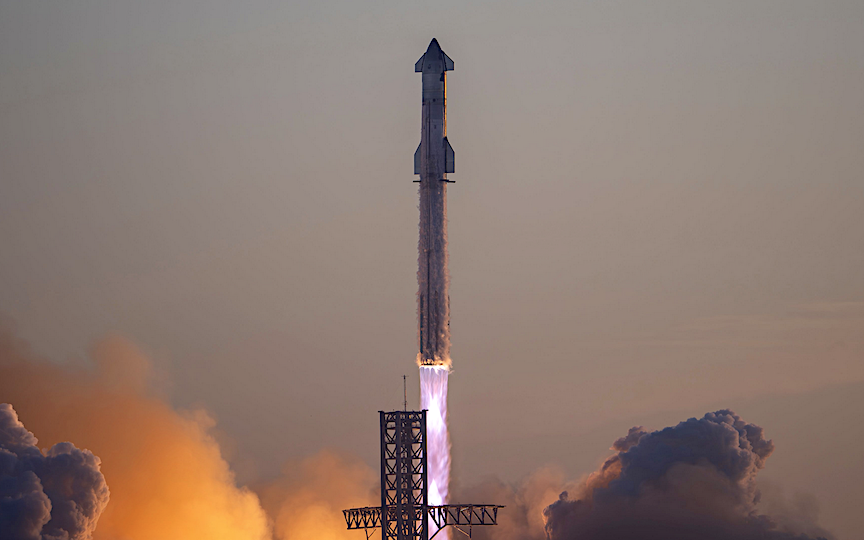
The third flight test of Starship could launch as soon as March 14, pending regulatory approval.
A live webcast of the flight test will begin about 30 minutes before liftoff, As is the case with all developmental testing, the schedule is dynamic and likely to change, so be sure to stay tuned to SpaceX’s X account for updates.
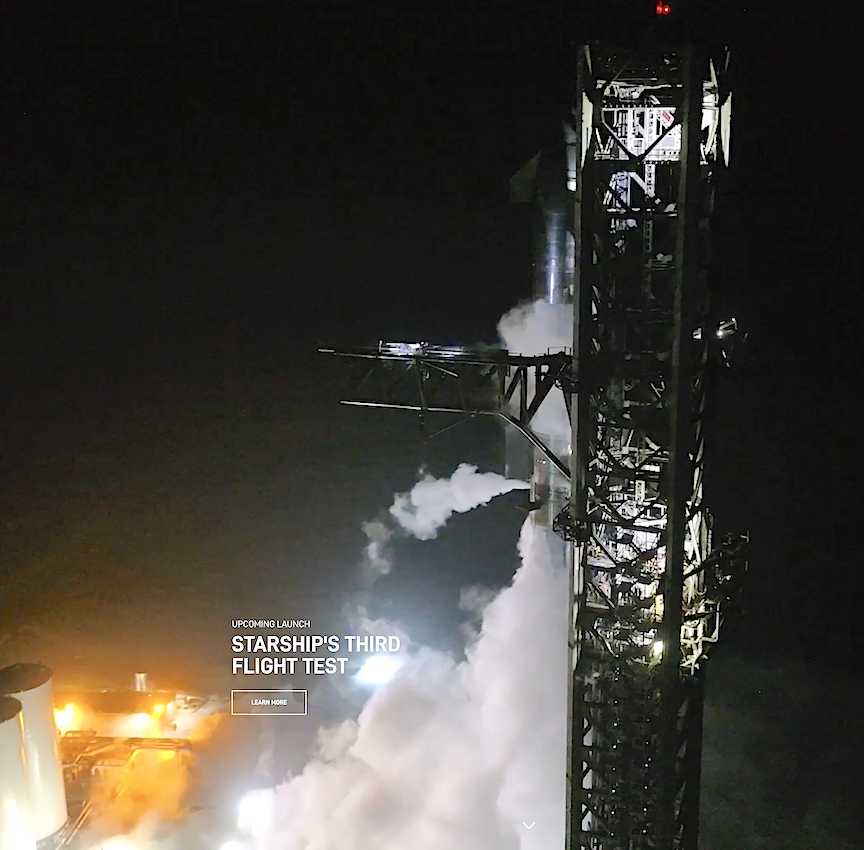
Starship’s second flight test achieved a number of major milestones and provided invaluable data to continue rapidly developing Starship. Each of these flight tests continue to be just that: a test. They aren’t occurring in a lab or on a test stand, but are putting flight hardware in a flight environment to maximize learning.
The third flight test aims to build on what we’ve learned from previous flights while attempting a number of ambitious objectives, including the successful ascent burn of both stages, opening and closing Starship’s payload door, a propellant transfer demonstration during the upper stage’s coast phase, the first ever re-light of a Raptor engine while in space, and a controlled reentry of Starship. It will also fly a new trajectory, with Starship targeted to splashdown in the Indian Ocean. This new flight path enables us to attempt new techniques like in-space engine burns while maximizing public safety.
This rapid iterative development approach has been the basis for all of SpaceX’s major innovative advancements, including Falcon, Dragon, and Starlink. Recursive improvement is essential as we work to build a fully reusable transportation system capable of carrying both crew and cargo to Earth orbit, help humanity return to the Moon, and ultimately travel to Mars and beyond.
The company recently performed a critical fueling test on March at its Starbase facility near Boca Chica, Texas. During the test, over 10 million pounds of liquid methane and liquid oxygen were pumped into the rocket.
Starship consists of two parts: The stainless-steel reusable upper stage known also as Starship, and its Super Heavy first-stage booster. Together, the two stand over 400 feet tall (122 meters).
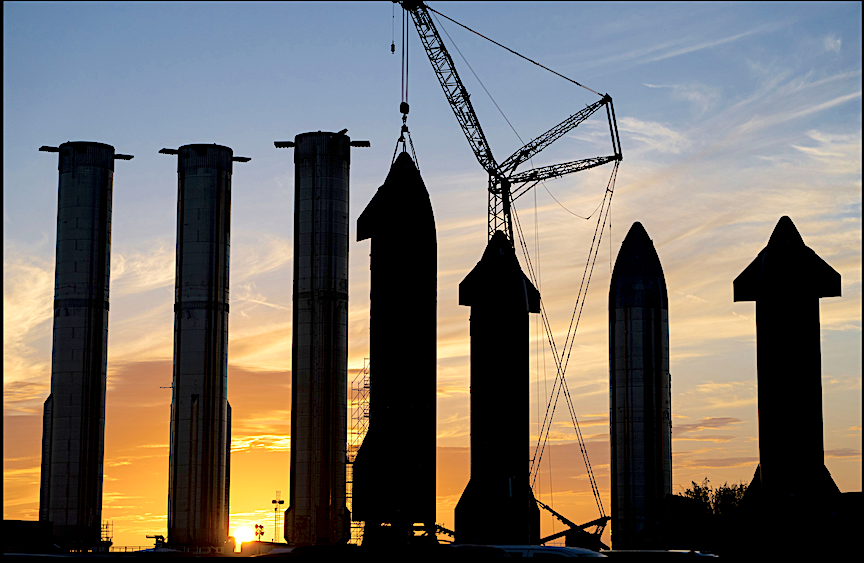
SpaceX’s documentation of the journey of Starship 1 and 2
September 8, 2023 — The second flight test of Starship and Super Heavy achieved a number of important milestones as we continue to advance the capabilities of the most powerful launch system ever developed.
On November 18, 2023, Starship successfully lifted off at 7:02 a.m. CT from Starbase in Texas. All 33 Raptor engines on the Super Heavy Booster started up successfully and, for the first time, completed a full-duration burn during ascent. Starship then executed a successful hot-stage separation, the first time this technique has been done successfully with a vehicle of this size.
Following stage separation, Super Heavy initiated its boostback burn, which sends commands to 13 of the vehicle’s 33 Raptor engines to propel the rocket toward its intended landing location. During this burn, several engines began shutting down before one engine failed energetically, quickly cascading to a rapid unscheduled disassembly (RUD) of the booster. The vehicle breakup occurred more than three and a half minutes into the flight at an altitude of ~90 km over the Gulf of Mexico.
The most likely root cause for the booster RUD was determined to be filter blockage where liquid oxygen is supplied to the engines, leading to a loss of inlet pressure in engine oxidizer turbopumps that eventually resulted in one engine failing in a way that resulted in loss of the vehicle. SpaceX has since implemented hardware changes inside future booster oxidizer tanks to improve propellant filtration capabilities and refined operations to increase reliability.
At vehicle separation, Starship’s upper stage successfully lit all six Raptor engines and flew a normal ascent until approximately seven minutes into the flight, when a planned vent of excess liquid oxygen propellant began. Additional propellant had been loaded on the spacecraft before launch in order to gather data representative of future payload deploy missions and needed to be disposed of prior to reentry to meet required propellant mass targets at splashdown.
A leak in the aft section of the spacecraft that developed when the liquid oxygen vent was initiated resulted in a combustion event and subsequent fires that led to a loss of communication between the spacecraft’s flight computers. This resulted in a commanded shut down of all six engines prior to completion of the ascent burn, followed by the Autonomous Flight Safety System detecting a mission rule violation and activating the flight termination system, leading to vehicle breakup. The flight test’s conclusion came when the spacecraft was as at an altitude of ~150 km and a velocity of ~24,000 km/h, becoming the first Starship to reach outer space.
SpaceX has implemented hardware changes on upcoming Starship vehicles to improve leak reduction, fire protection, and refined operations associated with the propellant vent to increase reliability. The previously planned move from a hydraulic steering system for the vehicle’s Raptor engines to an entirely electric system also removes potential sources of flammability.
The water-cooled flame deflector and other pad upgrades made after Starship’s first flight test performed as expected, requiring minimal post-launch work to be ready for vehicle tests and the next integrated flight test.
Following the flight test, SpaceX led the investigation efforts with oversight from the FAA and participation from NASA, and the National Transportation Safety Board.
Upgrades derived from the flight test will debut on the next Starship and Super Heavy vehicles to launch from Starbase on Flight 3. SpaceX is also implementing planned performance upgrades, including the debut of a new electronic Thrust Vector Control system for Starship’s upper stage Raptor engines and improving the speed of propellant loading operations prior to launch.
More Starships are ready to fly, putting flight hardware in a flight environment to learn as quickly as possible. Recursive improvement is essential as we work to build a fully reusable launch system capable of carrying satellites, payloads, crew, and cargo to a variety of orbits and Earth, lunar, or Martian landing sites.
The first flight test of a fully integrated Starship and Super Heavy was a critical step in advancing the capabilities of the most powerful launch system ever developed. Starship’s first flight test provided numerous lessons learned that are directly contributing to several upgrades being made to both the vehicle and ground infrastructure to improve the probability of success on future Starship flights. This rapid iterative development approach has been the basis for all of SpaceX’s major innovative advancements, including Falcon, Dragon, and Starlink. SpaceX has led the investigation efforts following the flight with oversight from the FAA and participation from NASA and the National Transportation Safety Board.
Starship and Super Heavy successfully lifted off for the first time on April 20, 2023 at 8:33 a.m. CT (13:33:09 UTC) from the orbital launch pad at Starbase in Texas. Starship climbed to a maximum altitude of ~39 km (24 mi) over the Gulf of Mexico.
During ascent, the vehicle sustained fires from leaking propellant in the aft end of the Super Heavy booster, which eventually severed connection with the vehicle’s primary flight computer. This led to a loss of communications to the majority of booster engines and, ultimately, control of the vehicle. SpaceX has since implemented leak mitigations and improved testing on both engine and booster hardware. As an additional corrective action, SpaceX has significantly expanded Super Heavy’s pre-existing fire suppression system in order to mitigate against future engine bay fires.
The Autonomous Flight Safety System (AFSS) automatically issued a destruct command, which fired all detonators as expected, after the vehicle deviated from the expected trajectory, lost altitude and began to tumble. After an unexpected delay following AFSS activation, Starship ultimately broke up 237.474 seconds after engine ignition. SpaceX has enhanced and requalified the AFSS to improve system reliability.
SpaceX is also implementing a full suite of system performance upgrades unrelated to any issues observed during the first flight test. For example, SpaceX has built and tested a hot-stage separation system, in which Starship’s second stage engines will ignite to push the ship away from the booster. Additionally, SpaceX has engineered a new electronic Thrust Vector Control (TVC) system for Super Heavy Raptor engines. Using fully electric motors, the new system has fewer potential points of failure and is significantly more energy efficient than traditional hydraulic systems.
SpaceX also made significant upgrades to the orbital launch mount and pad system in order to prevent a recurrence of the pad foundation failure observed during the first flight test. These upgrades include significant reinforcements to the pad foundation and the addition of a flame deflector, which SpaceX has successfully tested multiple times.
Testing development flight hardware in a flight environment is what enables our teams to quickly learn and execute design changes and hardware upgrades to improve the probability of success in the future. We learned a tremendous amount about the vehicle and ground systems during Starship’s first flight test. Recursive improvement is essential as we work to build a fully reusable launch system capable of carrying satellites, payloads, crew, and cargo to a variety of orbits and Earth, lunar, or Martian landing sites.
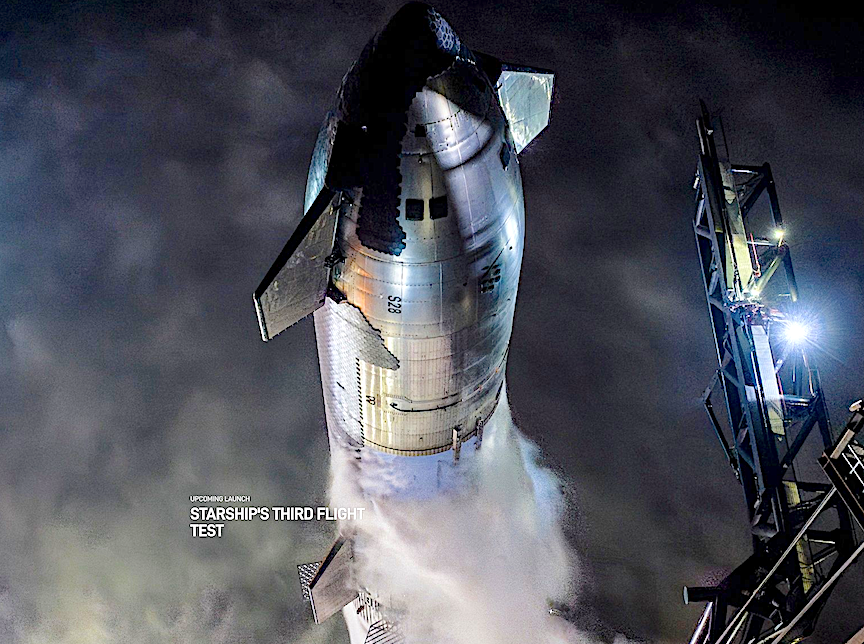
SpaceX’s third flight test of Starship could launch as soon as March 14, pending regulatory approval.
A live webcast of the flight test will begin about 30 minutes before liftoff, which can be viewed on X @SpaceX. As is the case with all developmental testing, the schedule is dynamic and likely to change, X account will provide updates.
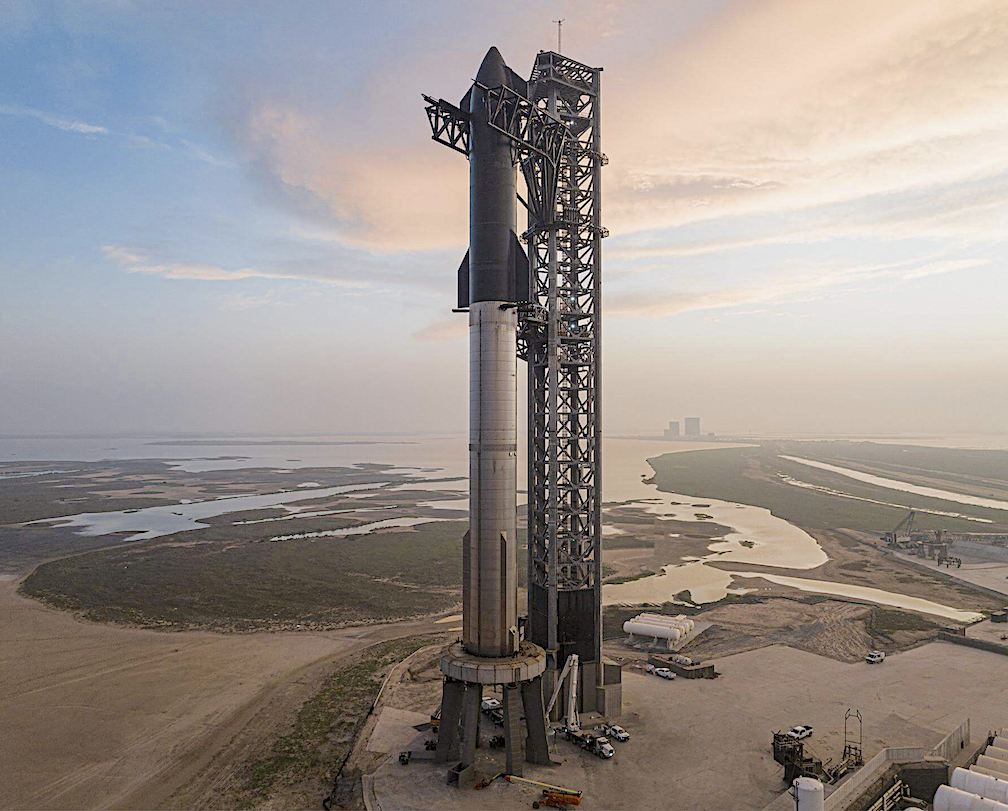
Fully reusable two-stage super heavy-lift launch vehicle.
Starship’s second flight test achieved a number of major milestones and provided invaluable data to continue rapidly developing Starship. Each of these flight tests continue to be just that: a test. They aren’t occurring in a lab or on a test stand, but are putting flight hardware in a flight environment to maximize learning. A SpaceX Super Heavy Starship cost $90 million to build in 2024.
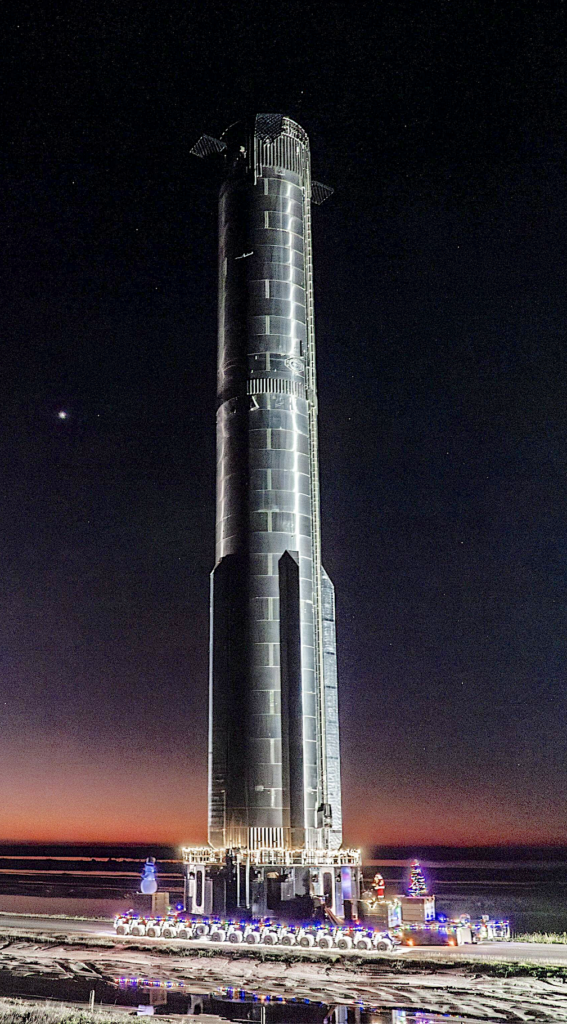
The third flight test aims to build on what has been learned from previous flights while attempting a number of ambitious objectives, including the successful ascent burn of both stages, opening and closing Starship’s payload door, a propellant transfer demonstration during the upper stage’s coast phase, the first ever re-light of a Raptor engine while in space, and a controlled reentry of Starship.
It will also fly a new trajectory, with Starship targeted to splashdown in the Indian Ocean. This new flight path enables SpaceX to attempt new techniques such as in-space engine burns while maximizing public safety.
This rapid iterative development approach has been the basis for all of SpaceX’s major innovative advancements, including Falcon, Dragon, and Starlink. Recursive improvement is essential as we work to build a fully reusable transportation system capable of carrying both crew and cargo to Earth orbit, help humanity return to the Moon, and ultimately travel to Mars and beyond.
