

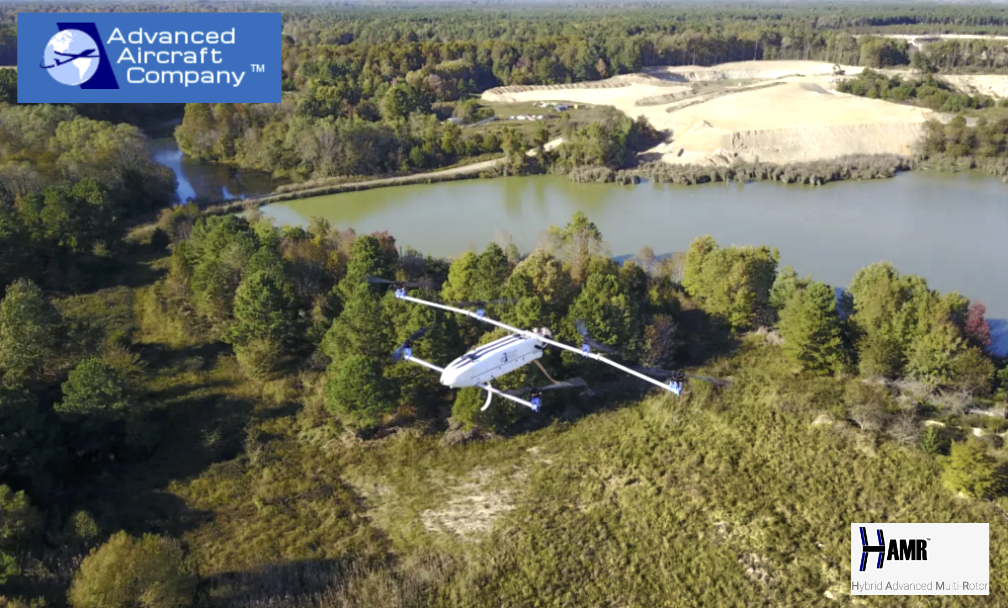
Advanced Aircraft Company has been selected by AFRL and AFWERX for a Direct-to-Phase II contract in the amount of $1.25 million to focus on the company’s Hybrid Advanced Multirotor Unmanned Aircraft System (HAMR) to address Department of the Air Force operational strategies.

AAC is developing HAMR to support the USAF Agile Combat Employment concept of operations, an operational approach that combines proactive and reactive strategies that are executed within defined threat timelines to ensure that Airmen are well-prepared for potential contingencies from a range of locations, each with varying levels of capacity and support.
The HAMR UAV can be optimized for various defense applications and mission profiles, including long-endurance, tactical ISR, perimeter security, search and rescue, and medical supply delivery missions. HAMR UAS also serves as a force multiplier, significantly increasing ISR capabilities relative to the Department of Defense (DoD) incumbent, tactical ISR UAS to better protect our warfighters.
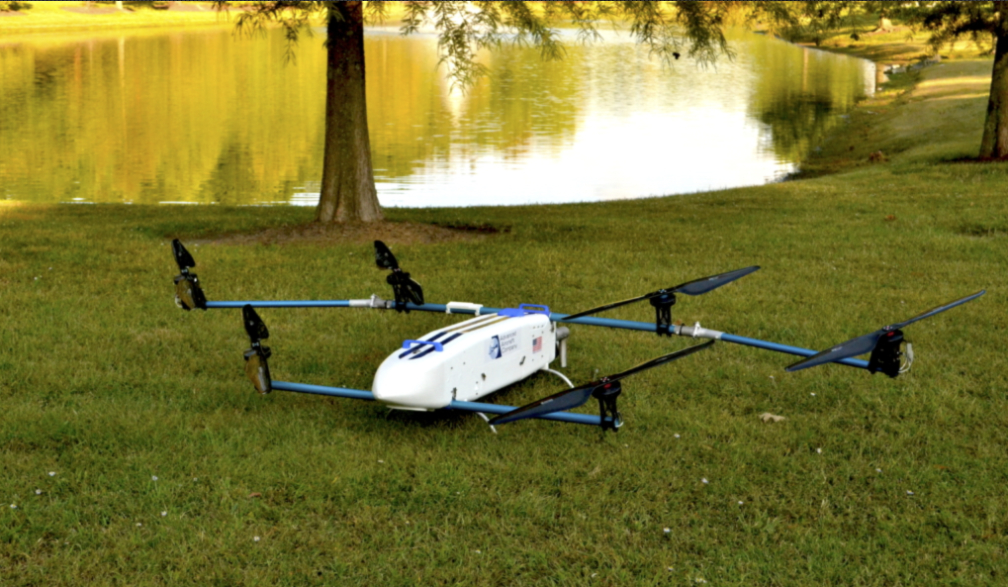
This UAS uses a distributed electric propulsion system that incorporates an electronic, fuel-injected and computer-controlled piston engine that drives an integrated generator that produces as much as 4000W to power six, independent, brushless, DC electric motors as well as a backup battery.
Bridging the gap between today’s Group 1 and Group 2 UAS capabilities, HAMR features a flight endurance of up to 3.5 hours. That is six times longer than a conventional, battery-powered, multirotor aircraft. Multiple redundant systems, remote in-flight engine starting and onboard batteries ensure the aircraft is able to operate with a high margin of safety. In the event of an engine or electric motor failure, the craft can abort, maneuver away, and land safely without further incident. Additionally, an IP rating of 65 (IP65) ensures safe and reliable operation in challenging environments, including dusty and rainy conditions.
The aircraft employs line replaceable units (LRUs) for rapid, in-the-field servicing, with minimal training and minimal operational downtime, with new technologies integrated into the vehicle over time.
HAMR can carry 12 pounds of payload and features dual payload bays that offer versatile capabilities, such as accommodating multiple sensor payloads, increasing fuel capacity, or carrying air-droppable cargo. HAMR employs an open modular architecture, enabling operators to easily reconfigure the payload bays for specific application and mission requirements.
HAMR’s forward payload bay can integrate various standard Group 2 payloads suitable for defense applications, including electro-optical (EO) and infrared (IR) systems. The center payload bay can be configured with LIDAR, GPS-denied navigation, and communications systems. For extended-duration missions, there is the option to equip the bay with an additional fuel bladder, or two 2U SOCOM MOD, double-stacked, SIGINT payloads and the center payload bay can facilitate cargo delivery operations, facilitating UAS support for a broad range of tasks.
Additionally, the HAMR is highly portable and can be launched within minutes without needing ground support infrastructure. The aircraft can be disassembled, stored in a single case and easily transported in a conventional, small civilian or military vehicle.
“We are excited to continue the development and testing of HAMR with the support of the AFWERX program,” said Paul Allen, Chief Executive Officer of AAC. “This Direct-to-Phase II contract takes us one step further to providing our warfighters with an efficient and rugged uncrewed aircraft capable of conducting military support operations in austere environments. The Pivot to the Pacific is a massive focus for the US Department of Defense and we are proud to help our great nation in this endeavor.”
