

• Skip to primary navigation
  • Skip to main content
  • Skip to primary sidebar
  • Skip to secondary sidebar
  • Skip to footer
  • NEWS:
  • SatNews
  • SatMagazine
  • MilSatMagazine
  • SmallSat News
  • |     EVENTS:
  • SmallSat Symposium
  • Satellite Innovation
  • MilSat Symposium
  • SmallSat Europe

SatNews

Satellite Industry Intelligence Since 1983

Subscribe
  • LATEST
  • SatNews Events
  • Magazines
  • Calendar
  • Subscribe
  • Missions & Constellations
    • Exploration & Science Missions
    • In-Orbit Servicing & Orbital Operations
    • LEO Constellations
    • Mission Autonomy & Onboard Systems
    • Mission Deployments & Manifests
    • Navigation & PNT
    • SmallSat
    • Spacecraft & Payload Technology
    View All in Missions & Constellations →
    Viasat Completes ViaSat-3 Constellation with Successful Flight 3 LaunchViasat Completes ViaSat-3 Constellation with Successful Flight 3 Launch
    GMV to Lead Mission Planning for ESA’s Next-Generation Copernicus ExpansionGMV to Lead Mission Planning for ESA’s Next-Generation Copernicus Expansion
    Canada Tightens Re-entry Regulations as SpaceX Starlink Constellations DescendCanada Tightens Re-entry Regulations as SpaceX Starlink Constellations Descend
    The waiver was the policy. Thursday is the paperwork.The waiver was the policy. Thursday is the paperwork.
  • Business
    • Contracts & Commercial Deals
    • Earnings & Financial Reporting
    • Events & Conferences
    • Funding & Venture Capital
    • Market Forecasts
    • Mergers & Acquisitions
    • Personnel Moves & Appointments
    View All in Business & Finance →
    SmallSat Europe Speaker Focus: Koen Willems, ST Engineering iDirect EuropeSmallSat Europe Speaker Focus: Koen Willems, ST Engineering iDirect Europe
    U.S. Commercial Service to Host “Future in Orbit” Networking Event at SpaceBR 2026U.S. Commercial Service to Host “Future in Orbit” Networking Event at SpaceBR 2026
    SmallSat Europe Speaker Focus: Dr. Jakob Stöber, McKinsey & CompanySmallSat Europe Speaker Focus: Dr. Jakob Stöber, McKinsey & Company
    Bright Ascension Finalizes Leadership Transition with John Baughn as CEOBright Ascension Finalizes Leadership Transition with John Baughn as CEO
  • Defense
    • Counterspace & ASAT
    • Defense Budgets & Procurement
    • ISR & Reconnaissance
    • MILSATCOM
    • Missile Warning & Defense
    • National Security Programs
    • Space Domain Awareness
    View All in Military & Defense →
    BAE Systems Enters Production for NavGuide M-Code GPS ReceiverBAE Systems Enters Production for NavGuide M-Code GPS Receiver
    Space Force Awards $3.2 Billion in Golden Dome Contracts for Orbital Interceptor ConstellationSpace Force Awards $3.2 Billion in Golden Dome Contracts for Orbital Interceptor Constellation
    USSF Finalizes GPS III Constellation with Successful SV-10 DeploymentUSSF Finalizes GPS III Constellation with Successful SV-10 Deployment
    Meink: Space Force Programs Ready to Execute Once FY27 Budget LandsMeink: Space Force Programs Ready to Execute Once FY27 Budget Lands
  • Gov
    • Export Controls & Compliance
    • International Space Agreements
    • National Space Policy
    • Space Law & Treaties
    • Space Sustainability & Debris Policy
    • Space Traffic Management / Debris Removal
    View All in Government & Regulation →
    SmallSat Europe Speaker Focus: Tanja Masson-Zwaan, Leiden UniversitySmallSat Europe Speaker Focus: Tanja Masson-Zwaan, Leiden University
    How CubeSat Proliferation is Redefining Sovereignty and Diplomatic Leverage at the United NationsHow CubeSat Proliferation is Redefining Sovereignty and Diplomatic Leverage at the United Nations
    FCC Modernization of Spectrum Rules Unlocks Sevenfold Gain in Satellite CapacityFCC Modernization of Spectrum Rules Unlocks Sevenfold Gain in Satellite Capacity
    The Smartest Money in the Room Is Looking UpThe Smartest Money in the Room Is Looking Up
  • Launch
    • Launch Providers
    • Launch Schedule & Calendars
    • Launch Sites & Infrastructure
    • Rocket Technology & Vehicles
    View All in Launch →
    FAA Grounds Blue Origin Following New Glenn Upper Stage Failure and Facility AnomalyFAA Grounds Blue Origin Following New Glenn Upper Stage Failure and Facility Anomaly
    NanoAvionics to Launch Trio of Milestone Payloads on SpaceX CAS500-2 MissionNanoAvionics to Launch Trio of Milestone Payloads on SpaceX CAS500-2 Mission
    Astrobotic Achieves Record 300-Second Burn with New Detonation EngineAstrobotic Achieves Record 300-Second Burn with New Detonation Engine
    Bad news, but good news followedBad news, but good news followed
  • Software
    • Autonomous Ground Operations
    • Data Processing & AI/ML
    • Digital Twins & Modeling
    • Ground Segment & Teleports
    • Mission Planning & Simulation
    • Space Systems Software Engineering
    • Spectrum & Licensing
    View All in Software Automation & Ground Systems →
    Global Invacom Secures Exclusive Worldwide Distribution for Prodelin Antenna RangeGlobal Invacom Secures Exclusive Worldwide Distribution for Prodelin Antenna Range
    SmallSat Europe Speaker Focus: Giovanni Pandolfi Bortoletto, Leaf SpaceSmallSat Europe Speaker Focus: Giovanni Pandolfi Bortoletto, Leaf Space
    SpinLaunch Selects Equinix to Deploy Global Ground Infrastructure for Meridian Space ConstellationSpinLaunch Selects Equinix to Deploy Global Ground Infrastructure for Meridian Space Constellation
    RF-Design Launches FiberLink CompactLine FCLR1811S4 for Ground Segment OptimizationRF-Design Launches FiberLink CompactLine FCLR1811S4 for Ground Segment Optimization
  • Services & Apps
    • Climate & Environmental Monitoring
    • Disaster Response & Security Mapping
    • Earth Observation & Imaging
    • Maritime & Aviation Satcom
    • Satellite Communications
    View All in Services & Applications →
    Solstar Confirms Successful On-Orbit Operation of Deke Space Communicator Following Launch on SpaceX Transporter-16 MissionSolstar Confirms Successful On-Orbit Operation of Deke Space Communicator Following Launch on SpaceX Transporter-16 Mission
    IEC Telecom Unveils Voucher-Based Connectivity Solution at Singapore Maritime Week 2026IEC Telecom Unveils Voucher-Based Connectivity Solution at Singapore Maritime Week 2026
    GomSpace and STETMAN Establish UASAT Joint Venture for Ukrainian Sovereign CommunicationsGomSpace and STETMAN Establish UASAT Joint Venture for Ukrainian Sovereign Communications
    Market Dynamics and Non-Terrestrial Network (NTN) ChipsetsMarket Dynamics and Non-Terrestrial Network (NTN) Chipsets

STARSHIP UPDATE #2: Starship’s second launch a success using helpful data from first launch

November 18, 2023

UPDATE #2: “We have liftoff,” as Starship returned to integrated flight testing with it’s second launch from Starbase in Texas. While it didn’t happen in a lab or on a test stand, it was absolutely a test. What we did will provide invaluable data to continue rapidly developing Starship.
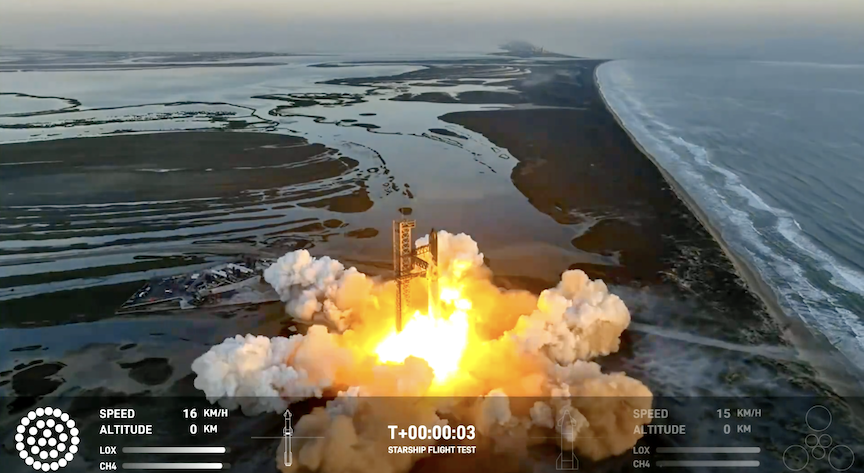
During this morning’s preparation to the launch the on air hosts at SpaceX informed us that helpful data learned after the first launch resulted in modifications such as design changes and ultimately hardware changes. The delay yesterday was to replace a grid fin actuator on the launch stack, and then it was decided to also replace two other actuators as a precaution.
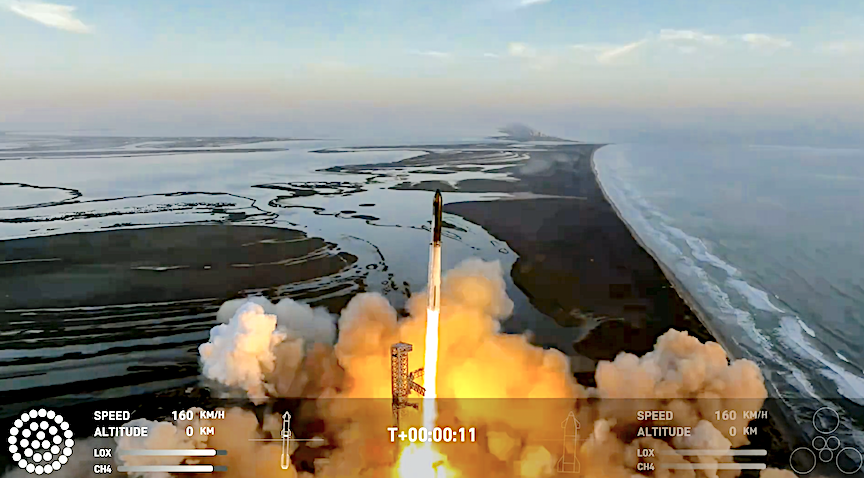
Starship successfully lifted off under the power of all 33 Raptor engines on the Super Heavy Booster and made it through a successful stage separation. The booster experienced a rapid unscheduled disassembly after stage separation and boostback burn while Starship’s engines fired for several minutes on its way to space.

With a test like this, success comes from what we learn, and today’s test will help us improve Starship’s reliability as SpaceX seeks to make life multiplanetary.
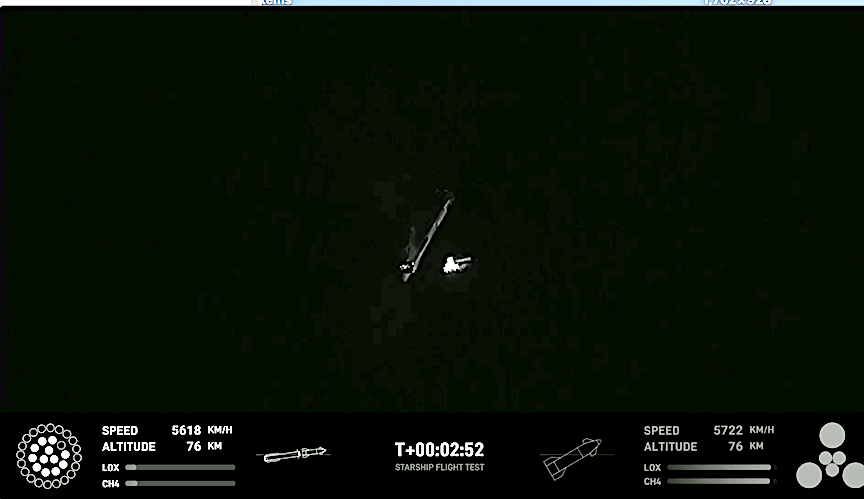
Cheers heard all around with today’s successful stage separation!
“Starship successfully lifted off under the power of all 33 Raptor engines on the Super Heavy Booster and made it through a successful stage separation.”

We’ll continue to share updates here as the team reviews data from today’s test. Thank you to our customers, Cameron County, and the wider community for the continued support and encouragement. And congratulations to the entire SpaceX team on an exciting second flight test of Starship!

UPDATE #1: The second flight test of a fully integrated was originally set for November 17, but SpaceX delayed it by 24 hours to replace a grid fin actuator on the launch stack. The launch is currently scheduled to occur from the company’s Starbase site near Boca Chica, Texas.

SpaceX launched its first Starship on April 20, but the rocket was intentionally exploded after its stages failed to separate as planned. The 33 engines of the Super Heavy first stage carved a huge crater beneath its launch mount, which SpaceX spent months repairing and upgrading. 
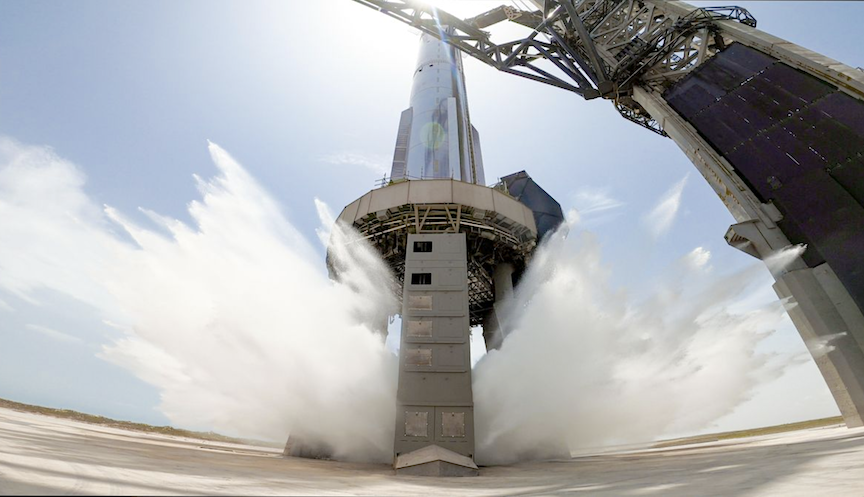
SpaceX has since installed a water deluge system beneath the launch pad to avoid creating another crater on this launch. Additionally there is now a hot-staging technique for stage separation, in which the upper Starship stage begins firing its engines before separating from the Super Heavy.

“This is another chance to put Starship in a true flight environment, maximizing how much we learn,” SpaceX wrote in a November 16 update on X, formerly known as Twitter. “This is another chance to put Starship in a true flight environment, maximizing how much we learn. Rapid iterative development is essential as we work to build a fully reusable launch system capable of carrying satellites, payloads, crew, and cargo to a variety of orbits and Earth, lunar, and Martian landing sites.”
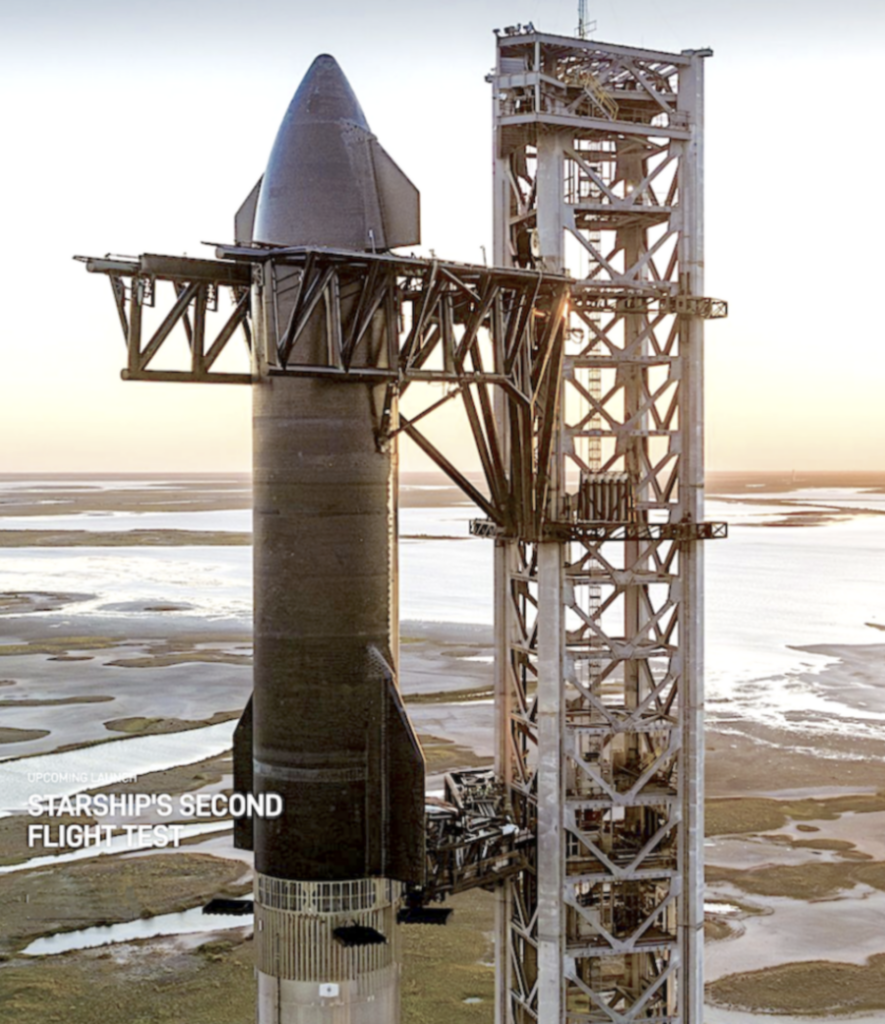
The second flight test of a fully integrated Starship is set to launch Friday, November 17. A two-hour launch window opens at 7:00 a.m. CT.

A live webcast of the flight test will begin about 35 minutes before liftoff, which you can watch on X @SpaceX. Be aware of possible updates as is the case with all developmental testing, the schedule is dynamic and likely to change.

As the most powerful launch system ever developed, Starship will be able to carry up to 100 people on long-duration, interplanetary flights. Starship will also help enable satellite delivery, the development of a Moon base, and point-to-point transport on Earth.
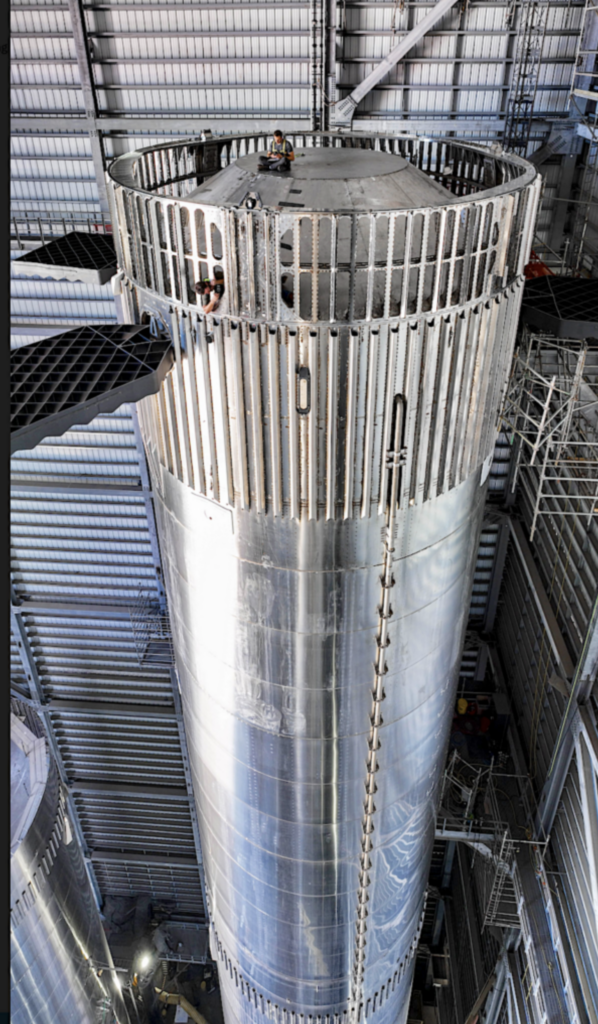
Hot-stage separation system

Starship’s first flight test provided numerous lessons learned that directly contributed to several upgrades to both the vehicle and ground infrastructure to improve the probability of success on future flights. The second flight test will debut a hot-stage separation system and a new electronic Thrust Vector Control (TVC) system for Super Heavy Raptor engines, in addition to reinforcements to the pad foundation and a water-cooled steel flame deflector, among many other enhancements.

UPGRADES AHEAD OF STARSHIP’S SECOND FLIGHT TEST

The first flight test of a fully integrated Starship and Super Heavy was a critical step in advancing the capabilities of the most powerful launch system ever developed. Starship’s first flight test provided numerous lessons learned that are directly contributing to several upgrades being made to both the vehicle and ground infrastructure to improve the probability of success on future Starship flights. This rapid iterative development approach has been the basis for all of SpaceX’s major innovative advancements, including Falcon, Dragon, and Starlink. SpaceX has led the investigation efforts following the flight with oversight from the FAA and participation from NASA and the National Transportation and Safety Board.
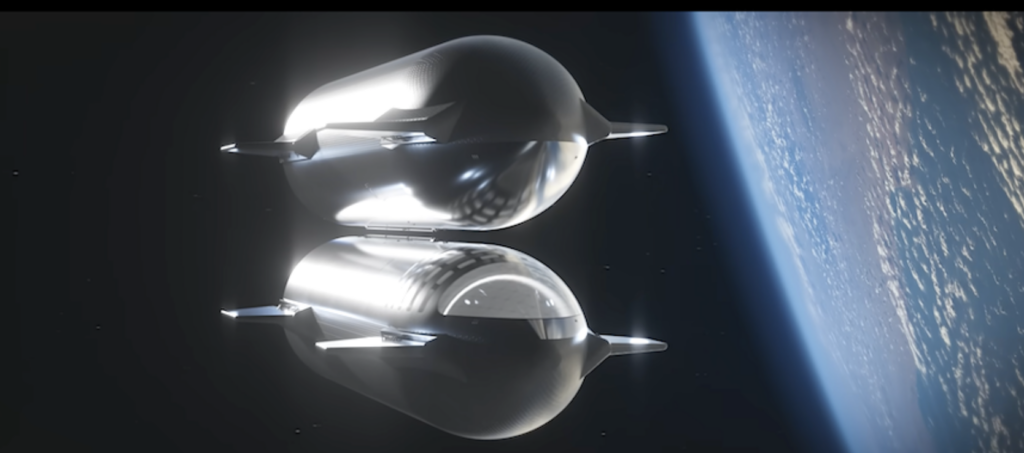
Starship and Super Heavy successfully lifted off for the first time on April 20, 2023 at 8:33 a.m. CT (13:33:09 UTC) from the orbital launch pad at Starbase in Texas. Starship climbed to a maximum altitude of ~39 km (24 mi) over the Gulf of Mexico. During ascent, the vehicle sustained fires from leaking propellant in the aft end of the Super Heavy booster, which eventually severed connection with the vehicle’s primary flight computer. This led to a loss of communications to the majority of booster engines and, ultimately, control of the vehicle. SpaceX has since implemented leak mitigations and improved testing on both engine and booster hardware. As an additional corrective action, SpaceX has significantly expanded Super Heavy’s pre-existing fire suppression system in order to mitigate against future engine bay fires.
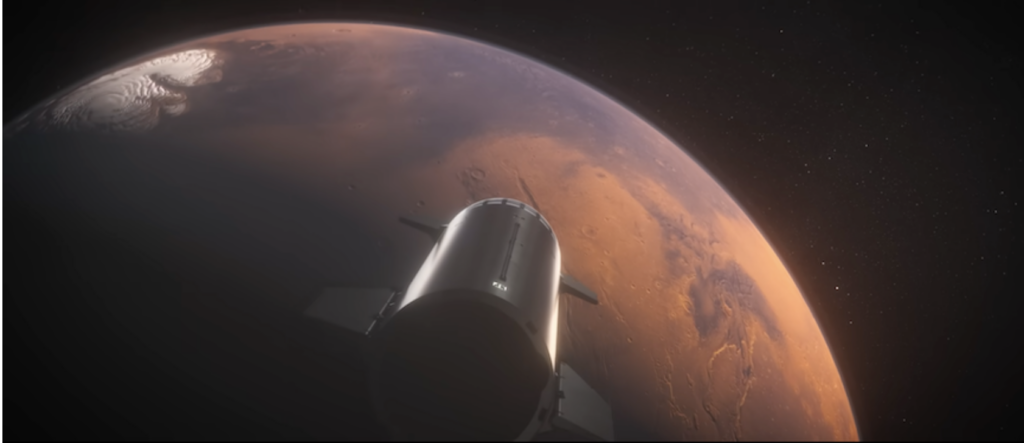
The Autonomous Flight Safety System (AFSS) automatically issued a destruct command, which fired all detonators as expected, after the vehicle deviated from the expected trajectory, lost altitude and began to tumble. After an unexpected delay following AFSS activation, Starship ultimately broke up 237.474 seconds after engine ignition. SpaceX has enhanced and requalified the AFSS to improve system reliability.
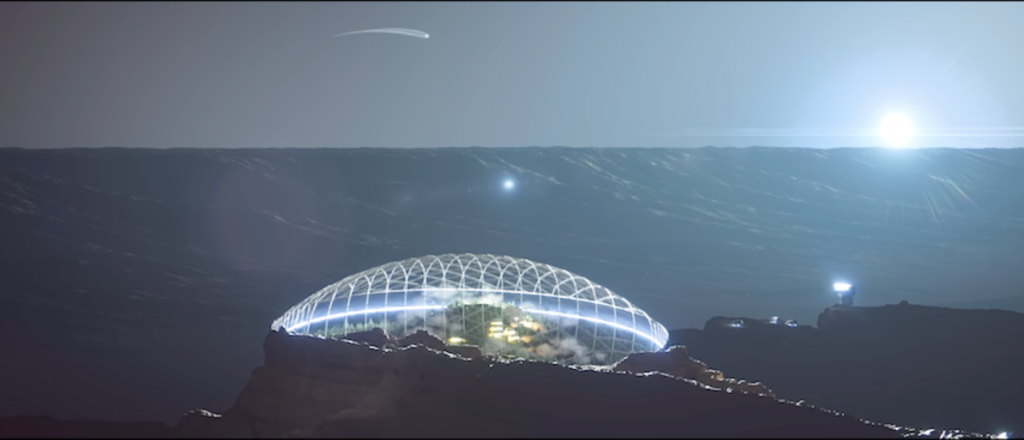
SpaceX is also implementing a full suite of system performance upgrades unrelated to any issues observed during the first flight test. For example, SpaceX has built and tested a hot-stage separation system, in which Starship’s second stage engines will ignite to push the ship away from the booster. Additionally, SpaceX has engineered a new electronic Thrust Vector Control (TVC) system for Super Heavy Raptor engines. Using fully electric motors, the new system has fewer potential points of failure and is significantly more energy efficient than traditional hydraulic systems.
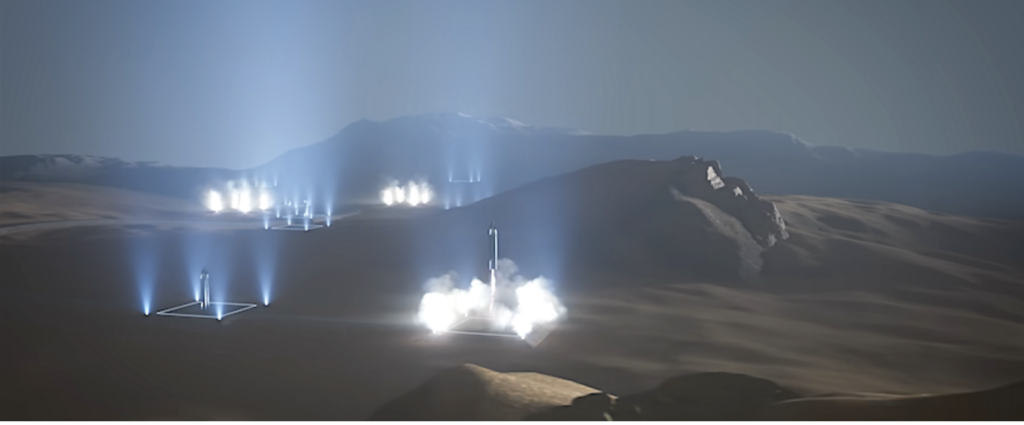
SpaceX also made significant upgrades to the orbital launch mount and pad system in order to prevent a recurrence of the pad foundation failure observed during the first flight test. These upgrades include significant reinforcements to the pad foundation and the addition of a flame deflector, which SpaceX has successfully tested multiple times.

Testing development flight hardware in a flight environment is what enables our teams to quickly learn and execute design changes and hardware upgrades to improve the probability of success in the future. We learned a tremendous amount about the vehicle and ground systems during Starship’s first flight test. Recursive improvement is essential as we work to build a fully reusable launch system capable of carrying satellites, payloads, crew, and cargo to a variety of orbits and Earth, lunar, or Martian landing sites.

This rapid iterative development approach has been the basis for all of SpaceX’s major innovative advancements, including Falcon, Dragon, and Starlink. Recursive improvement is essential as we work to build a fully reusable transportation system capable of carrying both crew and cargo to Earth orbit, help humanity return to the Moon, and ultimately travel to Mars and beyond.

Filed Under: Exploration & Science Missions, Launch Providers Tagged With: Featured

Primary Sidebar

Coverage

  • Missions & Constellations
  • Business & Finance
  • Military & Defense
  • Launch
  • Software Automation & Ground Systems
  • Government & Regulation
  • Services & Applications

Most Read Stories

  • Planet Labs Imposes Indefinite Blackout on Iran Satellite Imagery at U.S. Request
  • Amazon in Reported Talks to Acquire Globalstar in $9 Billion Move to Challenge Starlink
  • What the SpaceX IPO Changes for Every Satellite Operator
  • Russia Replaces Starlink With European-Built Satellites
  • The Downlink Deficit: The Pentagon's Optical Mesh Network and the Terrestrial Bottleneck

Secondary Sidebar

Footer


Satnews is a leading provider of satellite news, events, publications, research and other satellite industry information in both commercial and military enterprises worldwide.

Stories By Category

  • Business & Finance
  • Government & Regulation
  • Launch
  • Military & Defense
  • Missions & Constellations
  • Services & Applications
  • Software Automation & Ground Systems
  • Spectrum & Licensing
  • Startups & NewSpace Business

About Us

  • Leadership & Editorial Team
  • SatNews History
  • Free Satnews Subscription
  • SatNews Events
  • Magazines

Navigation

  • Latest Stories
  • Magazines
  • Events
  • Contact
  • Cookie & Privacy Policy for Satnews

We use cookies to ensure that we give you the best experience on our website. If you continue to use this site we will assume that you are happy with it.
x
Sign up Now (For Free)
Access daily or weekly satellite news updates covering all aspects of the commercial and military satellite industry.
Invalid email address
Notify Me Regarding ( At least one ):
We value your privacy and will not sell or share your email or other information with any other company. You may also unsubscribe at anytime.

Click Here to see our full privacy policy.
Thanks for subscribing!