


UPDATE: Huelva (Andalusia). 17 June 2023. PLD Space’s MIURA 1 SN1 Test Flight mission, scheduled for early this morning at INTA’s facilities in El Arenosillo (Huelva), was carried out on time in satisfactory compliance with all the autosequence protocols, but without launching because not all the umbilical cables in the avionics bay were released. This generated a safety sequence that caused the launch to be halted.
The launch at the Arenosillo facility in Huelva, southwest Spain was scrubbed just as the countdown reached T-0, when the rocket’s engines fired up for a few seconds.
In a Twitter thread update, translated from Spanish, PLD Space CEO Raúl Torres explained that the rocket firm will “finish a full investigation into the launch attempt and will be back soon with a new launch date.”
Torres explained in the Twitter thread that the Miura 1 countdown and the initial firing up of the rocket’s engine went perfectly. However, there was a delay in the release of the umbilical cables in the rocket’s avionics bay, resulting in PLD Space scrubbing the launch.
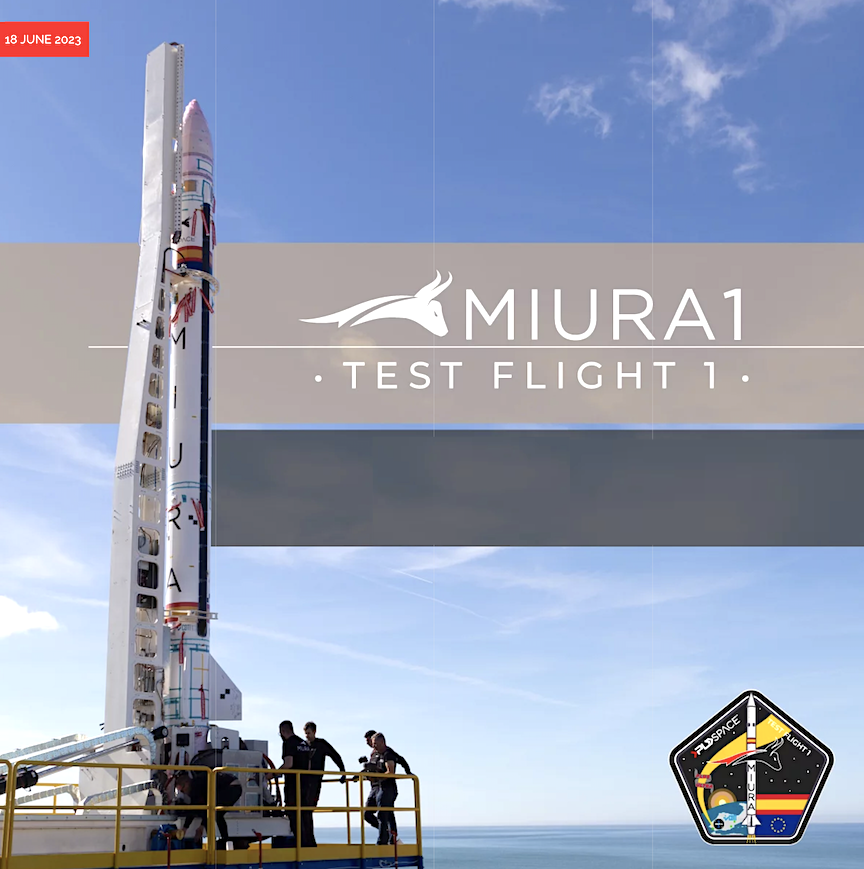
Both the launch pad and the rocket are in perfect condition, as is the payload. An exhaustive analysis will be made in the next few days to determine the causes that prevented the mission from being completed.
The 1st flight of the technological demonstrator MIURA 1 SN1 will allow PLD Space to gather as much data as possible for the validation and design of the technology that will later be transferred to and integrated in MIURA 5.
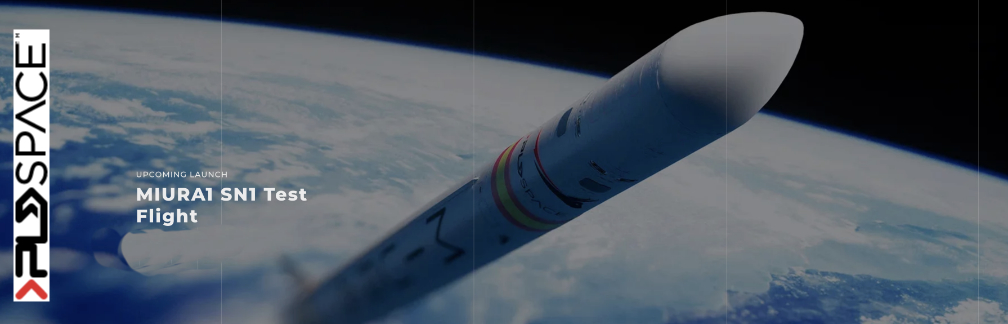
Additionally, this 1st suborbital flight will permit ZARM to study microgravity conditions through the gathering of valuable data needed for scientific experiments to be carried out in future suborbital flights.
The flight will last 12 minutes, during which microgravity conditions will be experienced from an altitude of 80km, and will reach its peak at an altitude of around 150km. A team from PLD Space will recover the rocket from the Atlantic Ocean once landing has occurred.
Payload
Experimental test flight in collaboration with the Centre of Applied Space Technology and Microgravity (ZARM) carrying a payload containing sensors for the collection of data in microgravity conditions.
The flight of PLD Space’s MIURA 1 SN1 technology demonstrator will be the launch of the first, private, micro-launcher in Europe. The mission of this first experimental flight aims to gather as much information as possible for the validation of the design, technology and processes that will later be transferred and integrated into the MIURA 5 orbital launcher.
PLD Space is a reference company in the aerospace sector and the first to launch a private rocket in Europe. Headquartered in Elche (Alicante), PLD Space designs and builds reusable orbital micro launchers that send small satellites into space that materialize in the suborbital MIURA 1 and the orbital MIURA 5. PLD Space was founded in 2011 by Raúl Torres and Raúl Verdú with the aim of democratizing access to space. Currently, the company, which has obtained more than 65 million in financing to date, has a workforce of more than 120 professionals distributed in three production centers located in Elche, Teruel and Huelva, totaling more than 20,000 m2 of industrial facilities.
