


• Skip to primary navigation
  • Skip to main content
  • Skip to primary sidebar
  • Skip to secondary sidebar
  • Skip to footer
  • NEWS:
  • SatNews
  • SatMagazine
  • MilSatMagazine
  • SmallSat News
  • |     EVENTS:
  • SmallSat Symposium
  • Satellite Innovation
  • MilSat Symposium
  • SmallSat Europe

SatNews

Satellite Industry Intelligence Since 1983

Subscribe
  • LATEST
  • SatNews Events
  • Magazines
  • Calendar
  • Subscribe
  • Missions & Constellations
    • Exploration & Science Missions
    • In-Orbit Servicing & Orbital Operations
    • LEO Constellations
    • Mission Autonomy & Onboard Systems
    • Mission Deployments & Manifests
    • Navigation & PNT
    • SmallSat
    • Spacecraft & Payload Technology
    View All in Missions & Constellations →
    Viasat Completes ViaSat-3 Constellation with Successful Flight 3 LaunchViasat Completes ViaSat-3 Constellation with Successful Flight 3 Launch
    GMV to Lead Mission Planning for ESA’s Next-Generation Copernicus ExpansionGMV to Lead Mission Planning for ESA’s Next-Generation Copernicus Expansion
    Canada Tightens Re-entry Regulations as SpaceX Starlink Constellations DescendCanada Tightens Re-entry Regulations as SpaceX Starlink Constellations Descend
    The waiver was the policy. Thursday is the paperwork.The waiver was the policy. Thursday is the paperwork.
  • Business
    • Contracts & Commercial Deals
    • Earnings & Financial Reporting
    • Events & Conferences
    • Funding & Venture Capital
    • Market Forecasts
    • Mergers & Acquisitions
    • Personnel Moves & Appointments
    View All in Business & Finance →
    SmallSat Europe Speaker Focus: Koen Willems, ST Engineering iDirect EuropeSmallSat Europe Speaker Focus: Koen Willems, ST Engineering iDirect Europe
    U.S. Commercial Service to Host “Future in Orbit” Networking Event at SpaceBR 2026U.S. Commercial Service to Host “Future in Orbit” Networking Event at SpaceBR 2026
    SmallSat Europe Speaker Focus: Dr. Jakob Stöber, McKinsey & CompanySmallSat Europe Speaker Focus: Dr. Jakob Stöber, McKinsey & Company
    Bright Ascension Finalizes Leadership Transition with John Baughn as CEOBright Ascension Finalizes Leadership Transition with John Baughn as CEO
  • Defense
    • Counterspace & ASAT
    • Defense Budgets & Procurement
    • ISR & Reconnaissance
    • MILSATCOM
    • Missile Warning & Defense
    • National Security Programs
    • Space Domain Awareness
    View All in Military & Defense →
    BAE Systems Enters Production for NavGuide M-Code GPS ReceiverBAE Systems Enters Production for NavGuide M-Code GPS Receiver
    Space Force Awards $3.2 Billion in Golden Dome Contracts for Orbital Interceptor ConstellationSpace Force Awards $3.2 Billion in Golden Dome Contracts for Orbital Interceptor Constellation
    USSF Finalizes GPS III Constellation with Successful SV-10 DeploymentUSSF Finalizes GPS III Constellation with Successful SV-10 Deployment
    Meink: Space Force Programs Ready to Execute Once FY27 Budget LandsMeink: Space Force Programs Ready to Execute Once FY27 Budget Lands
  • Gov
    • Export Controls & Compliance
    • International Space Agreements
    • National Space Policy
    • Space Law & Treaties
    • Space Sustainability & Debris Policy
    • Space Traffic Management / Debris Removal
    View All in Government & Regulation →
    SmallSat Europe Speaker Focus: Tanja Masson-Zwaan, Leiden UniversitySmallSat Europe Speaker Focus: Tanja Masson-Zwaan, Leiden University
    How CubeSat Proliferation is Redefining Sovereignty and Diplomatic Leverage at the United NationsHow CubeSat Proliferation is Redefining Sovereignty and Diplomatic Leverage at the United Nations
    FCC Modernization of Spectrum Rules Unlocks Sevenfold Gain in Satellite CapacityFCC Modernization of Spectrum Rules Unlocks Sevenfold Gain in Satellite Capacity
    The Smartest Money in the Room Is Looking UpThe Smartest Money in the Room Is Looking Up
  • Launch
    • Launch Providers
    • Launch Schedule & Calendars
    • Launch Sites & Infrastructure
    • Rocket Technology & Vehicles
    View All in Launch →
    FAA Grounds Blue Origin Following New Glenn Upper Stage Failure and Facility AnomalyFAA Grounds Blue Origin Following New Glenn Upper Stage Failure and Facility Anomaly
    NanoAvionics to Launch Trio of Milestone Payloads on SpaceX CAS500-2 MissionNanoAvionics to Launch Trio of Milestone Payloads on SpaceX CAS500-2 Mission
    Astrobotic Achieves Record 300-Second Burn with New Detonation EngineAstrobotic Achieves Record 300-Second Burn with New Detonation Engine
    Bad news, but good news followedBad news, but good news followed
  • Software
    • Autonomous Ground Operations
    • Data Processing & AI/ML
    • Digital Twins & Modeling
    • Ground Segment & Teleports
    • Mission Planning & Simulation
    • Space Systems Software Engineering
    • Spectrum & Licensing
    View All in Software Automation & Ground Systems →
    Global Invacom Secures Exclusive Worldwide Distribution for Prodelin Antenna RangeGlobal Invacom Secures Exclusive Worldwide Distribution for Prodelin Antenna Range
    SmallSat Europe Speaker Focus: Giovanni Pandolfi Bortoletto, Leaf SpaceSmallSat Europe Speaker Focus: Giovanni Pandolfi Bortoletto, Leaf Space
    SpinLaunch Selects Equinix to Deploy Global Ground Infrastructure for Meridian Space ConstellationSpinLaunch Selects Equinix to Deploy Global Ground Infrastructure for Meridian Space Constellation
    RF-Design Launches FiberLink CompactLine FCLR1811S4 for Ground Segment OptimizationRF-Design Launches FiberLink CompactLine FCLR1811S4 for Ground Segment Optimization
  • Services & Apps
    • Climate & Environmental Monitoring
    • Disaster Response & Security Mapping
    • Earth Observation & Imaging
    • Maritime & Aviation Satcom
    • Satellite Communications
    View All in Services & Applications →
    Solstar Confirms Successful On-Orbit Operation of Deke Space Communicator Following Launch on SpaceX Transporter-16 MissionSolstar Confirms Successful On-Orbit Operation of Deke Space Communicator Following Launch on SpaceX Transporter-16 Mission
    IEC Telecom Unveils Voucher-Based Connectivity Solution at Singapore Maritime Week 2026IEC Telecom Unveils Voucher-Based Connectivity Solution at Singapore Maritime Week 2026
    GomSpace and STETMAN Establish UASAT Joint Venture for Ukrainian Sovereign CommunicationsGomSpace and STETMAN Establish UASAT Joint Venture for Ukrainian Sovereign Communications
    Market Dynamics and Non-Terrestrial Network (NTN) ChipsetsMarket Dynamics and Non-Terrestrial Network (NTN) Chipsets

Copernicus Sentinel-1B decommissioned by ESA / EC due to a December 23, 2021, satellite anomaly

August 4, 2022

On December 23, 2021, the European Space Agency’s Copernicus Sentinel-1B experienced an anomaly related to the instrument electronics power supply provided by the satellite platform, leaving the spacecraft unable to deliver radar data.
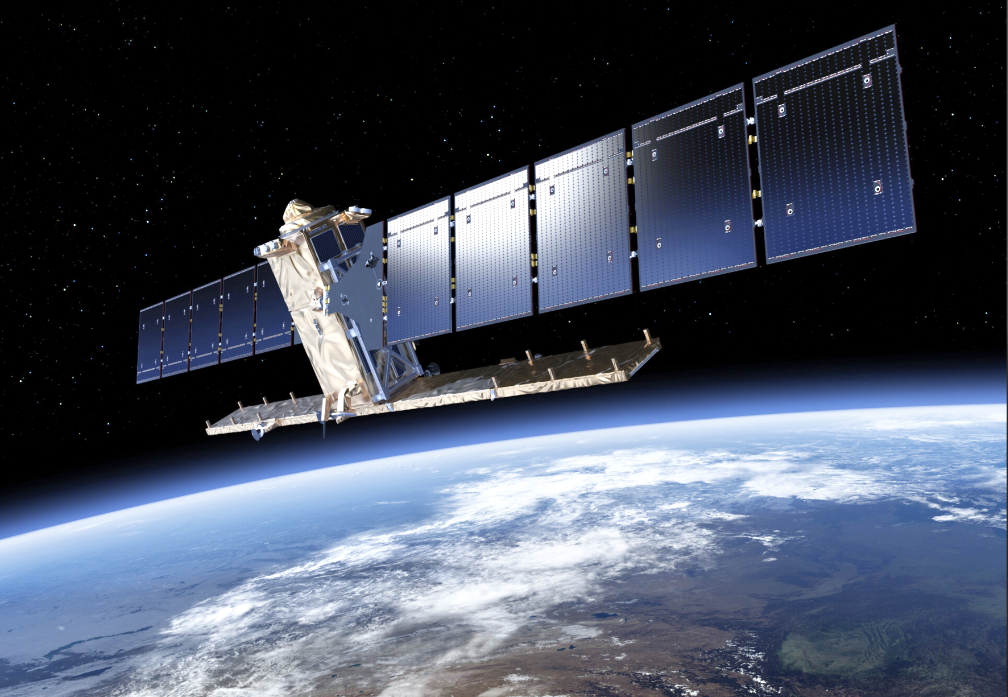

Artistic rendition of the Sentinel-1 satellite on-orbit, courtesy of ESA.

Since that date. spacecraft operators and engineers have been working to rectify the issue. Unfortunately, ESA and the European Commission have announced that this is now the end of the mission for Sentinel-1B. Copernicus Sentinel-1A remains fully operational and plans are in force to launch Sentinel-1C as soon as possible.

In April of 2014, Sentinel-1A was the first satellite to be launched for Copernicus, the Earth Observation (EO) component of the European Union’s space program. While the European Union is at the helm of Copernicus, ESA develops, builds and launches the dedicated Sentinel satellites and also operates some of the missions.

After the Sentinel-1B launch in April of 2016, with the mission comprising two identical satellites orbiting 180° apart, the mission was able to image the planet with a maximum repeat frequency of six days, down to daily coverage at high latitudes. Carrying advanced radar technology to provide an all-weather, day-and-night supply of imagery of Earth’s surface, the ambitious Sentinel-1 mission raised the bar for spaceborne radar.

The mission benefited numerous Copernicus services and applications, such as those that relate to Arctic sea-ice monitoring, iceberg tracking, routine sea-ice mapping, glacier-velocity monitoring, surveillance of the marine environment including oil-spill monitoring and ship detection for maritime security as well as illegal fisheries monitoring. The satellite is also used for monitoring ground deformation resulting from subsidence, earthquakes and volcanoes, mapping for forest, water and soil management, and mapping to support humanitarian aid and crisis situations.
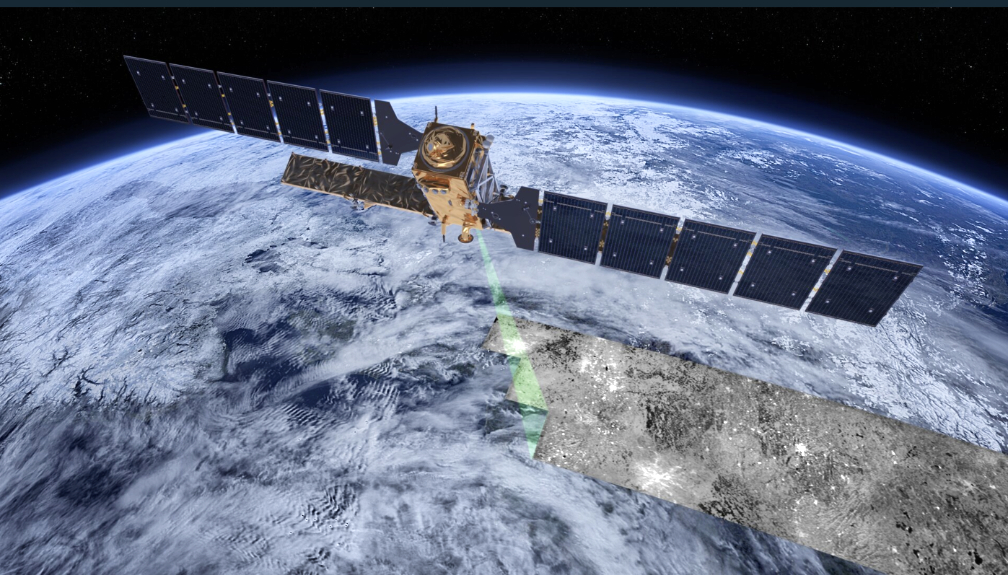
Copernicus Sentinel-1 carries an advanced synthetic aperture radar that works in several specialised modes to provide detailed imagery for Europe’s Copernicus programme. These data will be used for applications such as monitoring the oceans, including shipping lanes, sea ice and oil spills. It also provides data to map changing land cover, ground deformation, ice shelves and glaciers, and can be used to help emergency response when disasters such as floods strike and to support humanitarian relief efforts at times of crisis.

With such an important role to play and users relying on timely data, ESA acted as soon as it was clear that Sentinel-1B’s power issue could take some weeks to resolve, which was the hope at the end of December.

Copernicus Sentinel-1C features a new, separation mechanism that will help to avoid space debris. A summary of the description of the anomaly, of the investigations and the recovery attempts, as well as the parallel Sentinel-1 mission level actions and way forward is available at the Sentinel Online website.

ESA’s Sentinel-1 Mission Manager, Pierre Potin, said, “Together with the European Commission, we are making sure to bridge some of the data gaps by adjusting the Sentinel-1A observation plan and through radar data from other satellite missions that contribute to the Copernicus programme. For example, we are able to use data from Canada’s Radarsat-2 and Radarsat Constellation Mission, Germany’s TerraSAR-X, Italy’s COSMO-SkyMed and Spain’s PAZ to support operational sea-ice monitoring for the Copernicus Marine Environment Monitoring Service.”

ESA’s Director of Earth Observation Programs, Simonetta Cheli, said, “Unfortunately, we have to announce the end of the mission for the Copernicus Sentinel-1B satellite. The conclusion drawn by the Anomaly Review Board is that it is impossible to recover the 28V regulated bus of the satellite’s C-band synthetic aperture radar antenna power supply unit, which is needed to provide power to the radar electronics.”

European Commission’s Acting Director for Space (Directorate General for Defence Industry and Space), Paraskevi Papantoniou, said, “The permanent unavailability of Sentinel-1B satellite represents an important loss for the European Union’s space program and the European Commission is engaged to mitigate its impact. We notably managed to move forward the launch of Sentinel-1C satellite. Meanwhile, Copernicus Contributing Mission data, including from European New Space companies, will continue to be used to support the most critical Copernicus Services products that are affected. The preparations for the de-orbiting of Sentinel-1B satellite are an example of our joint commitment, for the European Union and ESA, to clean and responsible space, using the EU’s Space Surveillance and Tracking capabilities. Sentinel-1A remains very healthy in orbit, continuing to deliver high-quality radar images for a multitude of applications. Our focus is on fast-tracking the launch of Sentinel-1C. Now, thanks to the successful inaugural flight of the Vega-C rocket on 13 July, we, with Arianespace, are targeting the launch in the second quarter of 2023. While we continue to try to minimize inconvenience to users and push to get Sentinel-1C into orbit as soon as we can, we are also preparing for the responsible disposal of Sentinel-1B.”

As Europe’s center of excellence for mission operations, the European Space Operations Centre (ESOC) is home to the engineers who control spacecraft in orbit, manage our global tracking station network, and design and build the systems on ground that support missions in space. Since 1967, over 60 satellites belonging to ESA and its partners have been flown from Darmstadt, Germany.

The Sentinel-1 Spacecraft Operations Manager, Alistair O’Connell, said, “We have Sentinel-1B under control, all other systems except the power affected unit, which prevents the radar from being switched on, continue to function nominally and we perform regular monitoring of the spacecraft health and routine orbit control manoeuvres. We will keep Sentinel-1B under control until we can begin the disposal process, which we will start after Sentinel-1C is safely in orbit. Deorbiting Sentinel-1B will be carried out according to space debris mitigation requirements that were in place for ESA projects at the time of design of Sentinel-1A and Sentinel-1B, meaning that re-entry in the atmosphere will take place within 25 years. In practice, the re-entry duration is expected to be much shorter.”

Filed Under: Earth Observation & Imaging, International Space Agreements Tagged With: Featured

Primary Sidebar

Coverage

  • Missions & Constellations
  • Business & Finance
  • Military & Defense
  • Launch
  • Software Automation & Ground Systems
  • Government & Regulation
  • Services & Applications

Most Read Stories

  • Planet Labs Imposes Indefinite Blackout on Iran Satellite Imagery at U.S. Request
  • Amazon in Reported Talks to Acquire Globalstar in $9 Billion Move to Challenge Starlink
  • What the SpaceX IPO Changes for Every Satellite Operator
  • Russia Replaces Starlink With European-Built Satellites
  • The Downlink Deficit: The Pentagon's Optical Mesh Network and the Terrestrial Bottleneck

Secondary Sidebar

Footer


Satnews is a leading provider of satellite news, events, publications, research and other satellite industry information in both commercial and military enterprises worldwide.

Stories By Category

  • Business & Finance
  • Government & Regulation
  • Launch
  • Military & Defense
  • Missions & Constellations
  • Services & Applications
  • Software Automation & Ground Systems
  • Spectrum & Licensing
  • Startups & NewSpace Business

About Us

  • Leadership & Editorial Team
  • SatNews History
  • Free Satnews Subscription
  • SatNews Events
  • Magazines

Navigation

  • Latest Stories
  • Magazines
  • Events
  • Contact
  • Cookie & Privacy Policy for Satnews

We use cookies to ensure that we give you the best experience on our website. If you continue to use this site we will assume that you are happy with it.
x
Sign up Now (For Free)
Access daily or weekly satellite news updates covering all aspects of the commercial and military satellite industry.
Invalid email address
Notify Me Regarding ( At least one ):
We value your privacy and will not sell or share your email or other information with any other company. You may also unsubscribe at anytime.

Click Here to see our full privacy policy.
Thanks for subscribing!