


• Skip to primary navigation
  • Skip to main content
  • Skip to primary sidebar
  • Skip to secondary sidebar
  • Skip to footer
  • NEWS:
  • SatNews
  • SatMagazine
  • MilSatMagazine
  • SmallSat News
  • |     EVENTS:
  • SmallSat Symposium
  • Satellite Innovation
  • MilSat Symposium
  • SmallSat Europe

SatNews

Satellite Industry Intelligence Since 1983

Subscribe
  • LATEST
  • SatNews Events
  • Magazines
  • Calendar
  • Subscribe
  • Missions & Constellations
    • Exploration & Science Missions
    • In-Orbit Servicing & Orbital Operations
    • LEO Constellations
    • Mission Autonomy & Onboard Systems
    • Mission Deployments & Manifests
    • Navigation & PNT
    • SmallSat
    • Spacecraft & Payload Technology
    View All in Missions & Constellations →
    Canada Tightens Re-entry Regulations as SpaceX Starlink Constellations DescendCanada Tightens Re-entry Regulations as SpaceX Starlink Constellations Descend
    The waiver was the policy. Thursday is the paperwork.The waiver was the policy. Thursday is the paperwork.
    NanoAvionics to Launch Trio of Milestone Payloads on SpaceX CAS500-2 MissionNanoAvionics to Launch Trio of Milestone Payloads on SpaceX CAS500-2 Mission
    Satellite Connectivity Becomes the New Anchor for a Fragmenting Wearables MarketSatellite Connectivity Becomes the New Anchor for a Fragmenting Wearables Market
  • Business
    • Contracts & Commercial Deals
    • Earnings & Financial Reporting
    • Events & Conferences
    • Funding & Venture Capital
    • Market Forecasts
    • Mergers & Acquisitions
    • Personnel Moves & Appointments
    View All in Business & Finance →
    SmallSat Europe Speaker Focus: Dr. Jakob Stöber, McKinsey & CompanySmallSat Europe Speaker Focus: Dr. Jakob Stöber, McKinsey & Company
    Bright Ascension Finalizes Leadership Transition with John Baughn as CEOBright Ascension Finalizes Leadership Transition with John Baughn as CEO
    Global Invacom Secures Exclusive Worldwide Distribution for Prodelin Antenna RangeGlobal Invacom Secures Exclusive Worldwide Distribution for Prodelin Antenna Range
    HTX and ST Engineering Launch Space Tech Program for Singapore Public SafetyHTX and ST Engineering Launch Space Tech Program for Singapore Public Safety
  • Defense
    • Counterspace & ASAT
    • Defense Budgets & Procurement
    • ISR & Reconnaissance
    • MILSATCOM
    • Missile Warning & Defense
    • National Security Programs
    • Space Domain Awareness
    View All in Military & Defense →
    BAE Systems Enters Production for NavGuide M-Code GPS ReceiverBAE Systems Enters Production for NavGuide M-Code GPS Receiver
    Space Force Awards $3.2 Billion in Golden Dome Contracts for Orbital Interceptor ConstellationSpace Force Awards $3.2 Billion in Golden Dome Contracts for Orbital Interceptor Constellation
    USSF Finalizes GPS III Constellation with Successful SV-10 DeploymentUSSF Finalizes GPS III Constellation with Successful SV-10 Deployment
    Meink: Space Force Programs Ready to Execute Once FY27 Budget LandsMeink: Space Force Programs Ready to Execute Once FY27 Budget Lands
  • Gov
    • Export Controls & Compliance
    • International Space Agreements
    • National Space Policy
    • Space Law & Treaties
    • Space Sustainability & Debris Policy
    • Space Traffic Management / Debris Removal
    View All in Government & Regulation →
    SmallSat Europe Speaker Focus: Tanja Masson-Zwaan, Leiden UniversitySmallSat Europe Speaker Focus: Tanja Masson-Zwaan, Leiden University
    How CubeSat Proliferation is Redefining Sovereignty and Diplomatic Leverage at the United NationsHow CubeSat Proliferation is Redefining Sovereignty and Diplomatic Leverage at the United Nations
    FCC Modernization of Spectrum Rules Unlocks Sevenfold Gain in Satellite CapacityFCC Modernization of Spectrum Rules Unlocks Sevenfold Gain in Satellite Capacity
    The Smartest Money in the Room Is Looking UpThe Smartest Money in the Room Is Looking Up
  • Launch
    • Launch Providers
    • Launch Schedule & Calendars
    • Launch Sites & Infrastructure
    • Rocket Technology & Vehicles
    View All in Launch →
    Astrobotic Achieves Record 300-Second Burn with New Detonation EngineAstrobotic Achieves Record 300-Second Burn with New Detonation Engine
    Bad news, but good news followedBad news, but good news followed
    Rocket Lab Successfully Launches “Kakushin Rising” Mission for JAXARocket Lab Successfully Launches “Kakushin Rising” Mission for JAXA
    Blue Origin CEO Attributes BlueBird 7 Satellite Loss to Second-Stage Thrust AnomalyBlue Origin CEO Attributes BlueBird 7 Satellite Loss to Second-Stage Thrust Anomaly
  • Software
    • Autonomous Ground Operations
    • Data Processing & AI/ML
    • Digital Twins & Modeling
    • Ground Segment & Teleports
    • Mission Planning & Simulation
    • Space Systems Software Engineering
    • Spectrum & Licensing
    View All in Software Automation & Ground Systems →
    SmallSat Europe Speaker Focus: Giovanni Pandolfi Bortoletto, Leaf SpaceSmallSat Europe Speaker Focus: Giovanni Pandolfi Bortoletto, Leaf Space
    SpinLaunch Selects Equinix to Deploy Global Ground Infrastructure for Meridian Space ConstellationSpinLaunch Selects Equinix to Deploy Global Ground Infrastructure for Meridian Space Constellation
    RF-Design Launches FiberLink CompactLine FCLR1811S4 for Ground Segment OptimizationRF-Design Launches FiberLink CompactLine FCLR1811S4 for Ground Segment Optimization
    Sat-Lite Technologies adds  Richard Rader to Spearhead Sales ExpansionSat-Lite Technologies adds Richard Rader to Spearhead Sales Expansion
  • Services & Apps
    • Climate & Environmental Monitoring
    • Disaster Response & Security Mapping
    • Earth Observation & Imaging
    • Maritime & Aviation Satcom
    • Satellite Communications
    View All in Services & Applications →
    Solstar Confirms Successful On-Orbit Operation of Deke Space Communicator Following Launch on SpaceX Transporter-16 MissionSolstar Confirms Successful On-Orbit Operation of Deke Space Communicator Following Launch on SpaceX Transporter-16 Mission
    IEC Telecom Unveils Voucher-Based Connectivity Solution at Singapore Maritime Week 2026IEC Telecom Unveils Voucher-Based Connectivity Solution at Singapore Maritime Week 2026
    GomSpace and STETMAN Establish UASAT Joint Venture for Ukrainian Sovereign CommunicationsGomSpace and STETMAN Establish UASAT Joint Venture for Ukrainian Sovereign Communications
    Market Dynamics and Non-Terrestrial Network (NTN) ChipsetsMarket Dynamics and Non-Terrestrial Network (NTN) Chipsets

NASA’s Australian rocket launches seek habitable star conditions

June 27, 2022

On the heels of a successful launch on June 26, NASA is set to launch two more sounding rockets from northern Australia during the first half of July — these missions will help astronomers understand how starlight influences a planet’s atmosphere, possibly making or breaking its ability to support life as we know it.

The two missions will look at Alpha Centauri A and B – two Sun-like stars near our own – in extreme- and far-ultraviolet light. Ultraviolet light, which has wavelengths shorter than the light that is visible to the human eye, is a critical factor in the search for life. A little bit of ultraviolet light can help form the molecules necessary for life, but too much can erode an atmosphere, leaving behind an inhospitable planet.
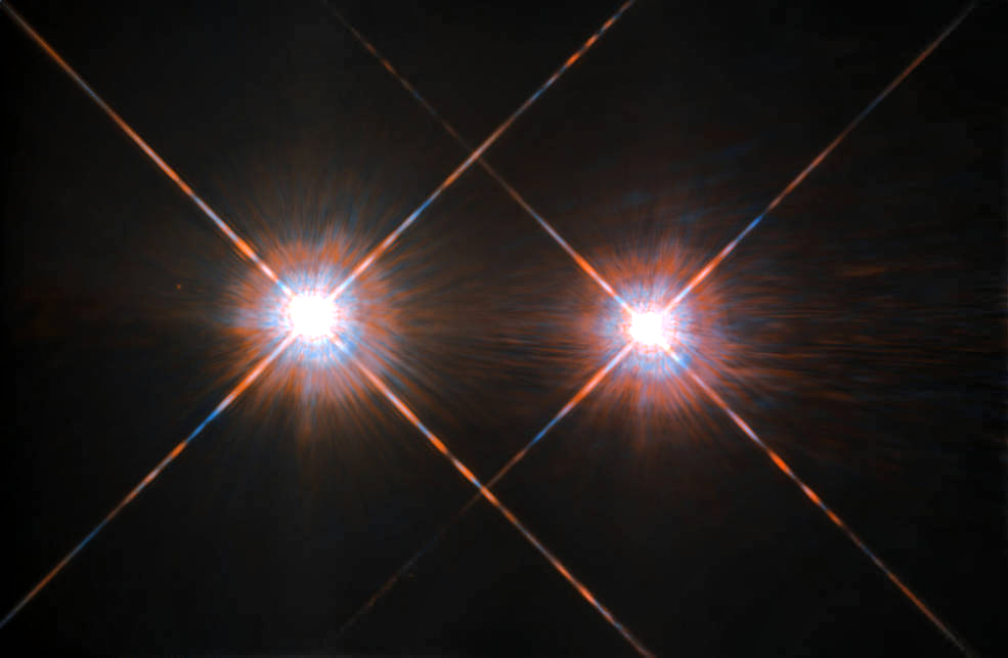
The closest star system to Earth is the famous Alpha Centauri group. At a distance of 4.3 light-years, this system is made up of the binary formed by the stars Alpha Centauri A and Alpha Centauri B, plus the faint red dwarf Alpha Centauri C, also known as Proxima Centauri. NASA’s Hubble Space Telescope captured this stunning view of the bright Alpha Centauri A (on the left) and Alpha Centauri B (on the right). Image credits: ESA/NASA

“Ultraviolet radiation from the Sun played a role in how Mars lost its atmosphere and how Venus turned into a dry, barren landscape,” said Brian Fleming, astronomer at the University of Colorado, Boulder, and principal investigator for one of the missions, the Dual-channel Extreme Ultraviolet Continuum Experiment, or DEUCE. “Understanding ultraviolet radiation is extremely important to understanding what makes a planet habitable.”

Of the over 5,000 exoplanets known throughout across the galaxy, only Earth is known to host life. In the search for other exoplanets that could host life as we know it, astronomers have focused on planets that orbit in the habitable zone – defined as the distances from a star where a planet’s surface temperature could support water.

“But that’s a rudimentary way of characterizing habitability,” Fleming said.

While water is one part of making a planet hospitable, for a planet to support an Earth-like biosphere, it also needs an atmosphere. If the habitable zone is bathed in too much ultraviolet radiation, any water vapor in the upper atmosphere could escape, quickly drying out the planet. Atmospheres can also be eroded by radiation and extreme flares from a planet’s host star, exposing the surface to harsh ultraviolet radiation, which can break apart molecules like DNA.

But just how much ultraviolet radiation is emitted by different types of stars is poorly known. Without accurate knowledge, astronomers can’t accurately predict which planets might host life.

“We need to understand the stars so that we can understand any planets we find there,” said Kevin France, astronomer at the University of Colorado, Boulder, and principal investigator for the Suborbital Imaging Spectrograph for Transition region Irradiance from Nearby Exoplanet host stars, or SISTINE, mission.
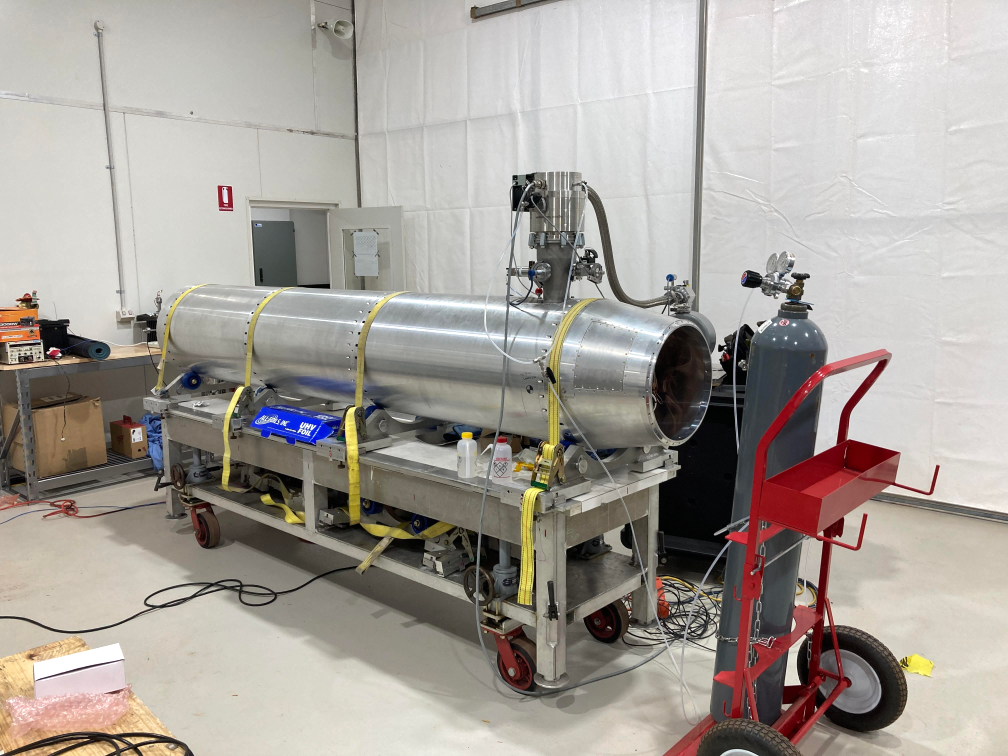
The Spectrograph for Transition region Irradiance from Nearby Exoplanet host stars, or SISTINE, payload is being prepared for launch. Image credits: NASA Wallops.

DEUCE and SISTINE will take these important measurements of ultraviolet light to help narrow the search for habitable planets. Launching only a week apart, the two missions will work together to get a full picture of the ultraviolet light coming from Alpha Centauri A and B.

The researchers selected Alpha Centauri A and B because they can serve as a useful reference against which to calibrate observations from the Sun – the only other star for which we have complete ultraviolet measurements. Ultraviolet light is absorbed by dust and gas in space. This makes it nearly impossible to measure ultraviolet light from more distant stars at the level needed for these types of analyses. The Alpha Centauri system, however, is just 4.3 light-years away, close enough that much of its ultraviolet light reaches us before being absorbed.

Ultraviolet light is also mostly blocked by Earth’s atmosphere, so researchers have to send instruments into space to measure it. Since the full range of ultraviolet light can’t be measured with a single instrument, DEUCE will measure the shorter, extreme-ultraviolet wavelengths and SISTINE will measure the longer, far-ultraviolet wavelengths. The wavelength coverages will slightly overlap so that the collected data can be calibrated and used as one dataset. This information will then be used to create models that can help astronomers assess which other star systems could support habitable environments.

“Looking at Alpha Centauri will help us check if other stars like the Sun have the same radiation environment or if there are a range of environments,” France said. “We have to go to Australia to study it because we can’t easily see these stars from the northern hemisphere to measure them.”

SISTINE is scheduled for launch on July 4th and DEUCE on July 12th.

The two missions, aboard NASA two-stage Black Brant IX sounding rockets, will launch from the Arnhem Space Center in East Arnhem Land in Australia’s Northern Territory. The Arnhem Space Center is owned and operated by Equatorial Launch Australia, or ELA, on the land of the Yolngu, the Traditional Custodians and Landowners.
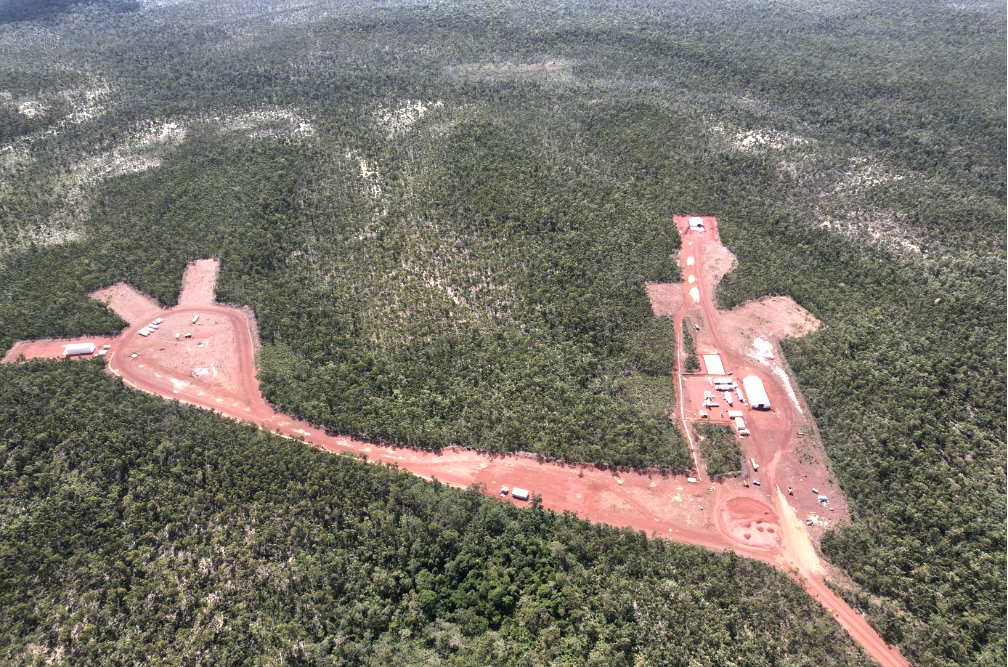
Aerial photo of the Arnhem Space Center in Australia.

Along with a third mission, the X-ray Quantum Calorimeter, or XQC, which flew on June 26, these scientific studies can only be conducted from the southern hemisphere.

Filed Under: International Space Agreements, Launch

Primary Sidebar

Coverage

  • Missions & Constellations
  • Business & Finance
  • Military & Defense
  • Launch
  • Software Automation & Ground Systems
  • Government & Regulation
  • Services & Applications

Most Read Stories

  • Planet Labs Imposes Indefinite Blackout on Iran Satellite Imagery at U.S. Request
  • Amazon in Reported Talks to Acquire Globalstar in $9 Billion Move to Challenge Starlink
  • What the SpaceX IPO Changes for Every Satellite Operator
  • Russia Replaces Starlink With European-Built Satellites
  • The Downlink Deficit: The Pentagon's Optical Mesh Network and the Terrestrial Bottleneck

Secondary Sidebar

Footer


Satnews is a leading provider of satellite news, events, publications, research and other satellite industry information in both commercial and military enterprises worldwide.

Stories By Category

  • Business & Finance
  • Government & Regulation
  • Launch
  • Military & Defense
  • Missions & Constellations
  • Services & Applications
  • Software Automation & Ground Systems
  • Spectrum & Licensing
  • Startups & NewSpace Business

About Us

  • Leadership & Editorial Team
  • SatNews History
  • Free Satnews Subscription
  • SatNews Events
  • Magazines

Navigation

  • Latest Stories
  • Magazines
  • Events
  • Contact
  • Cookie & Privacy Policy for Satnews

We use cookies to ensure that we give you the best experience on our website. If you continue to use this site we will assume that you are happy with it.
x
Sign up Now (For Free)
Access daily or weekly satellite news updates covering all aspects of the commercial and military satellite industry.
Invalid email address
Notify Me Regarding ( At least one ):
We value your privacy and will not sell or share your email or other information with any other company. You may also unsubscribe at anytime.

Click Here to see our full privacy policy.
Thanks for subscribing!