


• Skip to primary navigation
  • Skip to main content
  • Skip to primary sidebar
  • Skip to secondary sidebar
  • Skip to footer
  • NEWS:
  • SatNews
  • SatMagazine
  • MilSatMagazine
  • SmallSat News
  • |     EVENTS:
  • SmallSat Symposium
  • Satellite Innovation
  • MilSat Symposium
  • SmallSat Europe

SatNews

Satellite Industry Intelligence Since 1983

Subscribe
  • LATEST
  • SatNews Events
  • Magazines
  • Calendar
  • Subscribe
  • Missions & Constellations
    • Exploration & Science Missions
    • In-Orbit Servicing & Orbital Operations
    • LEO Constellations
    • Mission Autonomy & Onboard Systems
    • Mission Deployments & Manifests
    • Navigation & PNT
    • SmallSat
    • Spacecraft & Payload Technology
    View All in Missions & Constellations →
    Eutelsat Q1 LEO Revenue Rises 30% to €70.9M as OneWeb Offsets Video DeclineEutelsat Q1 LEO Revenue Rises 30% to €70.9M as OneWeb Offsets Video Decline
    FCC Proposes Modernized Direct-to-Device Rules, Explores 482 MHz Expansion for Satellite CellularFCC Proposes Modernized Direct-to-Device Rules, Explores 482 MHz Expansion for Satellite Cellular
    HIMERA and GomSpace Begin Orbital Operations of OBRIA NANO Test Satellite for Sovereign Ukrainian NetworkHIMERA and GomSpace Begin Orbital Operations of OBRIA NANO Test Satellite for Sovereign Ukrainian Network
    FCC Approves Amazon Acquisition of Globalstar to Advance Direct-to-Device CapabilitiesFCC Approves Amazon Acquisition of Globalstar to Advance Direct-to-Device Capabilities
  • Business
    • Contracts & Commercial Deals
    • Earnings & Financial Reporting
    • Events & Conferences
    • Funding & Venture Capital
    • Market Forecasts
    • Mergers & Acquisitions
    • Personnel Moves & Appointments
    View All in Business & Finance →
    “I Can’t Refuel You. I’m Sorry”: Satellite Servicers Can’t Agree on a Plug“I Can’t Refuel You. I’m Sorry”: Satellite Servicers Can’t Agree on a Plug
    Industry Built the Factories. Washington Keeps Throttling the Money.Industry Built the Factories. Washington Keeps Throttling the Money.
    The Pentagon’s Message to Space Startups: Show Us Something That WorksThe Pentagon’s Message to Space Startups: Show Us Something That Works
    Canada’s Satellite-to-Phone Network Can’t Go It Alone, So Terrestar Joined EquatysCanada’s Satellite-to-Phone Network Can’t Go It Alone, So Terrestar Joined Equatys
  • Defense
    • Counterspace & ASAT
    • Defense Budgets & Procurement
    • ISR & Reconnaissance
    • MILSATCOM
    • Missile Warning & Defense
    • National Security Programs
    • Space Domain Awareness
    View All in Military & Defense →
    Hughes Secures $42.5M Space Systems Command Award for Multi-Orbit Automated EM&C ArchitectureHughes Secures $42.5M Space Systems Command Award for Multi-Orbit Automated EM&C Architecture
    AvL Technologies Secures Final CMMC Level 2 Certification for Defense SATCOM Supply ChainAvL Technologies Secures Final CMMC Level 2 Certification for Defense SATCOM Supply Chain
    BofA’s Ron Epstein: “Everybody’s Doing National Security Work Today”BofA’s Ron Epstein: “Everybody’s Doing National Security Work Today”
    “We Just Sold a Business for 50 Times”: Defense Multiples Lift Space“We Just Sold a Business for 50 Times”: Defense Multiples Lift Space
  • Gov
    • Export Controls & Compliance
    • International Space Agreements
    • National Space Policy
    • Space Law & Treaties
    • Space Sustainability & Debris Policy
    • Space Traffic Management / Debris Removal
    View All in Government & Regulation →
    NTIA’s 500 MHz Mandate Is Its Top Job, Patrick SaysNTIA’s 500 MHz Mandate Is Its Top Job, Patrick Says
    KASA Grants Commercial Space Access to Defense Mutual Aid and Naro Space CenterKASA Grants Commercial Space Access to Defense Mutual Aid and Naro Space Center
    AT&T, T-Mobile, and Verizon Petition FCC to Exclude Mid-Band Spectrum from Satellite Coverage FrameworkAT&T, T-Mobile, and Verizon Petition FCC to Exclude Mid-Band Spectrum from Satellite Coverage Framework
    Telespazio and EUSPA Sign Agreement to Expand Galileo Fucino Control Centre for Second-Generation ConstellationTelespazio and EUSPA Sign Agreement to Expand Galileo Fucino Control Centre for Second-Generation Constellation
  • Launch
    • Launch Providers
    • Launch Schedule & Calendars
    • Launch Sites & Infrastructure
    • Rocket Technology & Vehicles
    View All in Launch →
    Blue Origin Reconstructs Launch Complex 36 Tower, Targets November Return to Flight for New GlennBlue Origin Reconstructs Launch Complex 36 Tower, Targets November Return to Flight for New Glenn
    DIA Space Security Report Reveals Detailed Orbital Imagery of China’s Shenlong SpaceplaneDIA Space Security Report Reveals Detailed Orbital Imagery of China’s Shenlong Spaceplane
    The Launch Crunch Is Coming as Falcon 9 Winds DownThe Launch Crunch Is Coming as Falcon 9 Winds Down
    Cowboy Space Is Building a Rocket Because It Couldn’t Find OneCowboy Space Is Building a Rocket Because It Couldn’t Find One
  • Software
    • Autonomous Ground Operations
    • Data Processing & AI/ML
    • Digital Twins & Modeling
    • Ground Segment & Teleports
    • Mission Planning & Simulation
    • Space Systems Software Engineering
    • Spectrum & Licensing
    View All in Software Automation & Ground Systems →
    MBSat Selects ST Engineering iDirect Intuition Platform for Ground Infrastructure in OmanMBSat Selects ST Engineering iDirect Intuition Platform for Ground Infrastructure in Oman
    AnySignal Co-Founder Urges Ground Station Interoperability to Resolve Orbital Data BottlenecksAnySignal Co-Founder Urges Ground Station Interoperability to Resolve Orbital Data Bottlenecks
    Arqiva Secures Three-Year Satellite Services Agreement with Kuwait’s GulfsatArqiva Secures Three-Year Satellite Services Agreement with Kuwait’s Gulfsat
    TrustPoint and Calian Deliver Industry’s First Mass-Market Ready C-band GNSS AntennaTrustPoint and Calian Deliver Industry’s First Mass-Market Ready C-band GNSS Antenna
  • Services & Apps
    • Climate & Environmental Monitoring
    • Disaster Response & Security Mapping
    • Earth Observation & Imaging
    • Maritime & Aviation Satcom
    • Satellite Communications
    View All in Services & Applications →
    Scanway and Pixxel Sign Pact to Expand Optical Payload and Earth Observation Data ServicesScanway and Pixxel Sign Pact to Expand Optical Payload and Earth Observation Data Services
    KTL Selects Keysight NR-NTN Test Suite to Accelerate Satellite Acceptance TestingKTL Selects Keysight NR-NTN Test Suite to Accelerate Satellite Acceptance Testing
    Leonardo Infrared Sensor Returns to Orbit Aboard SatVu HotSat-3 Thermal Imaging SatelliteLeonardo Infrared Sensor Returns to Orbit Aboard SatVu HotSat-3 Thermal Imaging Satellite
    Speedcast and Soya IT Complete Hybrid Dual-LEO Connectivity Rollout on 41 Wallenius Wilhelmsen VesselsSpeedcast and Soya IT Complete Hybrid Dual-LEO Connectivity Rollout on 41 Wallenius Wilhelmsen Vessels

Rocket Lab Planning The First Mid-Air Helicopter Capture Of The Electron Rocket During The Company’s Next Mission “There + Back Again”

April 6, 2022

For the first time, Rocket Lab will attempt a mid-air helicopter capture of an Electron rocket as it returns to Earth from space, furthering the company’s program to make Electron the first reusable orbital small launch vehicle.

The arrival of the Sikorsky recovery helicopter. Photo is courtesy of Rocket Lab.

The “There and Back Again” mission, Rocket Lab’s 26th Electron launch, will lift off from Pad A at Launch Complex 1 on New Zealand’s Māhia Peninsula within a 14-day launch window scheduled to commence on April 19, 2022, UTC. Electron will deploy 34 payloads from commercial operators Alba Orbital, Astrix Astronautics, Aurora Propulsion Technologies, E-Space, Unseenlabs, and Swarm Technologies via global launch services provider, Spaceflight Inc. The launch is expected to bring the total number of satellites launched by Electron to 146.
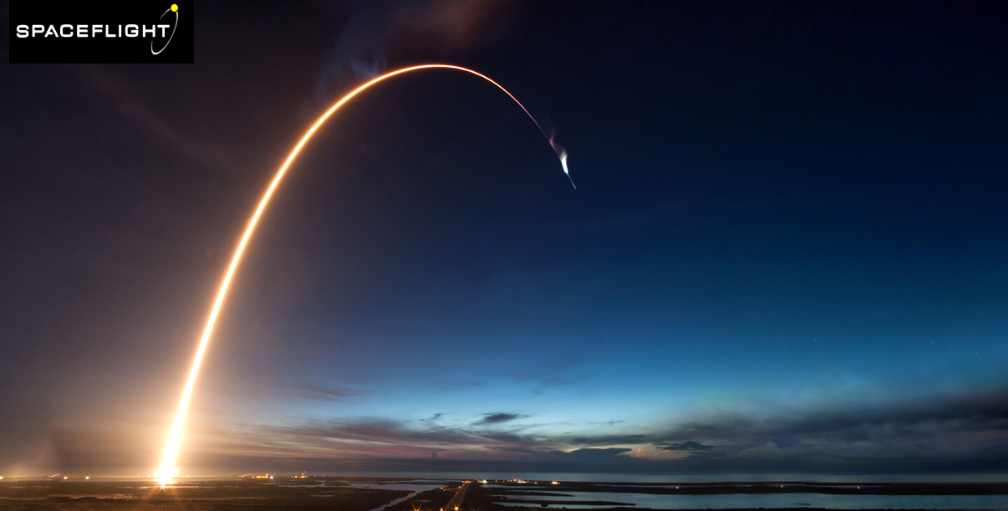
For the first time, Rocket Lab will also attempt a mid-air capture of Electron’s first stage as it returns from space after launch, the next major step in the Company’s development program to make Electron a reusable rocket. Rocket Lab will be attempting the catch with a customized Sikorsky S-92, a large, twin engine helicopter that is typically used in offshore oil & gas transport and search and rescue operations.

Catching a returning rocket stage mid-air as it returns from space is a highly complex operation that demands extreme precision. Several critical milestones must align perfectly to ensure a successful capture.

Recovery Mission Profile:

  • Approximately an hour prior to lift-off, Rocket Lab’s Sikorsky S-92 will move into position in the capture zone, approximately 150 nautical miles off New Zealand’s coast, to await launch.
  • At T+2:30 minutes after lift-off, Electron’s first and second stages will separate per a standard mission profile. Electron’s second stage will continue on to orbit for payload deployment and Electron’s first stage will begin its descent back to Earth reaching speeds of almost 8,300 km (5,150 miles) per hour. The stage will reach temperatures of around 2,400 degrees C (4,352 F) during its descent.
  • After deploying a drogue parachute at 13 km (8.3 miles) altitude, the main parachute will be extracted at around 6 km (3.7 miles) altitude to dramatically slow the stage to 10 meters per second, or 36 km (22.3 miles) per hour.
  • As the stage enters the capture zone, Rocket Lab’s helicopter will attempt to rendezvous with the returning stage and capture the parachute line via a hook.
  • Once the stage is captured and secured, the helicopter will transport it back to land where Rocket Lab will conduct a thorough analysis of the stage and assess its suitability for reflight.

“We’re excited to enter this next phase of the Electron recovery program,” said Rocket Lab founder and CEO, Peter Beck. “We’ve conducted many successful helicopter captures with replica stages, carried out extensive parachute tests, and successfully recovered Electron’s first stage from the ocean during our 16th, 20th, and 22nd missions. Now it’s time to put it all together for the first time and pluck Electron from the skies. Trying to catch a rocket as it falls back to Earth is no easy feat, we’re absolutely threading the needle here, but pushing the limits with such complex operations is in our DNA. We expect to learn a tremendous amount from the mission as we work toward the ultimate goal of making Electron the first reusable orbital smallsat launcher and providing our customers with even more launch availability.”

Rocket Lab has previously conducted three successful ocean recovery missions where Electron returned to Earth under parachute and was recovered from the ocean. Analysis of those missions informed design modifications to Electron, enabling it to withstand the hard re-entry environment, and also helped to developed procedures for an eventual helicopter capture.

Payloads aboard the “There and Back Again” mission include:

  • Alba Orbital: A cluster of four pico-satellites will be deployed, including Alba Orbital’s own Unicorn-2 PocketQube satellites, as well as TRSI-2, TRSI-3, and MyRadar-1 satellites for Alba Orbital’s customers. Each smallsat carries a unique sensor designed to demonstrate innovative technologies on orbit. Unicorn-2 will be carrying an optical night-time imaging payload designed to monitor light pollution across the globe.
  • Astrix Astronautics: Astrix Astronautics is deploying the “Copia” system – a high-performance power generation system for CubeSats that aims to improve on power restraints typically seen in small satellites. The mission aims to demonstrate the high performance of Copia’s novel design via -on-orbit testing with 1U solar arrays able to capture up to 200W.
  • Aurora Propulsion Technologies: The AuroraSat-1 also known as The Flying Object will deploy to LEO a demonstration of the company’s proprietary propulsion devices and plasma brakes that provide efficient propulsion and deorbiting capabilities for small satellites. The cubesat will validate the water-based propellant and mobility control of its Resistojets that can assist cubesats with detumbling capabilities and propulsion-based attitude control. AuroraSat-1 will also test its deployable Plasma Brakes which combine a micro-tether with charged particles in space, or ionospheric plasma, to generate significant amounts of drag to deorbit the spacecraft safely at the end of its life.
  • E-Space: E-Space’s payload will consist of three demo satellites to validate the systems and technology for its sustainable satellite system. The satellites have small cross-sections to decrease the risk of collision from the millions of untrackable space objects and will automatically de-orbit if any systems malfunction. Eventually, the satellites will sacrificially capture and deorbit small debris to burn up on re-entry, setting a new standard in space environmental management.
  • Spaceflight Inc: Spaceflight Inc. has arranged for Rocket Lab to launch two stacks of SpaceBEEs for Internet-of-Things constellation operator, Swarm Technologies.
  • UNSEENLABS: BRO-6 is the sixth satellite of the Unseenlabs’ constellation, dedicated to the detection of RF signals. Thanks to its technology, the French company detects any vessel at sea, even those whose cooperative beacon is turned off. The launch of BRO-6 satellite will allow Unseenlabs to improve its revisit time and deliver more customers.

Filed Under: Launch Providers, Launch Schedule & Calendars Tagged With: Featured

Primary Sidebar

Coverage

  • Missions & Constellations
  • Business & Finance
  • Military & Defense
  • Launch
  • Software Automation & Ground Systems
  • Government & Regulation
  • Services & Applications

Most Read Stories

  • AT&T, T-Mobile, and Verizon Form Joint Venture to Standardize Satellite Direct-to-Device Connectivity
  • SpaceX Unveils 250 kW Starlink Gen3 AI Satellites Featuring 10 Tbps Throughput and Onboard Edge Compute
  • SpaceX Acquires Grain Management’s 800 MHz Spectrum Portfolio to Launch Standalone Starlink Mobile Carrier
  • FCC Grants SpaceX Approval for 15,000-Satellite Very Low Earth Orbit Direct-to-Device Constellation
  • Rocket Lab Challenges NASA’s $700M Mars Orbiter Award to Blue Origin While Scaling Vertical Integration via $8B Iridium Acquisition

Secondary Sidebar

Footer


Satnews is a leading provider of satellite news, events, publications, research and other satellite industry information in both commercial and military enterprises worldwide.

Stories By Category

  • Business & Finance
  • Government & Regulation
  • Launch
  • Military & Defense
  • Missions & Constellations
  • Services & Applications
  • Software Automation & Ground Systems
  • Spectrum & Licensing
  • Startups & NewSpace Business

About Us

  • Leadership & Editorial Team
  • SatNews History
  • Free Satnews Subscription
  • SatNews Events
  • Magazines

Navigation

  • Latest Stories
  • Magazines
  • Events
  • Contact
  • Cookie & Privacy Policy for Satnews

We use cookies to ensure that we give you the best experience on our website. If you continue to use this site we will assume that you are happy with it.
x
Sign up Now (For Free)
Access daily or weekly satellite news updates covering all aspects of the commercial and military satellite industry.
Invalid email address
Notify Me Regarding ( At least one ):
We value your privacy and will not sell or share your email or other information with any other company. You may also unsubscribe at anytime.

Click Here to see our full privacy policy.
Thanks for subscribing!