

• Skip to primary navigation
  • Skip to main content
  • Skip to primary sidebar
  • Skip to secondary sidebar
  • Skip to footer
  • NEWS:
  • SatNews
  • SatMagazine
  • MilSatMagazine
  • SmallSat News
  • |     EVENTS:
  • SmallSat Symposium
  • Satellite Innovation
  • MilSat Symposium
  • SmallSat Europe

SatNews

Satellite Industry Intelligence Since 1983

Subscribe
  • LATEST
  • SatNews Events
  • Magazines
  • Calendar
  • Subscribe
  • Missions & Constellations
    • Exploration & Science Missions
    • In-Orbit Servicing & Orbital Operations
    • LEO Constellations
    • Mission Autonomy & Onboard Systems
    • Mission Deployments & Manifests
    • Navigation & PNT
    • SmallSat
    • Spacecraft & Payload Technology
    View All in Missions & Constellations →
    Novaspace Projects $3 Billion Cumulative In-Orbit Servicing Market Over the Next DecadeNovaspace Projects $3 Billion Cumulative In-Orbit Servicing Market Over the Next Decade
    Lunar Station Corp Integrates NASA Datasets to Model Commercial Surface InfrastructureLunar Station Corp Integrates NASA Datasets to Model Commercial Surface Infrastructure
    Private Consortium Allied Orbits Secures Approval to Build India’s ₹1,200 Crore Commercial Satellite ConstellationPrivate Consortium Allied Orbits Secures Approval to Build India’s ₹1,200 Crore Commercial Satellite Constellation
    Redwire Partners with Kanematsu to Expand Space Infrastructure and Microgravity Technology Portfolio in JapanRedwire Partners with Kanematsu to Expand Space Infrastructure and Microgravity Technology Portfolio in Japan
  • Business
    • Contracts & Commercial Deals
    • Earnings & Financial Reporting
    • Events & Conferences
    • Funding & Venture Capital
    • Market Forecasts
    • Mergers & Acquisitions
    • Personnel Moves & Appointments
    View All in Business & Finance →
    Norway’s Sovereign Wealth Fund Expands AST SpaceMobile Stake and Discloses $1.22 Billion SpaceX HoldingNorway’s Sovereign Wealth Fund Expands AST SpaceMobile Stake and Discloses $1.22 Billion SpaceX Holding
    Silicon Valley Space Week Speaker Focus: Joseph Yaffe, Cowboy Space CorporationSilicon Valley Space Week Speaker Focus: Joseph Yaffe, Cowboy Space Corporation
    Silicon Valley Space Week Speaker Focus: Robert Cardillo, Planet FederalSilicon Valley Space Week Speaker Focus: Robert Cardillo, Planet Federal
    Fortastra Appoints Former Space Systems Command Executive Scott Klempner as National Security Product DirectorFortastra Appoints Former Space Systems Command Executive Scott Klempner as National Security Product Director
  • Defense
    • Counterspace & ASAT
    • Defense Budgets & Procurement
    • ISR & Reconnaissance
    • MILSATCOM
    • Missile Warning & Defense
    • National Security Programs
    • Space Domain Awareness
    View All in Military & Defense →
    Impulse Space Secures $28 Million Space Force Contract Extension for VICTUS SALO MissionsImpulse Space Secures $28 Million Space Force Contract Extension for VICTUS SALO Missions
    BlackSky Awarded Multi-Year International Defense Contract Combining Gen-2 and Gen-3 Satellite IntelligenceBlackSky Awarded Multi-Year International Defense Contract Combining Gen-2 and Gen-3 Satellite Intelligence
    DamoTech Joins Space ISAC to Expand Space-Based Cyber Threat Intelligence and ResilienceDamoTech Joins Space ISAC to Expand Space-Based Cyber Threat Intelligence and Resilience
    Marlink to Acquire GRC to Expand Sovereign European Defense and Critical Infrastructure CapabilitiesMarlink to Acquire GRC to Expand Sovereign European Defense and Critical Infrastructure Capabilities
  • Gov
    • Export Controls & Compliance
    • International Space Agreements
    • National Space Policy
    • Space Law & Treaties
    • Space Sustainability & Debris Policy
    • Space Traffic Management / Debris Removal
    View All in Government & Regulation →
    DarkSky International Petitions Full FCC to Overturn Approval of Reflect Orbital’s Space-Mirror SatelliteDarkSky International Petitions Full FCC to Overturn Approval of Reflect Orbital’s Space-Mirror Satellite
    FCC Opens Proceeding to Unlock 200 MHz of Unlicensed Spectrum for Direct-to-Device Satellite LinksFCC Opens Proceeding to Unlock 200 MHz of Unlicensed Spectrum for Direct-to-Device Satellite Links
    SpaceX Regulatory Strategy at the FCC: Disruptive Expansion Meets Administrative OversightSpaceX Regulatory Strategy at the FCC: Disruptive Expansion Meets Administrative Oversight
    Greece Unveils €350 Million Hellas-Space 2.0 National Space ProgrammeGreece Unveils €350 Million Hellas-Space 2.0 National Space Programme
  • Launch
    • Launch Providers
    • Launch Schedule & Calendars
    • Launch Sites & Infrastructure
    • Rocket Technology & Vehicles
    View All in Launch →
    Arianespace Pauses ICARUS Carbon-Composite Upper Stage Upgrade to Focus on Ariane 6 Production RampArianespace Pauses ICARUS Carbon-Composite Upper Stage Upgrade to Focus on Ariane 6 Production Ramp
    Long March 7A Rocket Explodes During ChinaSat 4B Launch from WenchangLong March 7A Rocket Explodes During ChinaSat 4B Launch from Wenchang
    Projected Starship Cost Collapse Redefines Low Earth Orbit Infrastructure EconomicsProjected Starship Cost Collapse Redefines Low Earth Orbit Infrastructure Economics
    Launch Manifests Are Becoming Spectrum PolicyLaunch Manifests Are Becoming Spectrum Policy
  • Software
    • Autonomous Ground Operations
    • Data Processing & AI/ML
    • Digital Twins & Modeling
    • Ground Segment & Teleports
    • Mission Planning & Simulation
    • Space Systems Software Engineering
    • Spectrum & Licensing
    View All in Software Automation & Ground Systems →
    Astrolight Advances End-to-End Lasercom Network to Address Orbital Bandwidth and Spectrum BottlenecksAstrolight Advances End-to-End Lasercom Network to Address Orbital Bandwidth and Spectrum Bottlenecks
    Intellian Unveils CM100 GMDSS Terminal Built for Iridium Certus 100 Safety NetworkIntellian Unveils CM100 GMDSS Terminal Built for Iridium Certus 100 Safety Network
    NASA Joins Federal Genesis Mission Initiative to Process 150 Petabytes of Space Data via AI ArchitecturesNASA Joins Federal Genesis Mission Initiative to Process 150 Petabytes of Space Data via AI Architectures
    IHI Corporation and Kuva Space Partner to Evaluate Japanese Sovereign Hyperspectral ConstellationIHI Corporation and Kuva Space Partner to Evaluate Japanese Sovereign Hyperspectral Constellation
  • Services & Apps
    • Climate & Environmental Monitoring
    • Disaster Response & Security Mapping
    • Earth Observation & Imaging
    • Maritime & Aviation Satcom
    • Satellite Communications
    View All in Services & Applications →
    Planet Labs Secures Seven-Figure Agricultural Data Contract with Scottish GovernmentPlanet Labs Secures Seven-Figure Agricultural Data Contract with Scottish Government
    Nilesat Secures Tier 4 WTA Certification for Cairo Teleport InfrastructureNilesat Secures Tier 4 WTA Certification for Cairo Teleport Infrastructure
    Resecurity Joins Space ISAC to Expand Cyber Threat Intelligence Across Space AssetsResecurity Joins Space ISAC to Expand Cyber Threat Intelligence Across Space Assets
    Telespazio Deploys S/X-Band Antenna in the Azores to Expand Global Ground Station NetworkTelespazio Deploys S/X-Band Antenna in the Azores to Expand Global Ground Station Network

JPL’s CubeSat’s Small Footprint Accomplishes a Big Feat

June 7, 2020


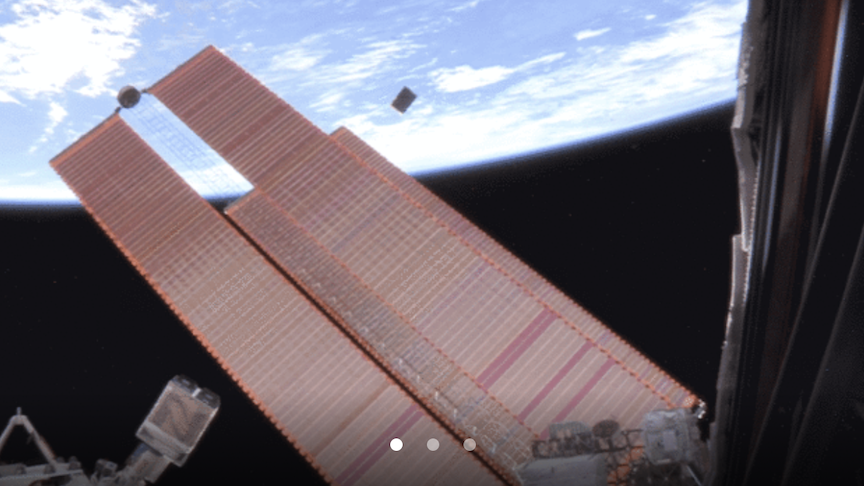
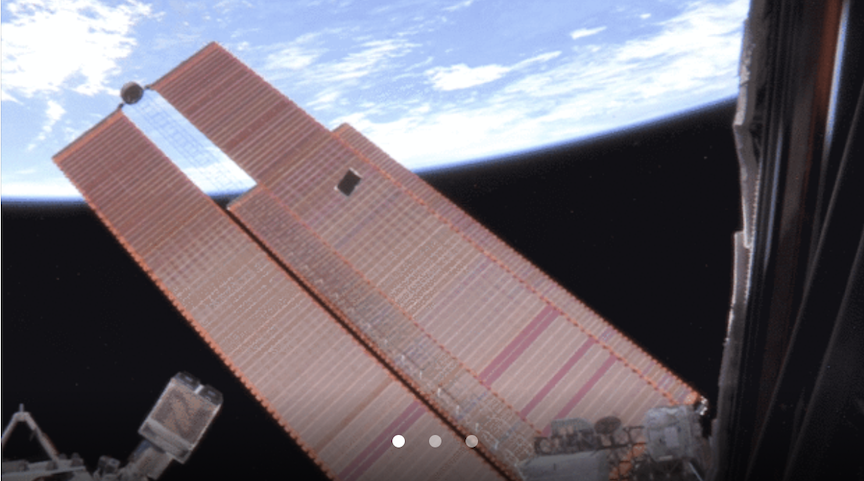
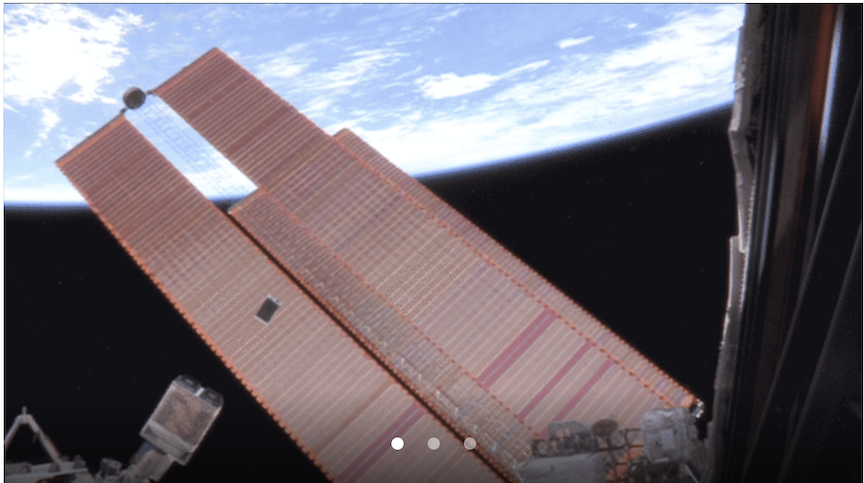
ASTERIA was deployed from the International Space Station on
November 20, 2017. Credit: NASA/JPL-Caltech


Long before it was deployed into low-Earth orbit from the International Space Station in Nov. 2017, the tiny ASTERIA spacecraft had a big goal: to prove that a satellite roughly the size of a briefcase could perform some of the complex tasks much larger space observatories use to study exoplanets, or planets outside our solar system. A new paper soon to be published in the Astronomical Journal describes how ASTERIA (short for Arcsecond Space Telescope Enabling Research in Astrophysics) didn't just demonstrate it could perform those tasks but went above and beyond, detecting the known exoplanet 55 Cancri e.

Scorching hot and about twice the size of Earth, 55 Cancri e orbits extremely close to its Sun-like parent star. Scientists already knew the planet's location; looking for it was a way to test ASTERIA's capabilities. The tiny spacecraft wasn't initially designed to perform science; rather, as a technology demonstration, the mission's goal was to develop new capabilities for future missions. The team's technological leap was to build a small spacecraft that could conduct fine pointing control — essentially the ability to stay very steadily focused on an object for long periods. 

Based at NASA's Jet Propulsion Laboratory in Southern California and at the Massachusetts Institute of Technology, the mission team engineered new instruments and hardware, pushing past existing technological barriers to create their payload. Then they had to test their prototype in space. Though its prime mission was only 90 days, ASTERIA received three mission extensions before the team lost contact with it last December. 

The CubeSat used fine pointing control to detect 55 Cancri e via the transit method, in which scientists look for dips in the brightness of a star caused by a passing planet. When making exoplanet detections this way, a spacecraft's own movements or vibrations can produce jiggles in the data that could be misinterpreted as changes in the star's brightness. The spacecraft needs to stay steady and keep the star centered in its field of view. This allows scientists to accurately measure the star's brightness and identify the tiny changes that indicate the planet has passed in front of it, blocking some of its light. 

ASTERIA follows in the footsteps of a small satellite flown by the Canadian Space Agency called MOST (Microvariability and Oscillations of Stars), which in 2011 performed the first transit detection of 55 Cancri e. MOST was about six times the volume of ASTERIA – still incredibly small for an astrophysics satellite. Equipped with a 5.9-inch (15-centimeter) telescope, MOST was also capable of collecting six times as much light as ASTERIA, which carried 2.4-inch (6-centimeter) telescope. Because 55 Cancri e blocks out only 0.04 percent of its host star's light, it was an especially challenging target for ASTERIA. 

"Detecting this exoplanet is exciting, because it shows how these new technologies come together in a real application," said Vanessa Bailey, the principal investigator for ASTERIA's exoplanet science team at JPL. "The fact that ASTERIA lasted more than 20 months beyond its prime mission, giving us valuable extra time to do science, highlights the great engineering that was done at JPL and MIT." 

Big Feat

The mission made what's known as a marginal detection, meaning the data from the transit would not, on its own, have convinced scientists that the planet existed. (Faint signals that look similar to a planet transit can be caused by other phenomena, so scientists have a high standard for declaring a planet detection.) But by comparing the CubeSat's data with previous observations of the planet, the team confirmed that they were indeed seeing 55 Cancri e. As a tech demo, ASTERIA also didn't undergo the typical prelaunch preparations for a science mission, which meant the team had to do additional work to ensure the accuracy of their detection.

"We went after a hard target with a small telescope that was not even optimized to make science detections – and we got it, even if just barely," said Mary Knapp, the ASTERIA project scientist at MIT's Haystack Observatory and lead author of the study. "I think this paper validates the concept that motivated the ASTERIA mission: that small spacecraft can contribute something to astrophysics and astronomy."

While it would be impossible to pack all the capabilities of a larger exoplanet-hunting spacecraft like NASA's Transiting Exoplanet Survey Satellite (TESS) into a CubeSat, the ASTERIA team envisions these petite packages playing a supporting role for them. Small satellites, with fewer demands on their time, could be used to monitor a star for long periods in hopes of detecting an undiscovered planet. Or, after a large observatory discovers a planet transiting its star, a small satellite could watch for subsequent transits, freeing up the larger telescope to do work smaller satellites can't. 

Astrophysicist Sara Seager, principal investigator for ASTERIA at MIT, was recently awarded a NASA Astrophysics Science SmallSat Studies grant to develop a mission concept for a follow-on to ASTERIA. The proposal describes a constellation of six satellites about twice as big as ASTERIA that would search for exoplanets similar in size to Earth around nearby Sun-like stars. 

Thinking Small 

To build the smallest planet-hunting satellite in history, the ASTERIA wasn't simply shrinking hardware used on larger spacecraft. In many cases, they had to take a more innovative approach. For example, the MOST satellite used a camera with a charge-coupled device (CCD) detector, which is common for space satellites; ASTERIA, on the other hand, was equipped with a complementary metal-oxide-semiconductor (CMOS) detector — a well-established technology typically used for making precision measurements of brightness in infrared light, not visible light. ASTERIA's CMOS-based, visible-light camera provided multiple advantages over a CCD. One big one: It helped keep ASTERIA small because it operated at room temperature, eliminating the need for the large cooling system that a cold-operating CCD would require. 

"This mission has mostly been about learning," said Akshata Krishnamurthy, co-investigator and science data analysis co-lead for ASTERIA at JPL. "We've discovered so many things that future small satellites will be able to do better because we demonstrated the technology and capabilities first. I think we've opened doors." 

ASTERIA was developed under JPL's Phaeton program, which provided early-career hires, under the guidance of experienced mentors, with the challenges of a flight project. ASTERIA is a collaboration with MIT in Cambridge; MIT's Sara Seager is principal investigator on the project. Brice Demory of the University of Bern also contributed to the new study. The project's extended missions were partially funded by the Heising-Simons Foundation. JPL is a division of Caltech in Pasadena, California.

Filed Under: Exploration & Science Missions, SmallSat

Primary Sidebar

Coverage

  • Missions & Constellations
  • Business & Finance
  • Military & Defense
  • Launch
  • Software Automation & Ground Systems
  • Government & Regulation
  • Services & Applications

Most Read Stories

  • SpaceX Targets First Starship Upper Stage Tower Catch for Flight 14
  • SpaceX Limits Future Commercial Rideshare Bookings Past 2028 Amid Severe Manifest Saturation
  • EchoStar Faces Mounting Financial Pressure on Hughes Satellite Unit Amid Corporate Reorganization
  • NASA and ISISPACE Deploy GRITSS CubeSat to Advance Orbital Reference Frame Precision
  • FCC Proposes Opening Unlicensed Bluetooth and Wi-Fi Bands for Space-Based Communications

Secondary Sidebar

Footer


Satnews is a leading provider of satellite news, events, publications, research and other satellite industry information in both commercial and military enterprises worldwide.

Stories By Category

  • Business & Finance
  • Government & Regulation
  • Launch
  • Military & Defense
  • Missions & Constellations
  • Services & Applications
  • Software Automation & Ground Systems
  • Spectrum & Licensing
  • Startups & NewSpace Business

About Us

  • Leadership & Editorial Team
  • SatNews History
  • Free Satnews Subscription
  • SatNews Events
  • Magazines

Navigation

  • Latest Stories
  • Magazines
  • Events
  • Contact
  • Cookie & Privacy Policy for Satnews

We use cookies to ensure that we give you the best experience on our website. If you continue to use this site we will assume that you are happy with it.
x
Sign up Now (For Free)
Access daily or weekly satellite news updates covering all aspects of the commercial and military satellite industry.
Invalid email address
Notify Me Regarding ( At least one ):
We value your privacy and will not sell or share your email or other information with any other company. You may also unsubscribe at anytime.

Click Here to see our full privacy policy.
Thanks for subscribing!