

On August 23, 2026, coinciding with India’s National Space Day, the Indian Space Research Organisation (ISRO) announced a structural policy pivot to cease direct manufacturing of commercial launch vehicles.
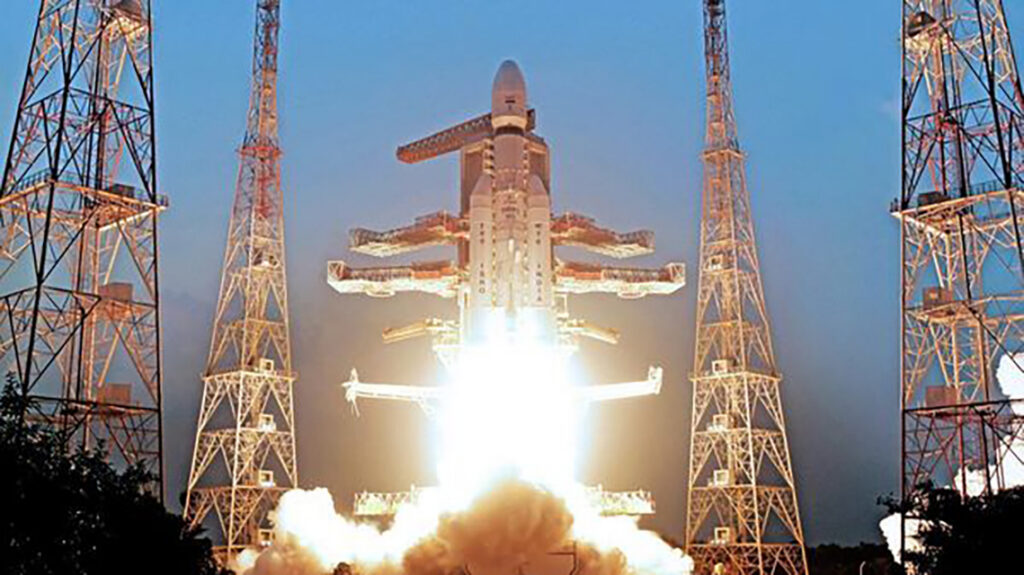
Under the strategic direction, ISRO will transfer end-to-end rocket assembly and operational manufacturing to private industrial consortia while refocusing its internal resources on advanced space exploration research, technology development, and deep-space missions.
Industrial Transfer and Manufacturing Allocation Specifications
The operational transition transfers production lines for ISRO’s operational launch fleet—including the Polar Satellite Launch Vehicle (PSLV), Launch Vehicle Mark-3 (LVM3), and the Small Satellite Launch Vehicle (SSLV)—to domestic private aerospace contractors.
Under the commercial handover framework, industry consortia led by firms such as Hindustan Aeronautics Limited (HAL) and Larsen & Toubro (L&T) will assume responsibility for serial production, component sourcing, and launch vehicle integration. Commercial operations and mission procurement will continue through NewSpace India Limited (NSIL), the commercial arm of ISRO, while regulatory authorizations remain managed by the Indian National Space Promotion and Authorization Centre (IN-SPACe).
Policy Framework and Regulatory Context
The manufacturing shift builds upon structural reforms initiated under the Indian Space Policy 2023 and updated foreign direct investment (FDI) regulations, which allowed up to 100 percent foreign investment in satellite component manufacturing and 49 percent in launch vehicle systems.
This industrial policy shift accelerates ISRO’s initiatives to expand spacecraft and launch throughput while adapting to competitive pressures from global commercial launch providers, where ISRO continues coordinating international rideshare manifests. By transitioning legacy rocket manufacturing to commercial vendors, ISRO aims to relieve operational bottlenecks at the Satish Dhawan Space Centre and expand annual launch cadences.
Long-Term Economic Outlook Through 2033
By shifting routine hardware fabrication to private industry, the Indian government aims to expand the nation’s domestic space economy from approximately $8 billion to $44 billion by 2033, capturing an estimated 8 percent of the global space market. Commercializing launch vehicle production is designed to establish an export-oriented aerospace supply chain, positioning Indian prime contractors to supply launch services and satellite buses to international commercial customers.
