

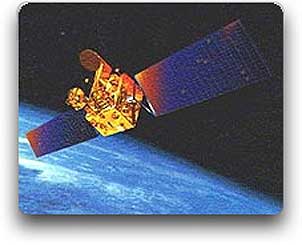
 Oceansat-2 would help identify potential fishing zones, assist in coastal zone studies and significantly enhance expertise in understanding surface temperature and winds.
Besides Rubin 9.1 and Rubin 9.2 nano satellites from Germany, the four cubesats lined up for the mission on board India’s workhorse rocket Polar Satellite Launch Vehicle are: Beesat, built by Technical University Berlin, UWE-2 (University of Wuerzburg Germany), ITU-pSat (Istanbul Technical University Turkey) and SwissCube-1 (Ecole Polytechnique Federal de Lausanne, Switzerland).
Oceansat-2 weighing around 970 kg, is an in-orbit replacement to Oceansat-1, which has completed 10 years of service, ISRO Spokesperson S. Satish said.
“It (Oceansat-2) will carry an OCM (Ocean Colour Monitor) and a Ku-band pencil beam Scatterometer. In addition, it will carry Radio Occultation Sounder for Atomospheric studies (ROSA), developed by the Italian Space Agency (ASI),” he said.
Oceansat-2 would help identify potential fishing zones, assist in coastal zone studies and significantly enhance expertise in understanding surface temperature and winds.
“Earlier, we had launched Oceansat (Oceansat-1) which essentially could look at (only) the colour of the ocean. Now, colour alone is not sufficient, we should look at the temperature and surface winds and so on,” ISRO Chairman G. Madhavan Nair told PTI.
