

- Alternative Packaging Options: Oceaneering Space Systems of Houston
- Avionics: Honeywell International, Inc. of Glendale, Arizona
- Energy Storage: ATK Space Systems Group of Brigham City, Utah; Battelle Memorial Institute of Columbus, Ohio, and Hamilton Sundstrand of Canoga Park, California
- Minimum Habitation Functions: The Boeing Company of Huntington Beach, California, ILC Dover of Frederica, Delaware, and University of Maryland, College Park
- Regolith Moving Methods: Astrobotic Technology Inc. of Pittsburgh and Honeybee Robotics of New York
- Software: The Charles Stark Draper Laboratory, Inc. of Cambridge, Massachusetts, and United Space Alliance of Houston
 The awards total approximately $2 million, with a maximum individual
award of $250,000. The recommendations from the studies will help determine packaging options, identify basic functions for lunar habitats, and conceptualize innovative avionics, computer software, energy storage ideas and equipment and techniques that could help preparation for
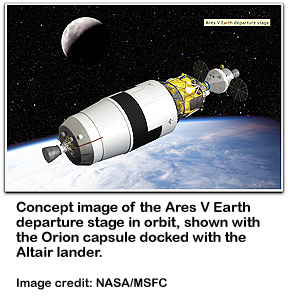
the lunar outpost site. The Constellation Program is building NASA‘s nexgen fleet of spacecraft that include the Ares I and Ares V rockets, the Orion crew capsule, the Altair lunar lander and lunar surface systems. NASA plans to establish a human outpost on the moon through a successive series of lunar missions starting in 2020. Lunar surface systems may include habitats, pressurized and un-pressurized rovers, communication and navigation elements, electrical power control, and natural resource use.
The awards total approximately $2 million, with a maximum individual
award of $250,000. The recommendations from the studies will help determine packaging options, identify basic functions for lunar habitats, and conceptualize innovative avionics, computer software, energy storage ideas and equipment and techniques that could help preparation for
the lunar outpost site. The Constellation Program is building NASA‘s nexgen fleet of spacecraft that include the Ares I and Ares V rockets, the Orion crew capsule, the Altair lunar lander and lunar surface systems. NASA plans to establish a human outpost on the moon through a successive series of lunar missions starting in 2020. Lunar surface systems may include habitats, pressurized and un-pressurized rovers, communication and navigation elements, electrical power control, and natural resource use.
