

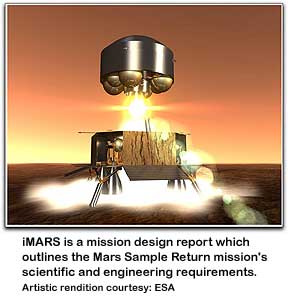
 The first robotic mission to return samples to Earth from Mars took a further step toward realization with the recent publication of a mission design report by the iMARS Working Group. The report defines key elements of the future, internationally-funded mission that involves the cooperation of ESA, NASA and other national agencies. iMARS, which stands for the International Mars Architecture for the Return of Samples, is a committee of the International Mars Exploration Working Group comprised of scientists, engineers, strategic planners, and managers. The report, which comes after months of deliberation, outlines the scientific and engineering requirements of such an international mission to be undertaken in the timeframe 2020-2022. The Mars Sample Return mission is an essential step with respect to future exploration goals and the prospect of establishing a future human mission to Mars. Returned samples will increase the knowledge of the properties of Martian soil and contribute significantly to answering questions about the possibility of life on the Red Planet. This mission will improve our understanding of the Mars environment to support planning for the future human exploration.
Sending Those Martian Soils Home—Working Group Defines Requirements
The first robotic mission to return samples to Earth from Mars took a further step toward realization with the recent publication of a mission design report by the iMARS Working Group. The report defines key elements of the future, internationally-funded mission that involves the cooperation of ESA, NASA and other national agencies. iMARS, which stands for the International Mars Architecture for the Return of Samples, is a committee of the International Mars Exploration Working Group comprised of scientists, engineers, strategic planners, and managers. The report, which comes after months of deliberation, outlines the scientific and engineering requirements of such an international mission to be undertaken in the timeframe 2020-2022. The Mars Sample Return mission is an essential step with respect to future exploration goals and the prospect of establishing a future human mission to Mars. Returned samples will increase the knowledge of the properties of Martian soil and contribute significantly to answering questions about the possibility of life on the Red Planet. This mission will improve our understanding of the Mars environment to support planning for the future human exploration.
