

Bank of America put a $235 price target on SpaceX on July 8, less than four weeks after the company went public at $135 a share. The stock was trading at $153 the next day. Six days after that note, MoffettNathanson started coverage at Neutral with a target of $131, below the offer price. The analyst who wrote the higher number takes the Satellite Innovation stage at Silicon Valley Space Week in October.
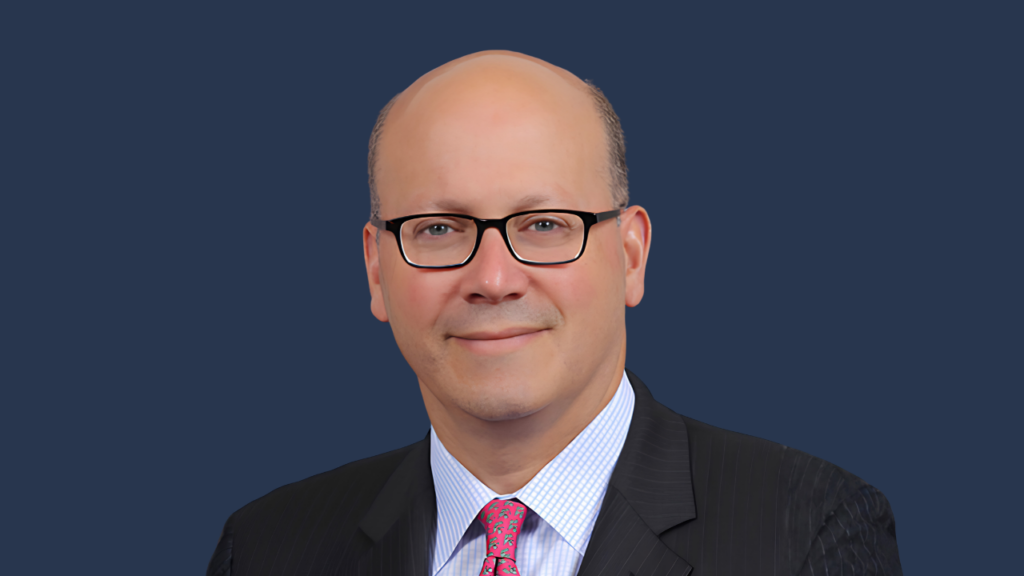
Dr. Ronald J. Epstein is a Managing Director in Americas Equity Research at Bank of America Securities, covering aerospace, defense and multi-industrials with large aerospace components from New York, across companies listed in the United States, Canada and Brazil. He joined Merrill Lynch in 2001. The Institutional Investor All-America Research poll has ranked him a top-three analyst in Aerospace and Defense Electronics for sixteen years running, and he led the number one team for eight of them. He is a Fellow of the Royal Aeronautical Society, a technology advisor to United Airlines Ventures, a member of the Board of Regents of the Potomac Institute for Policy Studies, an affiliate professor at the University of North Carolina and a mentor for the Techstars Space Accelerator. Before Wall Street he was a research scientist in applied aerodynamics at Boeing Phantom Works and an adjunct in the mechanical engineering department at Washington University in St. Louis, teaching fluid dynamics and control systems. He has a bachelor’s degree with highest honors from Skidmore College, an MBA with honors from Wharton, a research master’s in fluid dynamics from the Von Karman Institute and a doctorate in mechanical engineering from Duke.
The program bills the keynote as the satellite industry repriced. The repricing is easiest to see in the spread. SpaceX filed its Form S-1 on May 20 seeking $75 billion in fresh equity at a baseline valuation of $1.75 trillion, which SatNews reported in May as a record filing. It priced at $135 on June 12, raised $86 billion, and closed its first day at $161. The Bank of America target rests on discounted cash flows run out to 2045 across bear, base and bull cases, and the team frames the company as four businesses: launch, Starlink, Starshield and an orbital compute line it is still building. About a fifth of SpaceX revenue in 2025 came from U.S. federal agencies. Six days after that initiation, MoffettNathanson opened at Neutral and called the roughly $30 trillion addressable market in the prospectus absurd. MoffettNathanson has since raised its target to $142. On September 30, with the stock at $149, thirty-five analysts averaged $222 in a range from $140 to $450.
Epstein gives the keynote from 9:00 a.m. to 9:30 a.m. on Tuesday, October 27, in the Hahn Auditorium at the Computer History Museum in Mountain View. He is the only speaker on it. It is the first talk of Silicon Valley Space Week, following breakfast in the Grand Hall, and at 9:30 the room turns to the regulators who decide which networks get to grow. Later that morning a panel of investors and bankers reads the first set of quarterly results SpaceX filed as a public company.
Silicon Valley Space Week runs Tuesday, October 27 through Thursday, October 29 at the Computer History Museum, with Satellite Innovation across the first two days and the MilSat Symposium across the last two. Epstein opens the week. He reaffirmed the Buy on September 2, and on September 30 the stock was $12 below where it closed on its first day.
