

On Sept. 10, 2026, UK-based satellite manufacturer NewOrbit confirmed it has secured a launch slot for its first satellite, NEO-1, scheduled for Q3 2028.
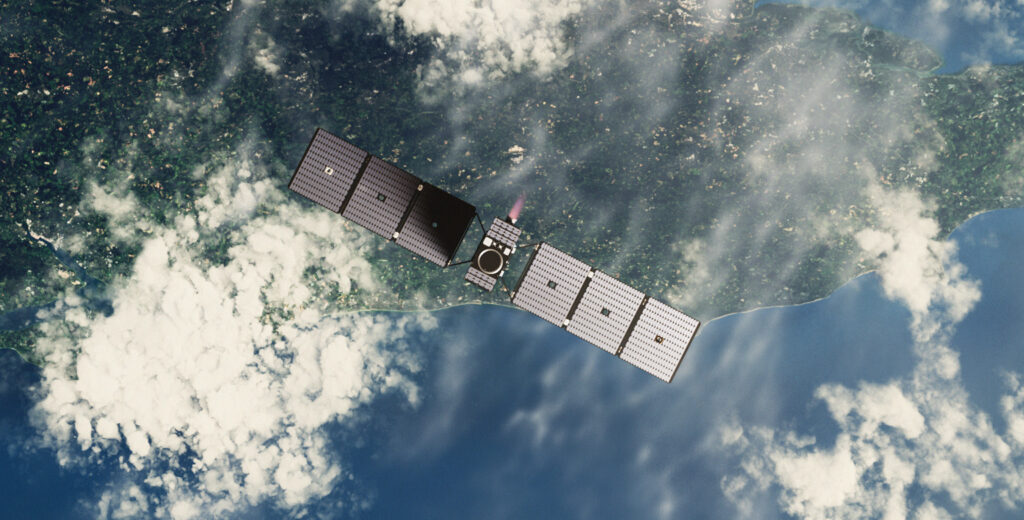
The launch opportunity was procured through French launch services broker RIDE! to place the spacecraft into Very Low Earth Orbit (VLEO) at altitudes between 200 and 300 kilometers. Designed as a multi-tenant rideshare platform, NEO-1 allows commercial and institutional payload developers to test, validate, and operate technologies in low altitudes without building dedicated spacecraft platforms.
Technical Specifications and Environmental Baseline
Operating in VLEO presents unique aerodynamic and thermal challenges, including atmospheric drag, atomic oxygen erosion, and aerodynamic torques that typically degrade spacecraft stability and cause rapid orbital decay. Historically, only two dedicated scientific missions have sustained multi-year operations below 300 kilometers: the European Space Agency’s GOCE spacecraft and JAXA’s Super Low Altitude Test Satellite (Tsubame).
- Target Altitude: 200 km to 300 km orbital regime
- Design Lifespan: 5 years of active orbit maintenance
- Propulsion System: In-house developed drag-compensation propulsion architecture
- Optical Advantage: Delivers 25-centimeter ground resolution from a system that would yield 50-centimeter resolution at a standard 500-kilometer orbit
Customer Partnerships and Technical Advisory Integration
Japanese optics firm Genesia Corporation—which manufactured the telescope for JAXA’s Tsubame satellite—has booked the first payload slot on NEO-1, alongside two unannounced payload developers. To support platform development, NewOrbit appointed four former leadership figures from ESA’s GOCE mission to its technical advisory board, including mission scientist Dr. Mark Drinkwater, propulsion manager Dr. Michael Fehringer, systems engineer Alex Popescu, and flight operations director Paolo Ferri. The company previously closed an oversubscribed $18.5 million Series A funding round led by Voyager Ventures.
“Only two missions in history have stayed in VLEO,” said Anatolii Papulov, CEO and co-founder of NewOrbit. “Today, the people behind both come together on one mission: the engineers who built and flew GOCE sit on our technical board, and Genesia, whose telescope imaged Earth from Tsubame’s record altitude, joins NEO-1 as our first announced payload partner. That brings an extraordinary concentration of VLEO experience onto one commercial mission, and for the first time it is open for anyone in the industry to fly with.”
Manufacturing Strategy and Launch Timeline
NewOrbit is constructing a specialized satellite manufacturing plant in the Thames Valley, UK, which is scheduled to begin operations in 2027. Following platform integration and payload qualification throughout 2027 and early 2028, NEO-1 will undergo launch vehicle integration managed by RIDE! ahead of its scheduled Q3 2028 orbital insertion.
