

On August 5, 2026, custom application-specific integrated circuit (ASIC) developer EnSilica announced its membership in the 5G-aNTeNna consortium. The European technical initiative focuses on engineering compact, secure, and scalable 5G Non-Terrestrial Network (5G-NTN) satellite user terminals built for operational deployment on the European Union’s sovereign IRIS² satellite communications infrastructure.
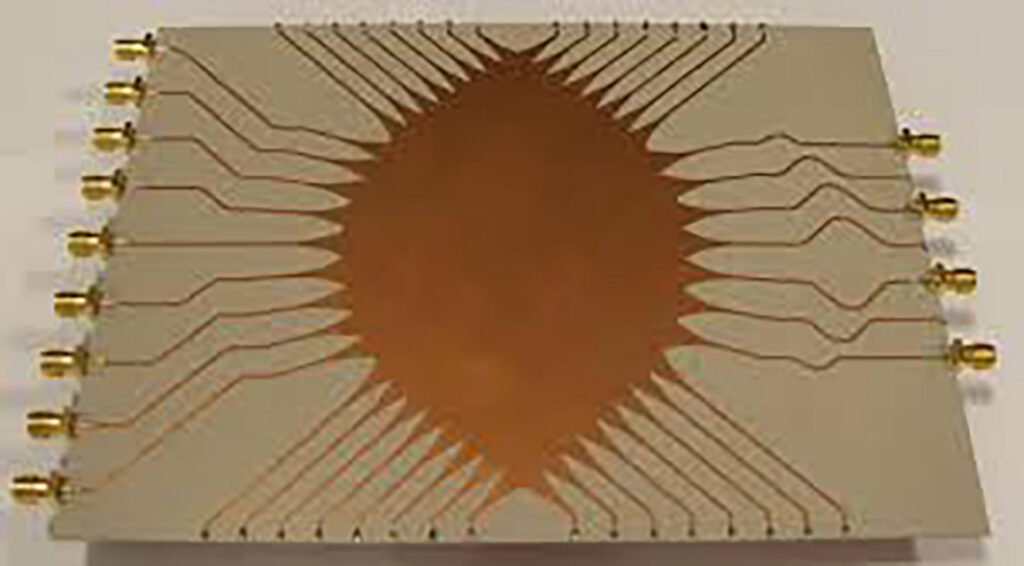
Led by Silicon Austria Labs (SAL), the research and development group includes industrial and technical partners CISC Semiconductor, EnSilica, FRITZ!, TechniSat, and Terma Technologies. The collaborative project aims to develop high-throughput Ka-band ground user terminal hardware designed to meet European government and enterprise broadband security parameters.
Consortium Structure and European Ground Infrastructure
The 5G-aNTeNna project is structured to address the full commercial manufacturing and technological supply chain for European satellite ground equipment. The industrial partners cover microchip design, radio-frequency (RF) engineering, phased-array antenna integration, manufacturing, and environmental testing.
By delivering home-grown ground terminal technology, the consortium supports the broader mandate of establishing European technological autonomy across orbital communications networks. The effort builds on previous satellite silicon initiatives, including EnSilica’s earlier £10.3 million ($13.1 million) award under the UK Space Agency’s Connectivity in Low Earth Orbit (C-LEO) program to engineer multi-orbit broadband user terminals.
Hybrid Phased-Array Architecture and ASIC Specifications
EnSilica’s contribution centers on the design and delivery of specialized application-specific standard products (ASSPs) and ASICs. The company is developing distributed digital beamformer integrated circuits and specialized modem microchips operating in the Ka-band spectrum.
These silicon devices enable hybrid electronically steerable phased-array terminal architectures. By pairing analog sub-arrays with digital beamforming microchips, the hardware balances RF signal processing power, operational thermal dissipation, and resistance to intentional jamming or radio-frequency interference.
“EnSilica’s involvement in the 5G-aNTeNna consortium is a natural extension of our work in satellite communications silicon and of our collaboration with other European partners,” said Ian Lankshear, CEO of EnSilica. “As satellite networks move towards wider deployment of 5G-NTN services, compact, electronically steerable user terminals will be critical, and our focus is on enabling the semiconductor technologies that make these systems practical and manufacturable for high-volume use.”
Manufacturing and Deployment Roadmap
The consortium partners will focus on refining terminal design prototypes for high-volume manufacturing. Engineering teams across the member organizations will conduct joint testing and verification to validate Ka-band beamforming performance and 5G-NTN protocol compliance ahead of planned operational demonstrations for the IRIS² multi-orbit constellation.
