

To resolve trade-offs between rapid impulse capability and high fuel efficiency during long-duration orbital missions, Impulse Space announced on Tuesday, July 28, 2026, the introduction of Electra, its first in-house electric propulsion (EP) system.
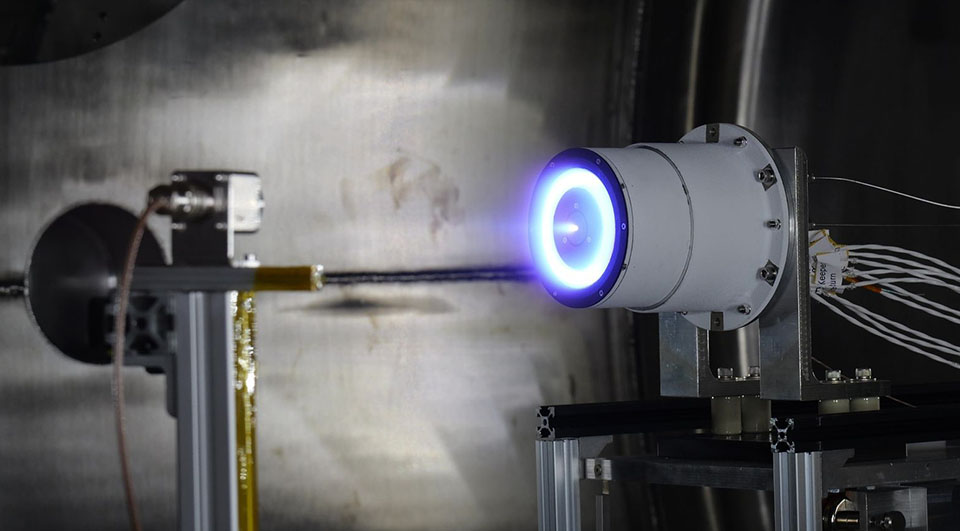
The low-thrust, high-efficiency engine is designed to complement the company’s existing high-thrust chemical propulsion systems, enabling hybrid mobility architectures for in-space operations.
Designed, manufactured, and tested vertically within six months at the company’s Redondo Beach facility, Electra allows satellite operators to offload long-duration tasks—such as orbital stationkeeping and inclination adjustments—to the electric thruster. This preserves onboard chemical propellant for time-sensitive, high-thrust maneuvers.
Engine Specifications and Hybrid Architecture
The Electra system integrates directly into the avionics and power architecture of Impulse’s spacecraft platforms. Key design and performance parameters include:
- Propulsion Type: High-efficiency Electric Propulsion (EP) thruster designed for continuous low-thrust operations.
- System Manufacturing: In-house vertical integration, encompassing custom drive electronics, power processing avionics, and internal thruster components.
- Operational Role: Handles continuous stationkeeping and long-duration delta-v maneuvers, offloading up to 50% of the fuel capacity traditionally reserved in chemical systems for lifetime orbit maintenance.
- Platform Compatibility: Engineered for hybrid configuration alongside high-thrust chemical thrusters on the company’s orbital transfer vehicles.
Program History and Context
The addition of electric propulsion marks an expansion of Impulse Space’s in-space transportation product lineup. Founded by former SpaceX propulsion lead Tom Mueller, Impulse built its initial flight heritage around its chemical-propulsion Mira orbital transfer vehicle.
Mira previously validated its high-thrust capabilities during the LEO Express-1 and LEO Express-2 missions, followed by upgraded system tests on the LEO Express-3 mission. Incorporating EP hardware directly addresses customer requirements for extended multi-year orbital hosting and complex cislunar transit profiles.
Leadership Perspectives
“As launch becomes more accessible, the next frontier is enabling spacecraft to do more once they arrive in orbit,” said Tom Mueller, Founder, CEO, and CTO of Impulse Space. “Our strategy has always been to develop the mobility technologies needed to support all missions after launch, and electric propulsion is an essential component of that strategy.”
“The best part of building Electra has been the opportunity to move fast and try new things,” stated Charlie Kelly, Lead Electric Propulsion Engineer at Impulse Space. “We get to turn ideas into plasma in a matter of weeks or months, not years. We’re still a small team, just a few people, which means every engineer gets to own a significant portion of our EP systems that will redefine the capabilities of Mira and future spacecraft.”
Flight Qualification Timeline
Impulse Space is executing qualification testing on flight-ready Electra engines to prepare the hardware for integration into upcoming Mira spacecraft production lines. Following qualification testing, the hybrid propulsion configuration will enter commercial service for multi-orbit payload delivery, constellation phasing, and responsive space missions.
