

On Friday, July 3, 2026, the South Korean government formally authorized a sweeping national aerospace roadmap that pulls forward its first uncrewed lunar landing by two years and establishes a sovereign low-Earth orbit (LEO) communications network by 2035.
Deliberated and approved during the 5th National Space Committee meeting chaired by President Lee Jae-myung, the updated policy accelerates the country’s transition toward a private-led commercial space ecosystem.
The policy shift is designed to expand South Korea’s share of the global space economy from its current 0.7% baseline to 3.0% by 2035, translating to a target revenue of 70 trillion won (approximately $49 billion).
Dual-Phase Lunar and Constellation Timelines
Administered by the newly operational Korea AeroSpace Administration (KASA), the accelerated strategy leverages domestic launch systems to achieve rapid outer-space and orbital infrastructure milestones:
- 2029 Lunar Orbiter: Launch of a dedicated Lunar Communication Orbiter utilizing the liquid-fueled Nuri (KSLV-II) rocket to establish basic deep-space routing protocols.
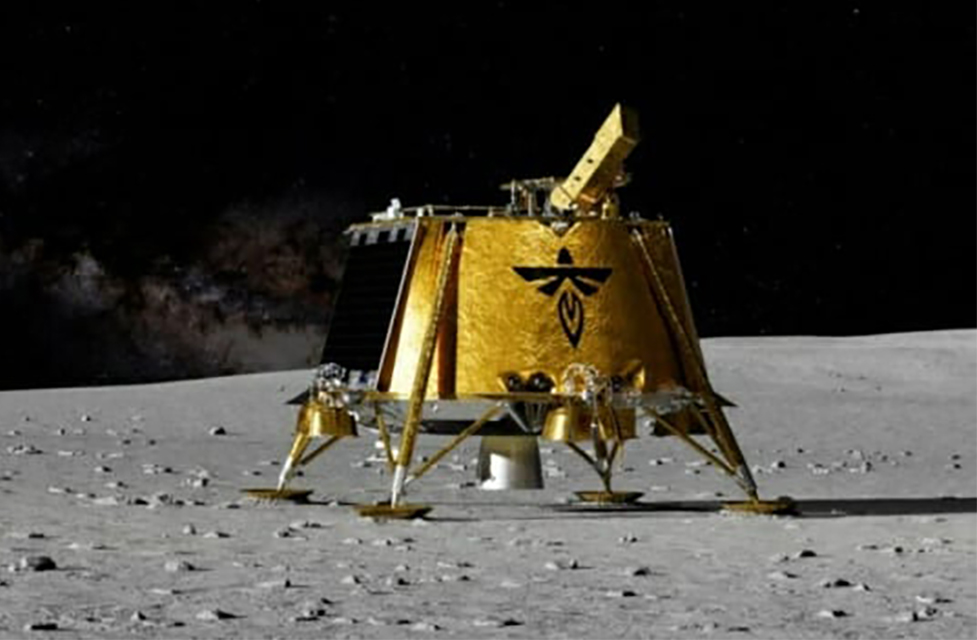
- 2030 Lunar Landing: Deployment of a privately developed small lunar lander carried aboard a three-stage Nuri rocket. This shifts the landing timeline forward from its original 2032 schedule to bypass delays associated with the next-generation launch vehicle currently slated for 2032.
- 2031 Earth-Moon Probe: Deployment of a dedicated Earth-Moon scientific probe to conduct local environmental and electromagnetic characterization.
- 2035 “K-Starlink” Deployment: Completion of a sovereign LEO communication constellation numbering between 128 and 512 mass-produced satellites to secure independent 6G communications sovereignty.
Commercial Infrastructure and Sovereign Networks
The National Space Committee’s strategy represents a major policy change, shifting execution from state-funded research institutes directly to commercial entities. South Korea formally ratified its 2035 “K-Starlink” Low Earth Orbit Constellation Plan as the primary driver for high-value industrial data.
The satellite network will utilize integrated artificial intelligence (AI) modules to compute dynamic handover protocols natively in space. To ensure economic sustainability, the government will establish a public-private joint Special Purpose Corporation (SPC) to sell and export accumulated orbital space data directly to global commercial markets.
Industrial operations will be physically anchored within the “South Coast Aerospace Industrial Belt,” a manufacturing corridor connecting Goheung, Suncheon, Jinju, and Changwon around KASA’s headquarters in Sacheon.
The Hanwha Private-Sector Monolith
The structural execution of the revised space strategy will rely heavily on a 55 trillion won ($38.5 billion) private-public investment pledge led by Hanwha Group. Following Hanwha’s purchase of a dominant secondary equity stake in Korea Aerospace Industries (KAI), the conglomerate has secured vertical integration over the domestic supply chain.
Under the administrative principle of “our satellites on our launch vehicles,” Hanwha Aerospace will manufacture and launch the LEO constellation platforms, while Hanwha Systems delivers the baseline 192-satellite ultra-low-orbit Synthetic Aperture Radar (SAR) and communication payloads.
Legislative and Financial Outlook
To foster a favorable investment climate, KASA is preparing the Space Utilization Promotion Act, which will establish a dedicated legal framework allowing the government to directly procure private-sector products and services for national space systems.
KASA Administrator Yoon Young-bin confirmed that South Korea’s space budget will exceed 1 trillion won (approximately $800 million) for the first time in 2026, facilitating the release of local specialization project funds and domestic launch vehicle contracts to accelerate private-sector participation from the earliest design phases.
