

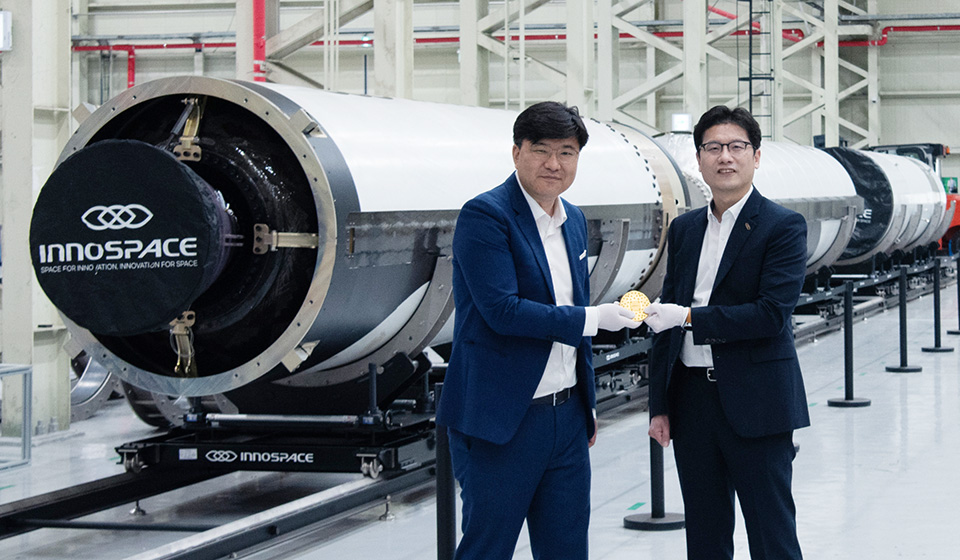
SEJONG, SOUTH KOREA — Forging a new frontier at the intersection of orbital logistics and advanced data architectures, South Korean satellite launch service provider INNOSPACE (KS:462350) has signed a memorandum of understanding (MOU) with Norma, a domestic quantum computing technology firm. The strategic agreement lays the groundwork for live, in-space testing of quantum hardware and the eventual deployment of a dedicated Space Quantum Computing Center.
As modern satellite constellations, direct-to-device communications, and real-time military intelligence networks grow increasingly complex, the demand for extreme computational power has skyrocketed. The partnership aims to address this bottleneck by evaluating whether next-generation quantum computing can handle complex orbital data processing, trajectory optimization, mission planning, and secure cryptographic communications directly in the space environment.
Testing a QPU in the Extreme Environment of Space
The core of the initial collaboration centers on an in-orbit technology demonstration. Norma will develop a compact quantum computing payload centered around a Quantum Processing Unit (QPU). Rather than waiting for traditional, multi-year satellite integration pipelines, the payload will be integrated directly into INNOSPACE’s flagship HANBIT launch vehicle family.
Operating directly from the rocket platform during flight, the mission will evaluate how sensitive QPU hardware behaves when subjected to the extreme radiation, thermal variations, and structural vibrations of an actual space environment. The two companies confirmed that specific operational details—including the exact launch manifest, payload docking configurations, and primary mission parameters—will be finalized during upcoming technical workshops.
The operational data gathered during the HANBIT flight will serve as the baseline architecture for the planned Space Quantum Computing Center. Envisioned as a cloud-linked, next-generation data infrastructure hub, the center will leverage quantum algorithms to optimize large-scale satellite fleet operations, accelerate deep-space data analytics, and provide cloud-based quantum resources to commercial and government clients.
Launch Vehicles Evolve into Technology Incubators
For INNOSPACE, the collaboration represents a deliberate shift in how commercial launch services monetize their flights. Rather than acting as a simple cargo delivery service for third-party satellites, rockets are increasingly being utilized as active, short-duration testing platforms for cutting-edge corporate research.
“As demand for in-space technology demonstration continues to grow, launch vehicles are evolving beyond satellite transportation into critical infrastructure that enables the validation and commercialization of advanced technologies across sectors such as bio/pharmaceuticals, semiconductors, communications, and AI,” said Soojong Kim, Founder and CEO of INNOSPACE.
Founded in 2011, Norma has rapidly scaled its presence in the deep-tech sector through its proprietary “Q Platform,” an integrated development and execution environment that delivers quantum software and cloud-native services. The company has aggressively expanded its commercial footprint through high-profile enterprise cloud partnerships with KT Cloud and Kakao Enterprise, aiming to deploy its specialized quantum algorithms across the biopharma, finance, defense, and gaming industries.
Hyunchul Jung, CEO of Norma, noted that the upcoming in-orbit demonstration with INNOSPACE represents a vital validation gate for the stability of their hardware. By proving that their QPUs can reliably function beyond Earth’s atmosphere, the joint venture intends to pursue lucrative government-funded aerospace R&D programs, establishing a dominant position in the burgeoning space-quantum convergence market.
