

On March 24, 2026, at the Satellite 2026 conference in Washington, D.C., SES announced plans to deploy meoSphere, a next-generation Medium Earth Orbit (MEO) satellite network. The initiative marks a significant expansion of SES’s multi-orbit infrastructure and begins with a strategic order for an initial 28 high-power satellite platforms from NewSpace manufacturer K2 Space.
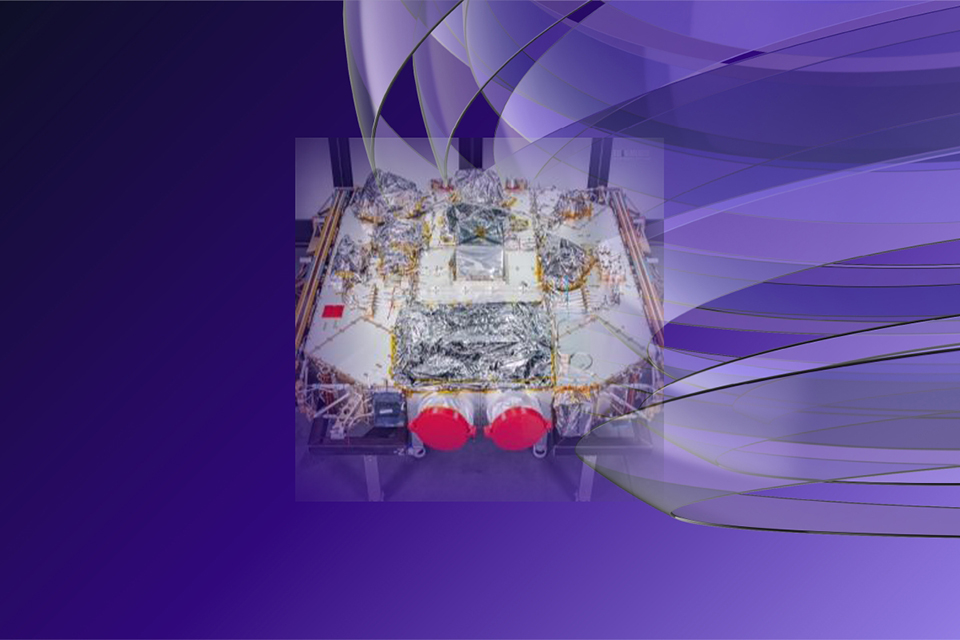
Targeted for full operation by 2030, meoSphere is designed to meet growing commercial and defense demands for flexible, high-capacity connectivity.
The network represents a shift toward iterative, agile manufacturing. SES will integrate its own software-defined payloads—developed and manufactured in Luxembourg—onto K2 Space’s “Mega-class” buses. This approach allows SES to maintain tighter control over critical supply-chain elements while enabling the network to scale dynamically based on market demand. The meoSphere architecture is also engineered for compatibility with the European Union’s IRIS2 secure satellite constellation program.
Strategic Alignment and Multi-Mission Capabilities
The meoSphere constellation will orbit approximately 8,000 km above Earth, providing a strategic middle layer between Low Earth Orbit (LEO) and Geostationary (GEO) assets. This positioning is intended to offer low-latency performance with the geographic efficiency of MEO. Beyond broadband services, the network is designed as a “backbone in space,” supporting multi-mission operations including real-time data relay for LEO constellations, space stations, and orbital data centers.
For government and defense users, meoSphere supports sovereign network functions, including the use of dedicated waveforms and military Ka-band spectrum. The inclusion of edge computing and ultra-secure onboard storage reduces dependency on vulnerable ground infrastructure by allowing for local processing of analytics and AI workloads.
Technical Specifications and High-Power Architecture
The meoSphere network utilizes K2 Space’s high-power satellite bus to support advanced mission equipment and digital regenerative payloads.
- Platform Power: 20 kW per satellite (significantly higher than previous MEO generations).
- Optical Networking: Integrated Optical Intersatellite Links (OISLs) supporting up to 100 Gbps for satellite crosslinks and data relay.
- Data Throughput: Up to 1 Gbps using flat-panel electronically steerable antennas (ESAs) and up to 4 Gbps for parabolic trunking applications.
- Standards Compliance: Fully 5G-NTN and 3GPP compliant for seamless terrestrial mobile integration.
- Orbital Configuration: 4 inclined planes with 7 satellites per plane in Phase 1 for pole-to-pole coverage.
Executive Perspective
“Together with K2 Space and other space partners, we’re building meoSphere as essential infrastructure—constructed faster, designed to handle massive data demands globally, and built to support the secure, resilient sovereign networks that our global government allies depend on,” said Adel Al-Saleh, CEO of SES.
“The meoSphere partnership with SES is a clear validation of K2’s mission to build the highest power satellites on orbit to realize our partners’ and customers’ ambitions in space,” added Karan Kunjur, Co-Founder and CEO of K2 Space.
Future Deployment
SES plans to utilize an iterative development cycle to de-risk the meoSphere rollout, beginning with a series of on-orbit pathfinder missions over the next three years.
| Milestone | Target Date | Status |
| First Pathfinder Mission | Spring 2026 | Scheduled (SpaceX Transporter-16) |
| Subsequent Pathfinder Missions | 2027–2028 | Planned |
| Initial Fleet Delivery (28 Sats) | 2029 | Contracted |
| Full Operational Capability (FOC) | 2030 | Targeted |
