

COVINGTON, La. — Globalstar executives met with Federal Communications Commission (FCC) leadership on Monday to advocate for the approval of its third-generation “C-3” mobile satellite service (MSS) system and to urge the regulator to protect the Big LEO spectrum band from competing proposals.
In an ex parte filing submitted December 30, 2025, Globalstar disclosed that its leadership team hosted Arpan Sura, Senior Counsel to Chairman Carr, at the company’s headquarters in Covington, Louisiana. During the visit, the company detailed its pending request for U.S. market access for the C-3 system, a project representing a total investment of more than $1 billion in satellites and ground infrastructure.
The C-3 Architecture
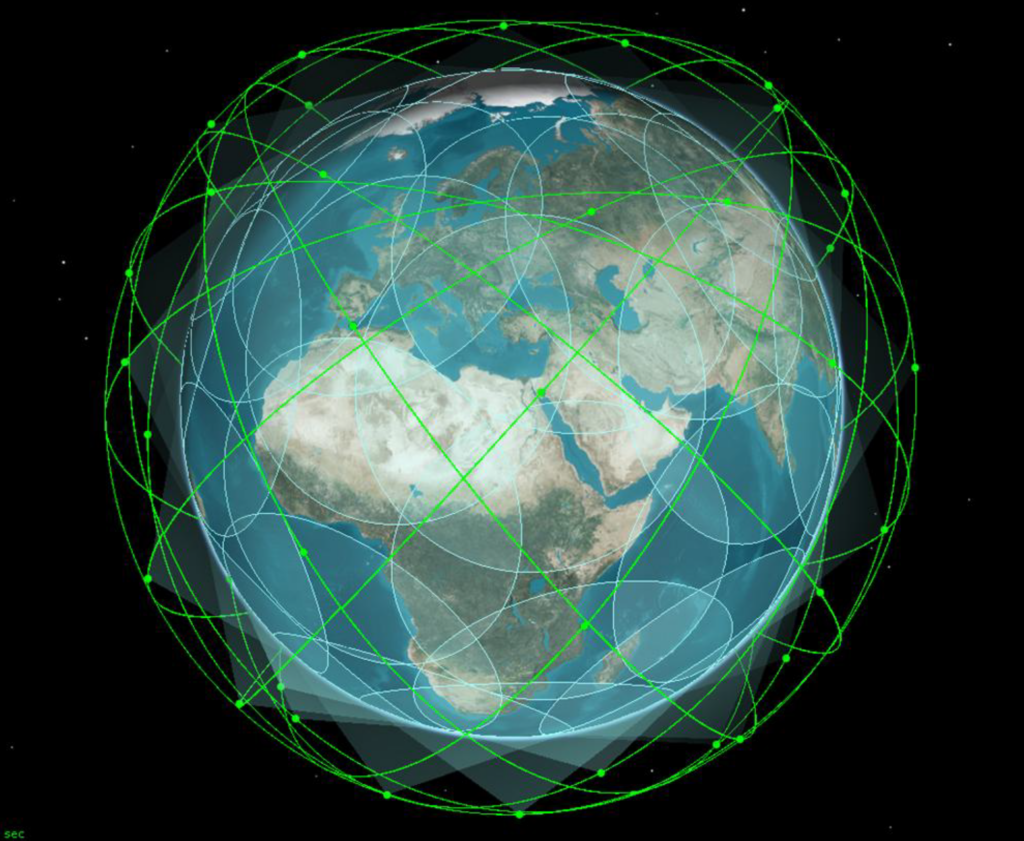
The proposed C-3 constellation consists of 54 satellites—48 operational units in a Walker configuration across 12 planes, plus six on-orbit spares. The system is designed to operate at an altitude of 1,414 kilometers with a 52-degree inclination, maintaining the same orbital parameters as the company’s existing HIBLEO-4 and HIBLEO-X deployments.
Technical upgrades in the C-3 generation focus on dynamic beamforming capabilities in the S-band downlink. According to the filing, this technology allows the satellites to transmit higher-power beams, concentrating capacity directly where users are located to support expanded MSS products and direct-to-device (D2D) features.
Regulatory Friction
Globalstar used the meeting to reiterate its opposition to new entrants seeking access to the Big LEO band (1.6/2.4 GHz). The company argued that the existing licensing framework, established by the FCC’s “2007 Big LEO Order,” has successfully fostered investment and should remain undisturbed.
Specifically, Globalstar executives warned that co-frequency operations by other entities would “inevitably cause extensive harmful interference” to its current services. The filing explicitly references pending requests from SpaceX and Kepler as threats to its spectrum rights.
“The Commission should expeditiously dismiss or deny all pending requests from other parties to operate in Globalstar’s licensed Big LEO MSS spectrum,” the company stated in the filing.
Ground Segment Expansion
To support the C-3 system, Globalstar is aggressively expanding its ground network. The company plans to deploy more than 15 new feeder link earth station antennas within the United States and its territories. On a global scale, the buildout includes approximately 90 new antennas across 35 gateway facilities in at least 25 countries.
Formal Petition Imminent
Globalstar confirmed it intends to file a formal petition to deny SpaceX’s September application by the applicable regulatory deadline. In the interim, the company is proceeding with fleet replenishment, with 17 replacement HIBLEO-4 satellites scheduled for launch by 2026.
