

• Skip to primary navigation
  • Skip to main content
  • Skip to primary sidebar
  • Skip to secondary sidebar
  • Skip to footer
  • NEWS:
  • SatNews
  • SatMagazine
  • MilSatMagazine
  • SmallSat News
  • |     EVENTS:
  • SmallSat Symposium
  • Satellite Innovation
  • MilSat Symposium
  • SmallSat Europe

SatNews

Satellite Industry Intelligence Since 1983

Subscribe
  • LATEST
  • SatNews Events
  • Magazines
  • Calendar
  • Subscribe
  • Missions & Constellations
    • Exploration & Science Missions
    • In-Orbit Servicing & Orbital Operations
    • LEO Constellations
    • Mission Autonomy & Onboard Systems
    • Mission Deployments & Manifests
    • Navigation & PNT
    • SmallSat
    • Spacecraft & Payload Technology
    View All in Missions & Constellations →
    Smart and Elveo Mobile Complete Direct-to-Device Satellite Trials on Philippine Sea RouteSmart and Elveo Mobile Complete Direct-to-Device Satellite Trials on Philippine Sea Route
    EnSilica Reaches Initial Agreement for $80 Million Resilient GNSS ASIC ProgramEnSilica Reaches Initial Agreement for $80 Million Resilient GNSS ASIC Program
    Thales Alenia Space Signs €240 Million Contract With OHB for Sentinel-3NG Topography AltimetersThales Alenia Space Signs €240 Million Contract With OHB for Sentinel-3NG Topography Altimeters
    Scientists and Regulators Weigh 150x Emission Claims Around SpaceX’s One-Million-Satellite Data Center ProposalScientists and Regulators Weigh 150x Emission Claims Around SpaceX’s One-Million-Satellite Data Center Proposal
  • Business
    • Contracts & Commercial Deals
    • Earnings & Financial Reporting
    • Events & Conferences
    • Funding & Venture Capital
    • Market Forecasts
    • Mergers & Acquisitions
    • Personnel Moves & Appointments
    View All in Business & Finance →
    Early Signals, 2016: SpaceX’s First Backer Opened the First SmallSat SymposiumEarly Signals, 2016: SpaceX’s First Backer Opened the First SmallSat Symposium
    A Second LEO Network Has Paying Customers and a Launch ProblemA Second LEO Network Has Paying Customers and a Launch Problem
    RBC Signals Secures $10 Million Strategic Growth Investment Led by Washington Harbour PartnersRBC Signals Secures $10 Million Strategic Growth Investment Led by Washington Harbour Partners
    GomSpace Secures €8 Million Phase 2 Contract for North American Dual-Satellite Lunar Prospecting MissionGomSpace Secures €8 Million Phase 2 Contract for North American Dual-Satellite Lunar Prospecting Mission
  • Defense
    • Counterspace & ASAT
    • Defense Budgets & Procurement
    • ISR & Reconnaissance
    • MILSATCOM
    • Missile Warning & Defense
    • National Security Programs
    • Space Domain Awareness
    View All in Military & Defense →
    GAO Finds Pentagon Lacks Coordinated View of Military Space Supply Chain RisksGAO Finds Pentagon Lacks Coordinated View of Military Space Supply Chain Risks
    Orbital Proximity Incidents Mask Broader Satellite Jamming ThreatOrbital Proximity Incidents Mask Broader Satellite Jamming Threat
    Lite Coms Secures Over $100 Million in Q3 2026 Defense SATCOM OrdersLite Coms Secures Over $100 Million in Q3 2026 Defense SATCOM Orders
    NATO Stands Up Starlift Launch Brokerage to Connect Alliance Demand With Allied SpaceportsNATO Stands Up Starlift Launch Brokerage to Connect Alliance Demand With Allied Spaceports
  • Gov
    • Export Controls & Compliance
    • International Space Agreements
    • National Space Policy
    • Space Law & Treaties
    • Space Sustainability & Debris Policy
    • Space Traffic Management / Debris Removal
    View All in Government & Regulation →
    United States Finalizes 20 Agenda Item Positions Ahead of WRC-27 Spectrum NegotiationsUnited States Finalizes 20 Agenda Item Positions Ahead of WRC-27 Spectrum Negotiations
    FCC Upper C-Band Auction 115 Creates Indirect Spectrum and Market Shifts for SmallSat and LEO OperatorsFCC Upper C-Band Auction 115 Creates Indirect Spectrum and Market Shifts for SmallSat and LEO Operators
    FCC Sets April 27, 2027 Start Date for Upper C-Band Auction, Pressuring BroadcastersFCC Sets April 27, 2027 Start Date for Upper C-Band Auction, Pressuring Broadcasters
    Senate Appropriators Move to Bar Sole-Source Awards Over $100 Million for Space Data Network and SB-AMTISenate Appropriators Move to Bar Sole-Source Awards Over $100 Million for Space Data Network and SB-AMTI
  • Launch
    • Launch Providers
    • Launch Schedule & Calendars
    • Launch Sites & Infrastructure
    • Rocket Technology & Vehicles
    View All in Launch →
    ULA Clears Blue Origin BE-4 Engines, Focuses Vulcan Failure Probe on Core Stage Fuel SupplyULA Clears Blue Origin BE-4 Engines, Focuses Vulcan Failure Probe on Core Stage Fuel Supply
    Google Selects Blue Origin’s New Glenn Rocket for 2029 AI Satellite LaunchGoogle Selects Blue Origin’s New Glenn Rocket for 2029 AI Satellite Launch
    NASA’s Voyager 1 Reaches One Light-Day From Earth at 16.1 Billion MilesNASA’s Voyager 1 Reaches One Light-Day From Earth at 16.1 Billion Miles
    PLD Space Signs First Commercial MIURA 5 Launch Contract With Mitsubishi ElectricPLD Space Signs First Commercial MIURA 5 Launch Contract With Mitsubishi Electric
  • Software
    • Autonomous Ground Operations
    • Data Processing & AI/ML
    • Digital Twins & Modeling
    • Ground Segment & Teleports
    • Mission Planning & Simulation
    • Space Systems Software Engineering
    • Spectrum & Licensing
    View All in Software Automation & Ground Systems →
    Ramon.Space Raises $124 Million Series B to Scale Orbital Computing InfrastructureRamon.Space Raises $124 Million Series B to Scale Orbital Computing Infrastructure
    Gilat Cuts 2026 Growth Forecast to 3% Amid Launch and IFC DelaysGilat Cuts 2026 Growth Forecast to 3% Amid Launch and IFC Delays
    U.S. Navy Expands ALL.SPACE Terminal Fleet to 108 with Follow-On Hydra MAX 2 OrderU.S. Navy Expands ALL.SPACE Terminal Fleet to 108 with Follow-On Hydra MAX 2 Order
    SpaceX Selects Qualcomm to Supply Terrestrial Base Stations for Starlink Mobile NetworkSpaceX Selects Qualcomm to Supply Terrestrial Base Stations for Starlink Mobile Network
  • Services & Apps
    • Climate & Environmental Monitoring
    • Disaster Response & Security Mapping
    • Earth Observation & Imaging
    • Maritime & Aviation Satcom
    • Satellite Communications
    View All in Services & Applications →
    Thales Alenia Space Awarded DGA Contract for French IRIS Military Optical ConstellationThales Alenia Space Awarded DGA Contract for French IRIS Military Optical Constellation
    Ubotica Demonstrates Autonomous Onboard Satellite Scheduling for Maritime SurveillanceUbotica Demonstrates Autonomous Onboard Satellite Scheduling for Maritime Surveillance
    UniSQ Demonstrates Tomographic Spectrometer During KREPE-3 Re-Entry CampaignUniSQ Demonstrates Tomographic Spectrometer During KREPE-3 Re-Entry Campaign
    MDA Space Secures C$100M+ Thales Alenia Space Award for First 66 IRIS² SatellitesMDA Space Secures C$100M+ Thales Alenia Space Award for First 66 IRIS² Satellites

Firefly Aerospace completes 14 days of surface operations on the Moon

March 17, 2025

All 10 NASA Commercial Lunar Payload Services (CLPS) instruments successfully operated on the lunar surface and collected their science data during Blue Ghost Mission 1
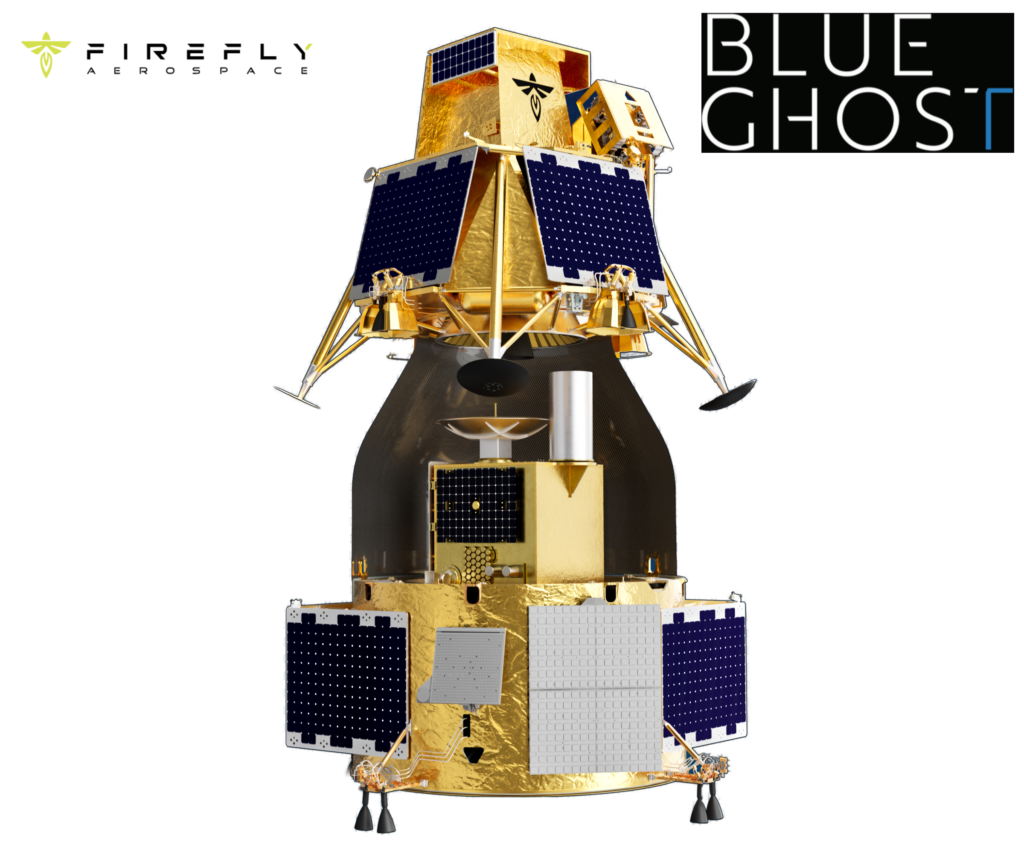
Firefly Aerospace has met 100 percent of their mission objectives for Blue Ghost Mission 1 after performing the first fully successful commercial Moon landing on March 2, completing more than 14 days of surface operations (346 hours of daylight), and operating just over five hours into the lunar night with the final data received around 6:15 pm CDT on March 16th. This achievement marks the longest commercial operations on the Moon to date.

Firefly’s Blue Ghost lunar lander softly touched down in Mare Crisium carrying 10 NASA instruments.

Throughout the mission, Blue Ghost transmitted more than 119 GB of data back to Earth, including 51 GB of science and technology data, significantly surpassing Firefly’s mission requirements. Key payload milestones completed on the surface include the following:
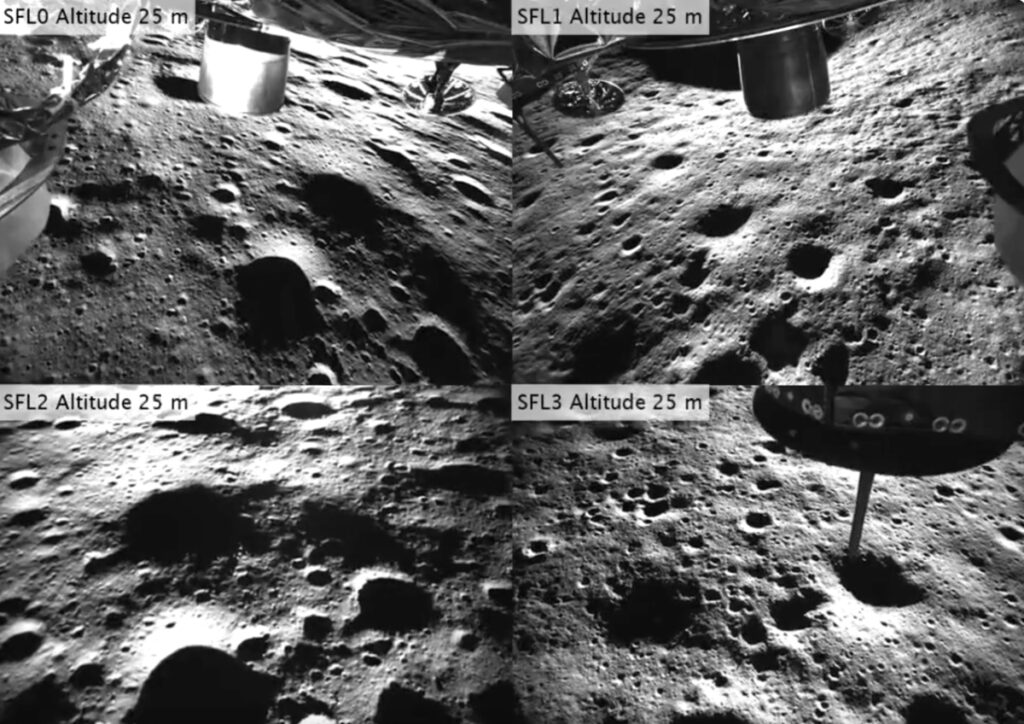
This compressed, resolution-limited video features a preliminary sequence of the Blue Ghost final descent and landing that NASA researchers stitched together from SCALPSS 1.1’s four short-focal-length cameras, which were capturing photos at 8 frames per second. Altitude data is approximate.

LuGRE: Integrated on Blue Ghost’s antenna gimbal on the top deck, LuGRE successfully acquired and tracked Global Navigation Satellite System (GNSS) signals, from satellite networks such as GPS and Galileo, on the way to and on the Moon’s surface for the first time. This achievement suggests GPS-like signals could be used to navigate future missions to the Moon and beyond.
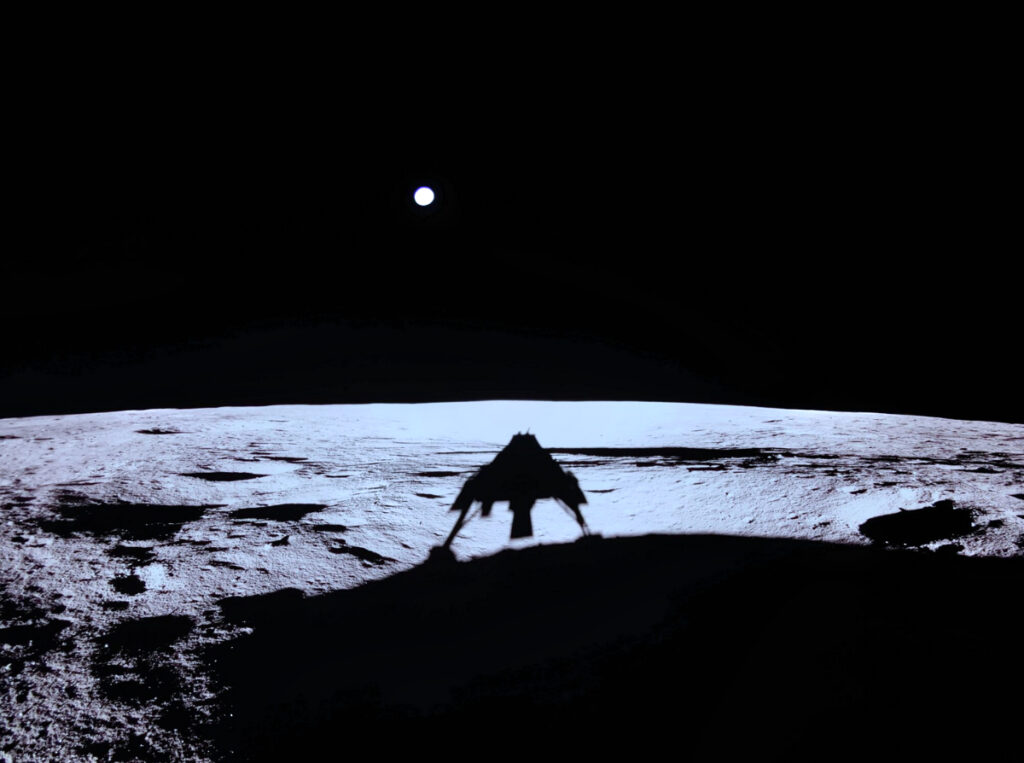
Image captured by Blue Ghost shows its shadow on the surface and
Earth on the horizon. Credit: Firefly Aerospace
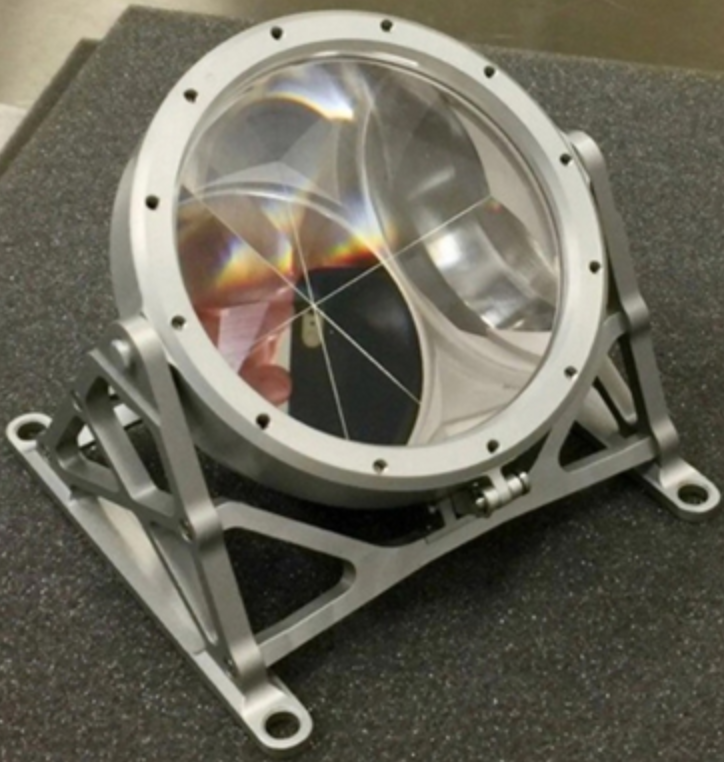
NGLR, courtesy of NASA.

NGLR: Also mounted on Blue Ghost’s antenna gimbal, the Next Generation Lunar Retroreflector (NGLR) successfully reflected laser pulses from Earth-based Lunar Laser Ranging Observatories (LLROs), allowing scientists to precisely measure the Moon’s shape and distance from Earth, expanding our understanding of the Moon’s inner structure.

LEXI: Mounted on Blue Ghost’s top deck on another Firefly-developed gimbal, the Lunar Environment heliospheric X-ray Imager (LEXI) captured a series of X-ray images to study the interaction of solar wind and the Earth’s magnetic field, providing insights into how space weather and other cosmic forces surrounding Earth affect the planet.

LMS electrodes and 6 foot mast, courtesy Firefly Aerospace.

LMS: Blue Ghost also deployed four tethered Lunar Magnetotelluric Sounder (LMS) electrodes on the surface, reaching a distance up to 60 feet from the lander, and deployed a six-foot mast above its top deck to enable the payload team to measure electric and magnetic fields and learn more about the Moon’s composition up to 700 miles, or two-thirds the distance to the Moon’s center.

RadPC: Integrated below Blue Ghost’s top deck, RadPC demonstrated a computer that can withstand space radiation while in transit to the Moon, including through the Earth’s Van Allen Belts, and on the Moon’s surface.

RAC: Mounted above Blue Ghost’s lower deck, the Regolith Adherence Characterization (RAC) instrument examined how lunar regolith sticks to a range of materials exposed to the Moon’s environment, allowing the industry to better test, improve, and protect spacecraft, spacesuits, and habitats from abrasive regolith.
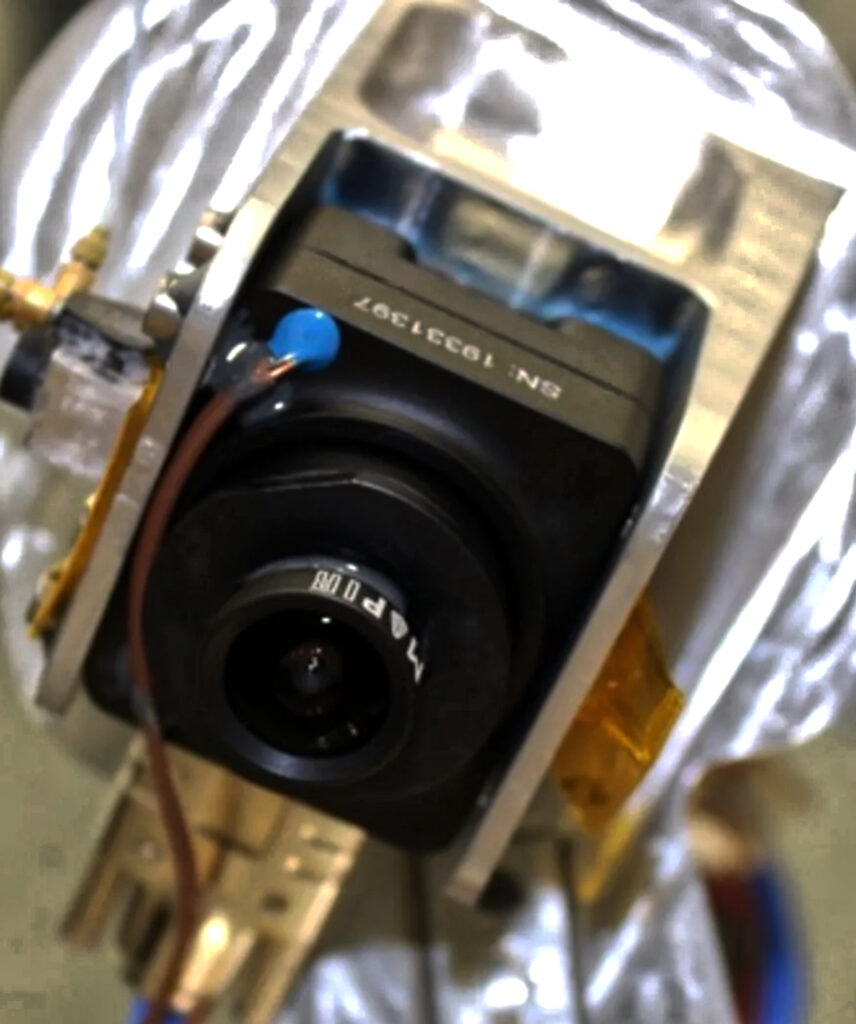
SCALPSS image instrument, image courtesy of
NASA / LaRC

SCALPSS: Mounted below Blue Ghost’s lower deck, the Stereo Cameras for Lunar Plume-Surface Studies (SCALPSS) instrument captured images during the spacecraft’s lunar descent and touchdown on the Moon, providing insights into the effects engine plumes have on the surface for future robotics and crewed Moon landings.

LISTER: Also mounted below Blue Ghost’s lower deck, the Lunar Instrumentation for Subsurface Thermal Exploration with Rapidity (LISTER) payload drilled about three feet into the surface to measure the temperature and flow of heat from the Moon’s interior. This pneumatic, gas-powered drill is now the deepest-reaching robotic planetary subsurface probe.
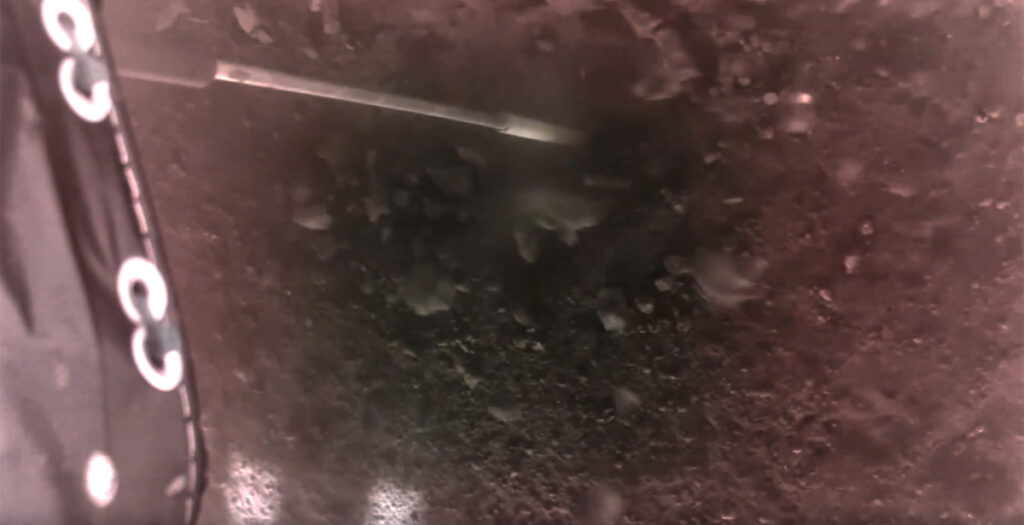
LISTER drilling into the Moon’s surface. Photo courtesy of Firefly Aerospace.

Lunar PlanetVac: Deployed on Blue Ghost’s surface access arm, the Lunar PlanetVac successfully collected, transferred, and sorted lunar regolith from the Moon using pressurized nitrogen gas, proving to be a low cost, low mass solution for future robotic sample collection.
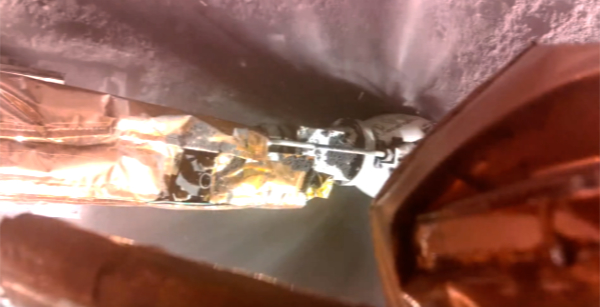
The Lunar PlanetVac instrument, developed by Honeybee Robotics, was deployed to the lunar surface and is shown at the end of Blue Ghost’s surface access arm. Credit: Firefly Aerospace

EDS: Also deployed on Blue Ghost’s surface access arm, the Electrodynamic Dust Shield (EDS) successfully lifted and removed lunar regolith using electrodynamic forces on the glass and thermal radiator surfaces. These results confirm EDS as a promising solution for dust mitigation on future lunar and interplanetary surface operations.

During surface operations, Firefly’s Blue Ghost lander captured high-definition imagery of a total solar eclipse on March 14. This marks the first time in history a commercial company was actively operating on the Moon and able to observe a solar eclipse where the Earth blocks the sun and casts a shadow on the lunar surface. Blue Ghost operated the LMS, RAC, and SCALPSS payloads during this unique phenomenon to measure changes in the lunar dust and radiation environment.
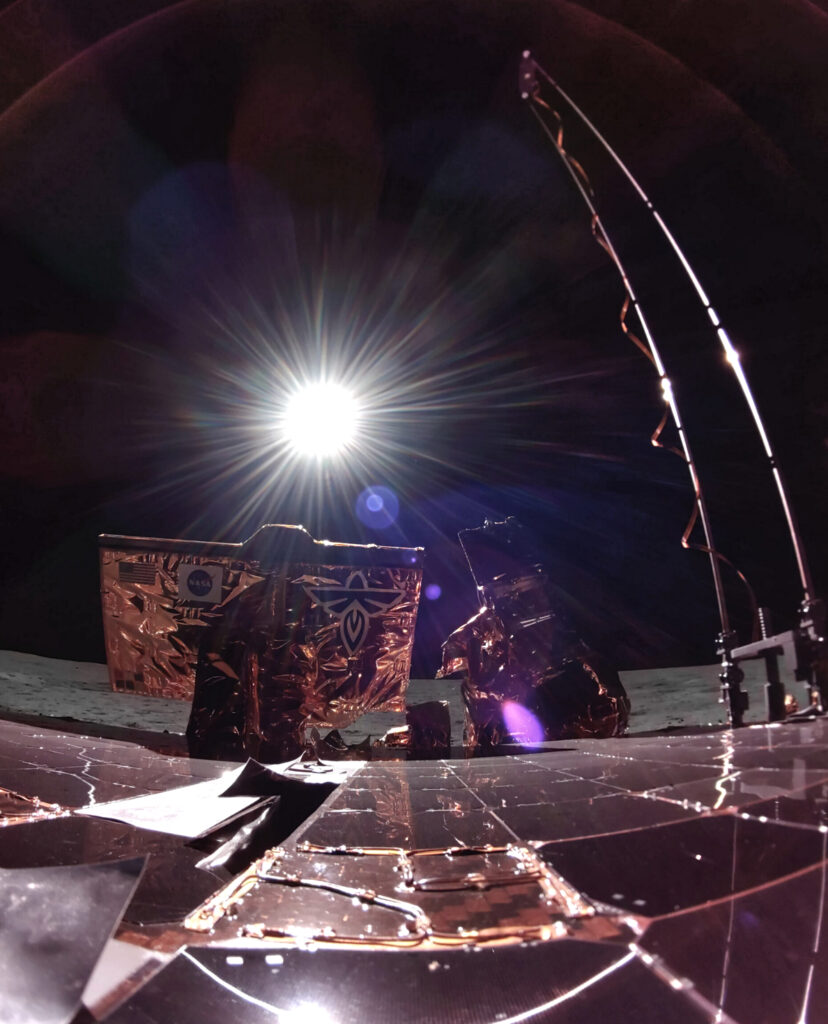
Firefly’s Blue Ghost lander captured a first look at the solar eclipse as it began to emerge from Firefly’s Mare Crisium landing site on March 14 at 12:30 am CDT. Credit: Firefly Aerospace

Firefly also captured imagery of the lunar sunset on March 16, providing NASA with data on whether lunar dust levitates due to solar influences and creates a lunar horizon glow that was hypothesized and observed by Eugene Cernan on Apollo 17. Following the sunset, Blue Ghost operated for five hours into the lunar night and continued to capture imagery that measures how dust behavior changes after sunset.
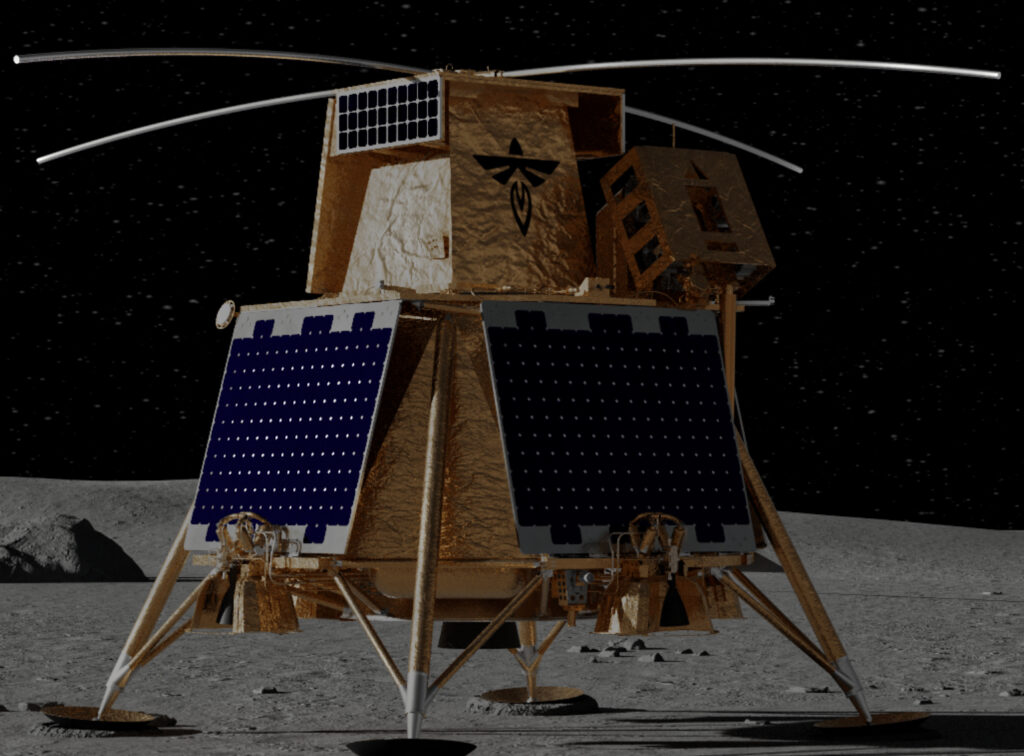
Blue Ghost 2

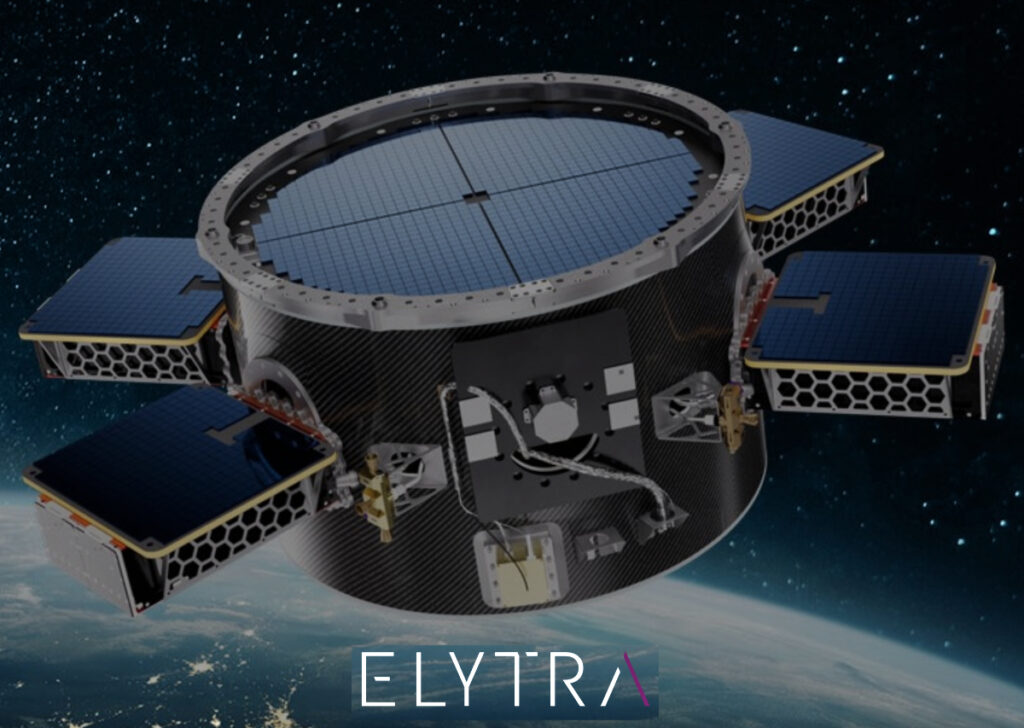
Looking ahead, Firefly is ramping up for annual missions to the Moon. The team has begun qualifying and assembling flight hardware for Blue Ghost Mission 2, which will use Firefly’s Blue Ghost lander stacked on an Elytra Dark orbital vehicle for operations in lunar orbit and on the far side of the Moon.
Firefly also captured imagery of the lunar sunset on March 16, providing NASA with data on whether lunar dust levitates due to solar influences and creates a lunar horizon glow that was hypothesized and observed by Eugene Cernan on Apollo 17. Following the sunset, Blue Ghost operated for 5 hours into the lunar night and continued to capture imagery that measures how dust behavior changes after sunset.

Looking ahead, Firefly is ramping up for annual missions to the Moon. The team has begun qualifying and assembling flight hardware for Blue Ghost Mission 2, which will utilize Firefly’s Blue Ghost lander stacked on an Elytra Dark orbital vehicle for operations in lunar orbit and on the far side of the Moon.

“After a flawless Moon landing, the Firefly team immediately moved into surface operations to ensure all 10 NASA payloads could capture as much science as possible during the lunar day,” said Jason Kim, CEO of Firefly Aerospace. “We’re incredibly proud of the demonstrations Blue Ghost enabled from tracking GPS signals on the Moon for the first time to robotically drilling deeper into the lunar surface than ever before. We want to extend a huge thank you to the NASA CLPS initiative and the White House administration for serving as the bedrock for this Firefly mission. It has been an honor to enable science and technology experiments that support future missions to the Moons, Mars, and beyond.”

“This team continues to make near-impossible achievements look easy, but there is no such thing as an easy Moon landing, especially on your first attempt,” said Will Coogan, Blue Ghost Chief Engineer at Firefly Aerospace. “We battle tested every system on the lander and simulated every mission scenario we could think of to get to this point. But what really sets this team apart is the passion and commitment to each other. Our team may look younger and less experienced than those of many nations and companies that attempted Moon landings before us, but the support we have for one another is what fuels the hard work and dedication to finding every solution that made this mission a success.”

Filed Under: Exploration & Science Missions, Launch Providers Tagged With: Featured

Primary Sidebar

Coverage

  • Missions & Constellations
  • Business & Finance
  • Military & Defense
  • Launch
  • Software Automation & Ground Systems
  • Government & Regulation
  • Services & Applications

Most Read Stories

  • Blue Origin Reconstructs Launch Complex 36 Tower, Targets November Return to Flight for New Glenn
  • Amazon Navigates Launch Delays with Under 400 Satellites in Orbit Ahead of Nov. 13 Vulcan Return
  • Satellite Bus Maker Apex in Talks to Raise $500M at $4B Valuation
  • Northwood Space Secures $375M Series C at $2B Valuation to Expand Shared Ground Station Network
  • NASA Outlines Artemis IV Starship Refueling Architecture as Launch Estimates Vary

Secondary Sidebar

Footer


Satnews is a leading provider of satellite news, events, publications, research and other satellite industry information in both commercial and military enterprises worldwide.

Stories By Category

  • Business & Finance
  • Government & Regulation
  • Launch
  • Military & Defense
  • Missions & Constellations
  • Services & Applications
  • Software Automation & Ground Systems
  • Spectrum & Licensing
  • Startups & NewSpace Business

About Us

  • Leadership & Editorial Team
  • SatNews History
  • Free Satnews Subscription
  • SatNews Events
  • Magazines

Navigation

  • Latest Stories
  • Magazines
  • Events
  • Contact
  • Cookie & Privacy Policy for Satnews

We use cookies to ensure that we give you the best experience on our website. If you continue to use this site we will assume that you are happy with it.
x
Sign up Now (For Free)
Access daily or weekly satellite news updates covering all aspects of the commercial and military satellite industry.
Invalid email address
Notify Me Regarding ( At least one ):
We value your privacy and will not sell or share your email or other information with any other company. You may also unsubscribe at anytime.

Click Here to see our full privacy policy.
Thanks for subscribing!