

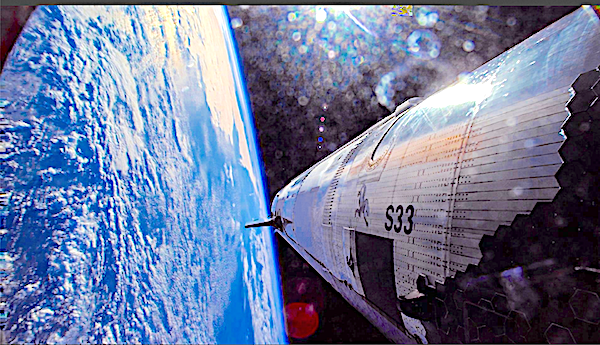
The eighth flight test of Starship is preparing to launch Thursday, March 6. The launch window will open at 5:30 p.m. CT.
A live webcast of the flight test will begin about 30 minutes before liftoff, available on X @SpaceX. As is the case with all developmental testing, the schedule is dynamic and likely to change.
After completing the investigation into the loss of Starship early on its seventh flight test, several hardware and operational changes have been made to increase reliability of the upper stage.
As noted by SpaceX, Starship’s forward flaps have been redesigned to reduce reentry heat exposure and simplify mechanisms. The Starship upper stage’s propulsion system has also gained a 25% propellant volume boost for longer flights.
The launch takes place at Orbital Launch Mount A, SpaceX Starbase, Texas. Orbital Launch Mount A has witnessed the launch of 7 rockets, including 0 orbital launch attempts. While SpaceX Starbase, Texas, has been the site for 16 rocket launches.
Starbase is an industrial complex for Starship rockets and the headquarters of SpaceX. Located near Brownsville, Texas, it has been under construction since the late 2010s by SpaceX. Starbase is composed of a spaceport near the Gulf of America, a production facility at the Boca Chica village, and a small structure test site along the Texas State Highway 4.
The forecast calls for a temperature of 71°F, clear skies, 0% cloud cover and a wind speed of 20mph.
SpaceX after last second scrub, reschedules Starship Flight 8 launch
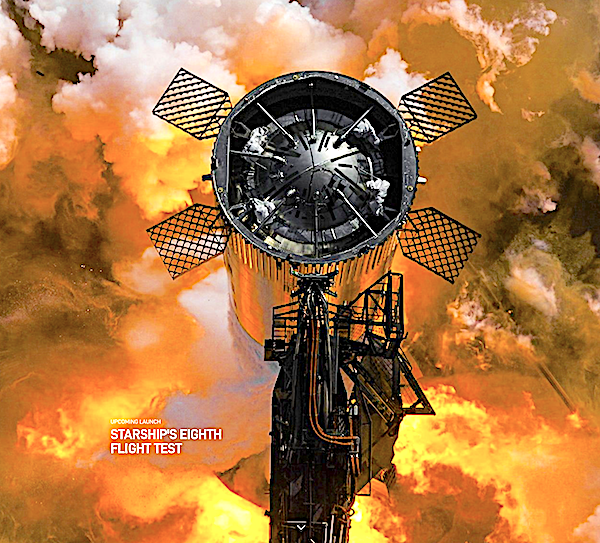
The eighth flight test of Starship is preparing to launch as soon as Wednesday, March 5. The launch window will open at 5:30 p.m. CT and that developmental testing can result in scheduling that can change.
If all goes according to plan, the eighth flight test of Starship, the nearly 400-foot-tall rocket that is the most powerful and largest in the world, will launch from Starbase, SpaceX’s facility near Boca Chica Beach, Texas, on Wednesday, March 5, during a window that opens at 5:30 p.m. CT (2330 GMT).
CEO Elon Musk on X said there were, “too many question marks about this flight and then we were 20 bar low on ground spin start pressure.”
Musk added that, “The best course of action was to de-stack, inspect both the Super Heavy booster and Ship’s upper stage and to try again.”
Ground spin pressure is the pressure inside the Super Heavy booster and its system that begins the 33 Raptor engines working. The rocket engines are started through spin pumps that pump propellants from tanks and ignite them at optimal conditions for liftoff.
SpaceX at 40 seconds scrubs Starship Flight 8 launch
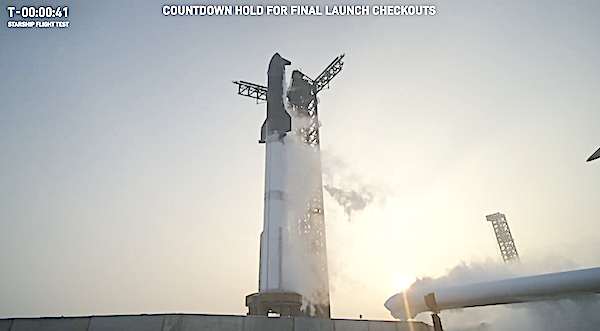
SpaceX scrubbed its Starship Flight 8 launch attempt on Monday afternoon. The cause for the scrub was not entirely shared, but it seemed to have shown up in the late stages of the count and involved the Super Heavy Booster. No specific reason for the scrub was given other than the holds came from the booster, not the ship.
The company then scrubbed the launch for the day. “Standing down from today’s flight test attempt. Starship team is determining the next best available opportunity to fly,” the company stated on social media. That could be as soon as March 4, SpaceX noted on its webcast.
“Too many question marks about this flight and then we were 20 bar low on ground spin start pressure,” SpaceX Chief Executive Elon Musk posted. “Best to destack, inspect both stages and try again in a day or two.”
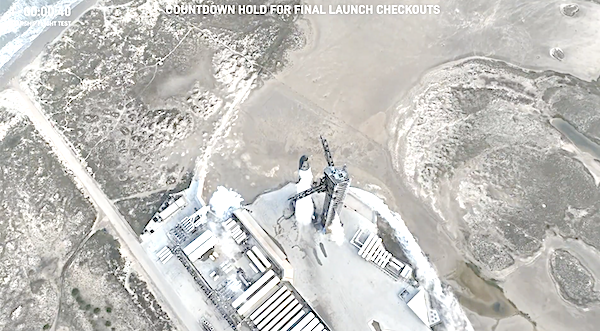
SpaceX spokesman Dan Huot said the company could try to launch again at the same time on Tuesday, depending on the issue.
At about the T-25 minute mark, an issue with Booster 15 showed up, causing a hold to take place. While the count didn’t stop, this eventually did lead to the hold triggering at the expected T-40 second mark.
Starship has a customized system that SpaceX is unable to utilize with its smaller Falcon rockets, holding for several minutes at T-40 seconds. For Falcon launches, if a hold is called after propellant loading begins, around T-20 minutes, a scrub has to take place. SpaceX’s Starship’s propellant tanks are so large that they enable a slower rate of cool down compared to Falcon, giving them at least some time to hold the count.
After a few minutes into the hold, the problem with the booster was solved; however, another issue with Ship 34 showed up that continued the hold. While SpaceX has the option to hold, it cannot hold at this point for the entire window, which had about 40 minutes left.
SpaceX eventually cleared the hold and began counting down again until approximately 10 seconds later, when Booster 15 triggered “multiple holds,” which resulted in T-40 seconds and the scrub.
SpaceX’s eighth Starship flight test still on for today, so far
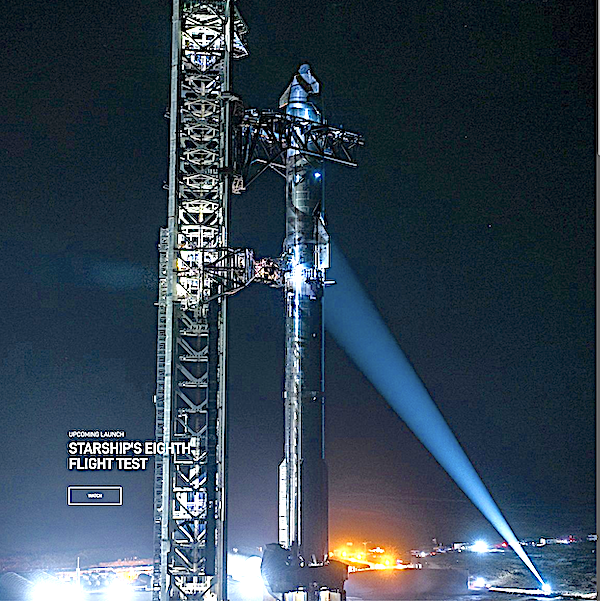
The eighth flight test of Starship is preparing to launch Monday, March 3. The 60-minute launch window opens at 5:30 p.m. CT.
A live webcast of the flight test will begin about 40 minutes before liftoff, which you can watch on X @SpaceX. You can also watch the webcast on the X TV app. As is the case with all developmental testing, the schedule is dynamic and likely to change, check back for updatesX account for updates.
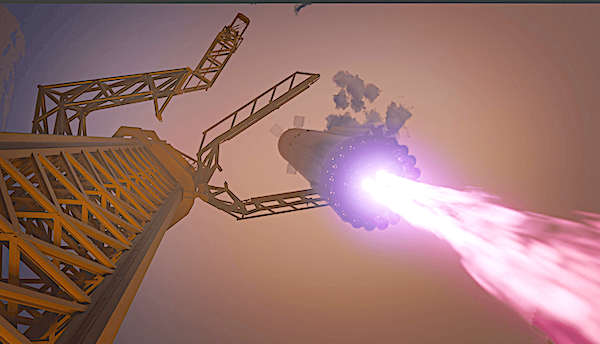
After completing the investigation into the loss of Starship early on its seventh flight test, several hardware and operational changes have been made to increase reliability of the upper stage. You can read the full summary of the mishap investigation here.
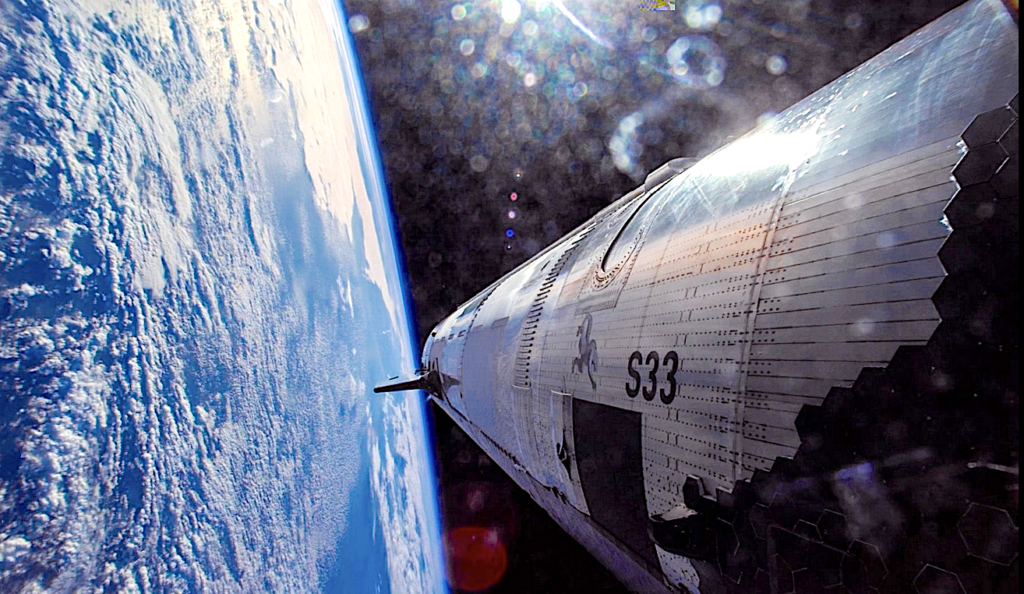
The company said it has made several changes after losing Starship early during the seventh test launch. These tests are likely to produce sonic booms in the area.
“The returning booster will slow down from supersonic speeds, resulting in audible sonic booms in the area around the landing zone,” SpaceX said in a news release. “Generally, the only impact to those in the surrounding area of a sonic boom is the brief thunder-like noise with variables like weather and distance from the return site determining the magnitude experienced by observers.”
SpaceX Starship’s eighth flight test launch delayed
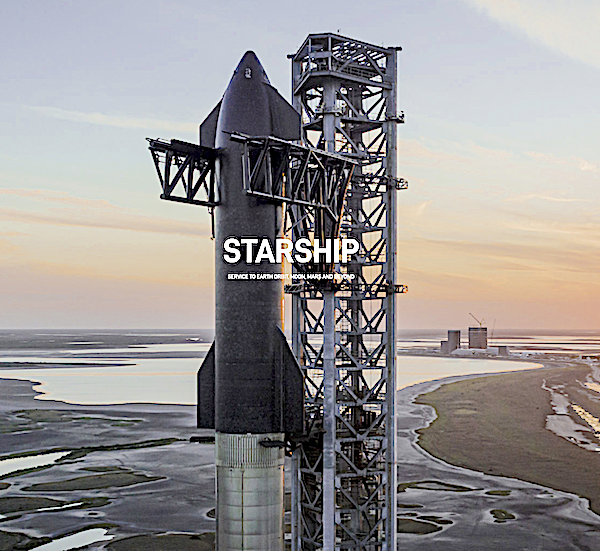
Originally, and optimistically, the eighth Starship flight test launch was said to be no earlier that Friday, February 28. However, SpaceX is announcing that the Starship launch is now preparing for a new date, as soon as Monday, March 3 pending regulatory approval.
A live webcast of the flight test will begin about 40 minutes before liftoff, which you can watch on X @SpaceX. You can also watch the webcast on the X TV app. The launch window will open at 5:30 p.m. CT. As is the case with all developmental testing, the schedule is dynamic and likely to change, so be sure to check in here and stay tuned to our X account for updates.
The eighth flight test of Starship is preparing to launch as soon as Friday, February 28, pending regulatory approval.
A live webcast of the flight test will begin about 40 minutes before liftoff, which you can watch on X @SpaceX. You can also watch the webcast on the X TV app. The launch window will open at 5:30 p.m. CT. As is the case with all developmental testing, the schedule is dynamic and likely to change, so be sure to check in here and stay tuned to our X account for updates.
After completing the investigation into the loss of Starship early on its seventh flight test, several hardware and operational changes have been made to increase reliability of the upper stage. You can read the full summary of the mishap investigation here.
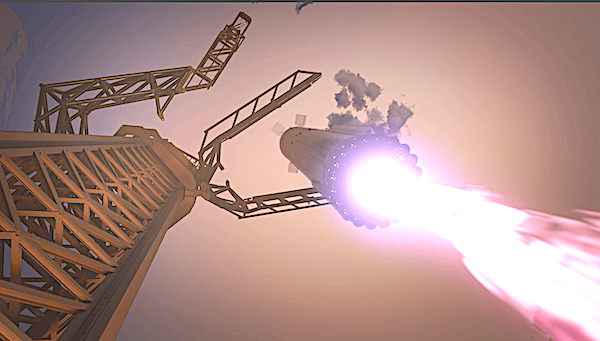
Returning the booster after launch is a core capability to Starship becoming rapidly and reliably reusable
The upcoming flight will target objectives not reached on the previous test, including Starship’s first payload deployment and multiple reentry experiments geared towards returning the upper stage to the launch site for catch. The flight also includes the launch, return, and catch of the Super Heavy booster.
Extensive upgrades to Starship’s upper stage debuted on the previous flight test, focused on adding reliability and performance across all phases of flight. Starship’s forward flaps have been upgraded to significantly reduce their exposure to reentry heating while simplifying the underlying mechanisms and protective tiling. Redesigns to the propulsion system, including a 25 percent increase in propellant volume over previous generations, add additional vehicle performance and the ability to fly longer duration missions. And the vehicle’s avionics underwent a complete redesign, adding additional capability and redundancy for increasingly complex missions like propellant transfer and ship return to the launch site.
During the flight test, Starship will deploy four Starlink simulators, similar in size to next-generation Starlink satellites, as the first exercise of a satellite deploy mission. The Starlink simulators will be on the same suborbital trajectory as Starship and are expected to demise upon entry. A relight of a single Raptor engine while in space is also planned.
The flight test includes several experiments focused on enabling Starship’s upper stage to return to the launch site. A significant number of tiles have been removed from Starship to stress-test vulnerable areas across the vehicle. Multiple metallic tile options, including one with active cooling, will test alternative materials for protecting Starship during reentry. On the sides of the vehicle, non-structural versions of Starship’s catch fittings are installed to test the fittings’ thermal performance, along with a section of the tile line receiving a smoothed and tapered edge to address hot spots observed during reentry on Starship’s sixth flight test. Starship’s reentry profile is designed to intentionally stress the structural limits of the upper stage’s rear flaps while at the point of maximum entry dynamic pressure. Finally, several radar sensors will once again be tested on the launch and catch tower’s chopsticks with the goal of increasing the accuracy when measuring distances between the chopsticks and a returning vehicle.
The Super Heavy booster for this flight features upgraded avionics, including a more powerful flight computer, improved power and network distribution, and integrated smart batteries.
Distinct vehicle and pad criteria must be met prior to the return and catch of the Super Heavy booster, requiring healthy systems on the booster and tower and a final manual command from the mission’s Flight Director. If this command is not sent prior to the completion of the boostback burn, or if automated health checks show unacceptable conditions with Super Heavy or the tower, the booster will default to a trajectory for a soft splashdown in the Gulf of America. We accept no compromises when it comes to ensuring the safety of the public and our team, and booster return will only take place if conditions are right.
The returning booster will slow down from supersonic speeds, resulting in audible sonic booms in the area around the landing zone. Generally, the only impact to those in the surrounding area of a sonic boom is the brief thunder-like noise with variables like weather and distance from the return site determining the magnitude experienced by observers.
Developmental testing by definition is unpredictable. But by putting flight hardware in a flight environment as frequently as possible, we’re able to quickly learn and execute design changes as we seek to bring Starship online as a fully and rapidly reusable vehicle.
