

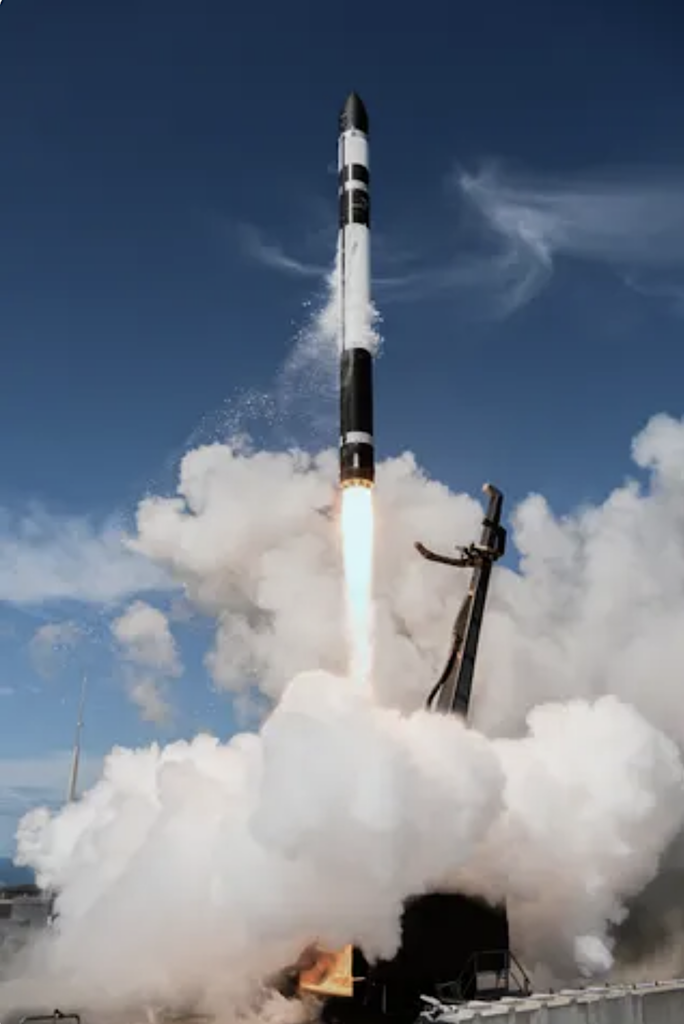
Rocket Lab USA, Inc. (Nasdaq: RKLB), provider of launch services and space systems, today successfully launched its 53rd Electron mission and deployed five satellites to Low Earth Orbit for French Internet-of-Things (IoT) company Kinéis.
The ‘Kinéis Killed the RadIOT Star’ lifted off from Rocket Lab Launch Complex 1 in Mahia, New Zealand, at 11:01 a.m. on 21 September NZST (23:01, 20 September UTC), successfully deploying five satellites to a 643 km orbit.
The mission was the second of five dedicated Electron launches for Kinéis, a company backed by private and public investors including the French government’s space agency CNES (Centre National d’Études Spatiales) and CLS (Collecte Localisation Satellites), an international space-based solutions provider, to improve global IoT connectivity. The Kinéis constellation is designed to make it possible to connect and locate any connected object anywhere in the world, enabling data transmission to users in near-real time, at low bit rates and with very low energy consumption.
By enabling internet connection to the Earth’s most remote locations, Kinéis constellation can support forest fire detection, water resource management, infrastructure and energy network monitoring, transport and logistics tracking, and much more.
Rocket Lab founder and CEO Sir Peter Beck said, “Today’s successful launch marks another milestone for Rocket Lab as we continue to enable innovative companies like Kinéis to push the boundaries of global IoT connectivity. With each mission, we are bringing the world closer together, allowing vital data to be transmitted from the remotest corners of the Earth.”
Across 53 launches Rocket Lab has now deployed 197 satellites for a diverse range of customers and missions, including NASA missions to the Moon, the National Reconnaissance Office and Space Force missions supporting national security and defense, scientific research to combat climate change, and commercial constellations providing vital data and services to millions of people on Earth.
Rocket Lab sets date after abort for second attempt to launch Kinéis Killed the RadIOT Star

After a very dramatic abort on Wednesday when Rocket Lab had to stand down from launching its 53rd Electron rocket on a mission for the France-based Internet of Things company, Kinéis, they are ready to have another attempt at a launch on Friday.
The launch date is currently targeted for Friday, September 20, 2024 at 11:01 PM (UTC). The launch takes place at LC-1A Rocket Lab Launch Complex, Mahia Peninsula New Zealand.
The rocket aborted prior to liftoff after the nine Rutherford engines began firing about two seconds prior.The second of five missions for the French Kinéis IoT constellation of 25 satellites. 5 satellites will launch on this flight.
The second of five missions for the French Kinéis IoT constellation of 25 satellites in which 5 satellites will launch on this flight.
Rocket Lab experiences a T-0 abort and scrubs Wednesday’s launch of Kinéis Killed the RadIOT Star
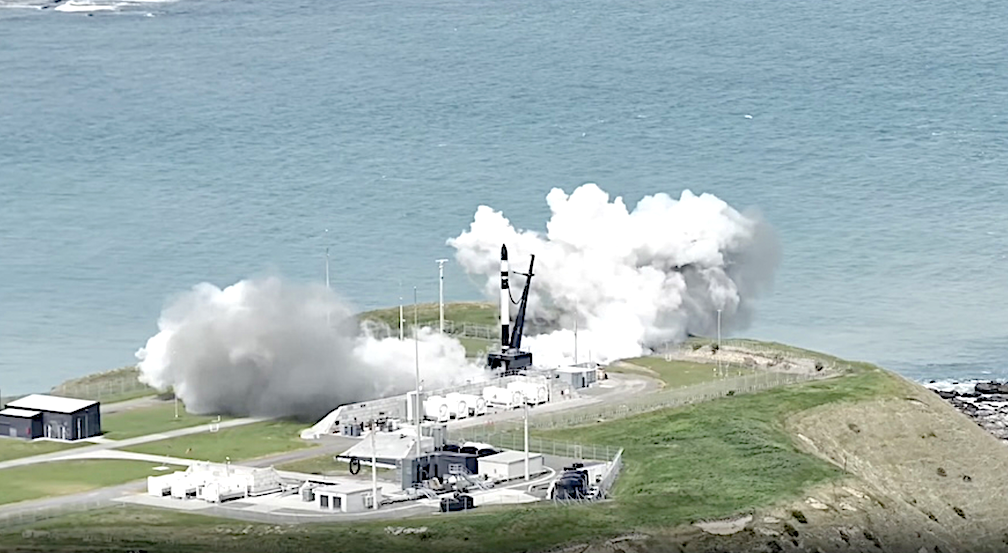
Image: Rocket Lab via launch livestream
Just as Rocket Lab’s 53rd Electron rocket was ready to lift off from its Launch Complex-1 in Mahia, New Zealand, the vehicle experienced a T-0 abort. The engines began firing as expected at T-2 seconds, but the vehicle remained on the pad.
At 9:47 p.m. EDT Rocket Lab declared the scrub was due to “a ground systems sensor trigger.”
Rocket Lab had to stand down from launching its 53rd Electron rocket on a mission for the France-based Internet of Things company, Kinéis. The rocket aborted prior to liftoff after the nine Rutherford engines began firing about two seconds prior.
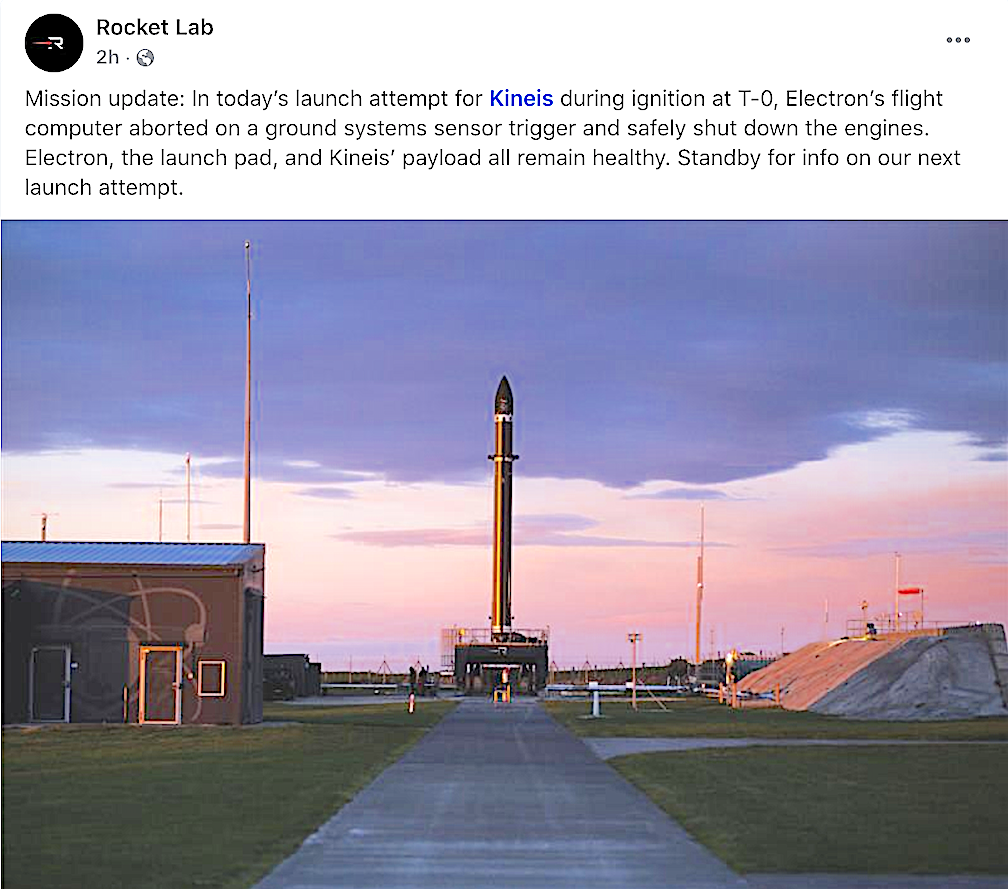
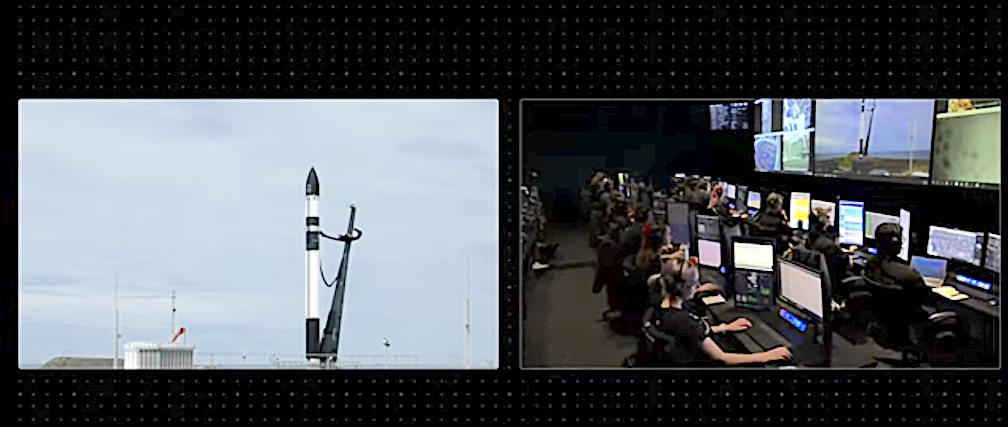
Everyone awaits the verdict of go or no go…
Rocket Lab’s Wednesday launch of Kinéis Killed the RadIOT Star, “The IoT revolution is underway”
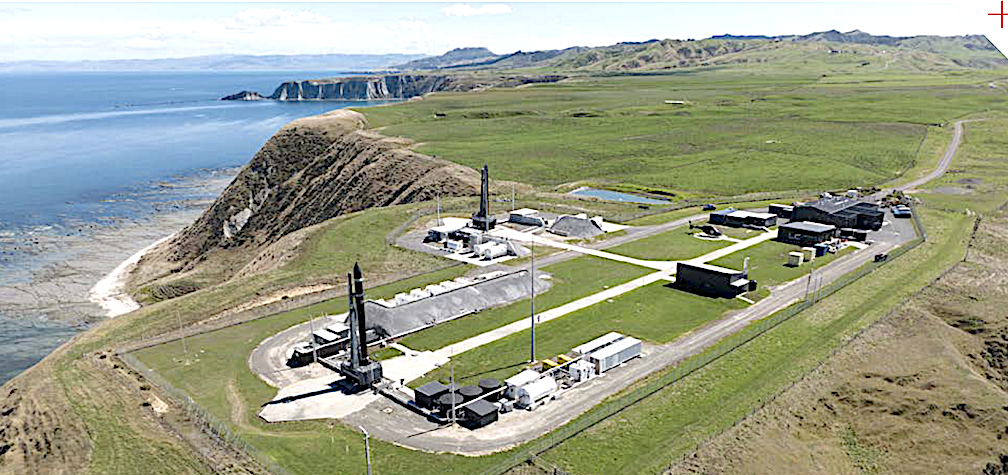
Rocket Lab Launch Complex-1, Mahia, New Zealan
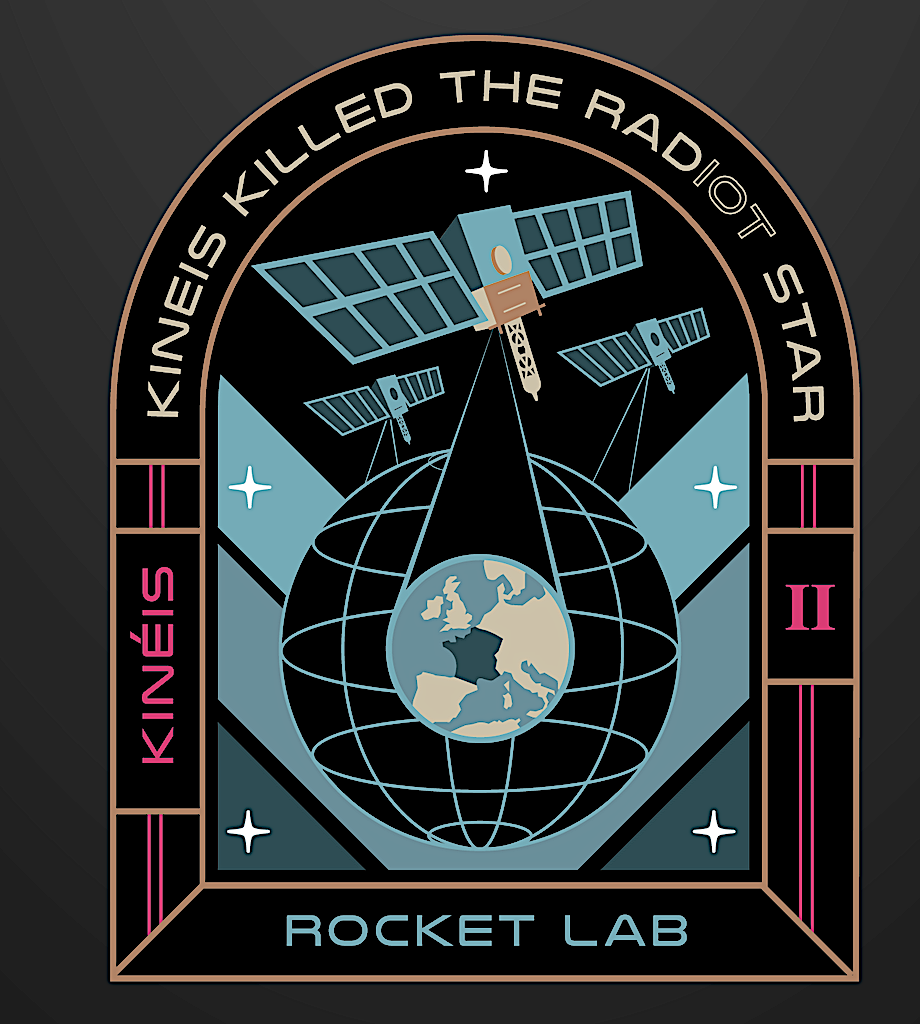
Rocket Lab is scheduled to launch the “Kinéis Killed the RadIOT Star” mission from Rocket Lab Launch Complex 1 Pad A during a launch window that opens September 18th, 2024 UTC. The launch is a dedicated mission for Kinéis, a French Internet of Things (IoT) company.
“Kinéis Killed the RadIOT Star” will be the second of five dedicated Electron launches for Kinéis (the first mission, ‘No Time Toulouse,’ successfully launched on June 19, 2024). Across these five launches, Rocket Lab will deploy Kinéis’ complete constellation of 25 satellites. “Kinéis Killed the RadIOT Star” will be Rocket Lab’s 53rd Electron launch and will bring the total number of satellites launched by the company to 192.
Kinéis’ constellation will connect any object anywhere in the world and guarantee the transmission of targeted and useful data to users, in near-real time, with low energy consumption with more powerful 30kg-class nanosats that integrate IoT technology.
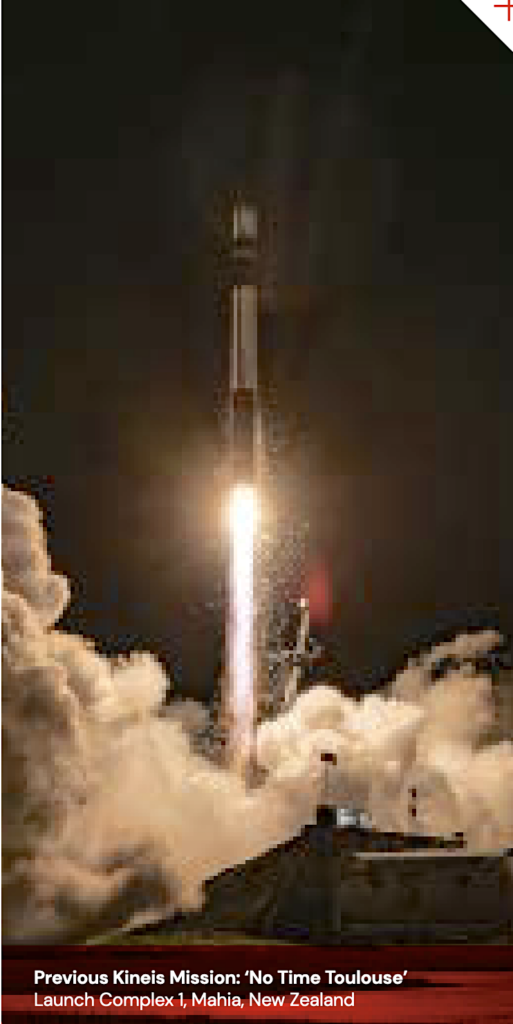
The mission is the second of five dedicated Electron launches for Kinéis, the first mission, ‘No Time Toulouse’, launched on June 19, 2024. Across these five launches Rocket Lab will deploy Kinéis’ complete constellation of 25 satellites.
Kinéis, a satellite IoT operator, is backed by private and public investors including the French government’s space agency CNES (Centre National d’Études Spatiales) and CLS (Collecte Localisation Satellites) an international space-based solutions provider, to improve global IoT connectivity.
The ‘Kinéis Killed the RadIOT Star’ launch has been tailored specifically to meet Kinéis’ mission requirements, giving them greater control over launch schedule, orbit, and deployment parameters than would be possible on a larger rideshare mission. Tailored mission parameters for this
launch include:
- Instantaneous launch window,
- After the first Curie engine burn to circularize the Kick Stage’s orbit, Curie will ignite again for an eight second burn to set a specific argument of perigee, enabling Kinéis to deploy five satellites to a precise location for each one of the five launches,
- All five satellites will be deployed in a precise sequence in singles and as pairs to build out the constellation exactly as Kinéis needs it,
- Finally, Curie will conduct a perigee lowering burn to reduce the Kick Stage’s orbital lifetime to keep space sustainable.
Rocket Lab sets launch date for 2nd dedicated Kinéis mission to deploy IoT constellation
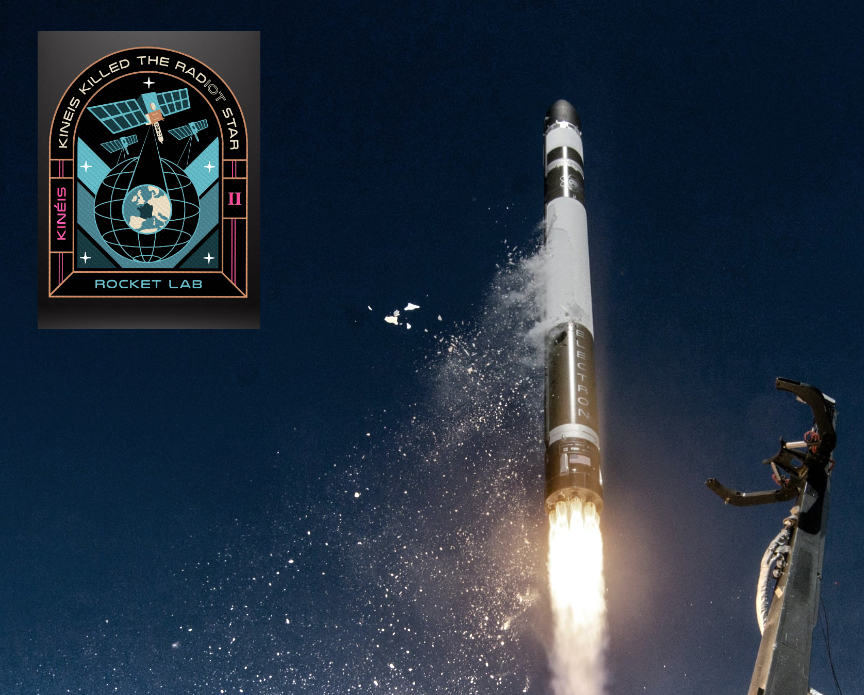
Rocket Lab USA, Inc. (Nasdaq: RKLB) has set the launch window for the company’s 53rd Electron Launch — this mission will be the second of five dedicated launches for the French company, Kinéis.
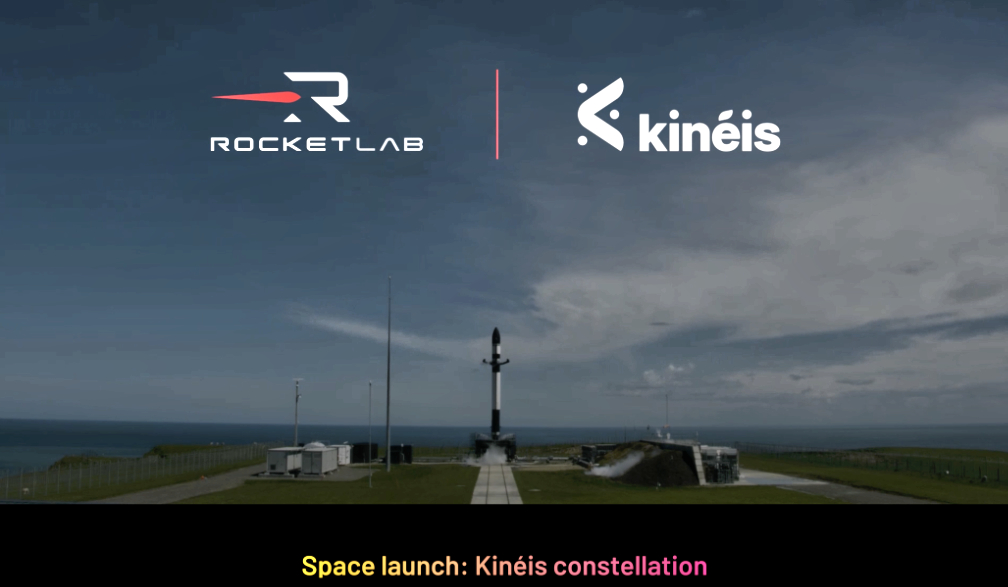
The ‘Kinéis Killed the RadIOT Star’ mission is scheduled to launch from Rocket Lab Launch Complex 1 in Mahia, New Zealand, during a 14 day launch window that opens on September 17, 2024, NZST.
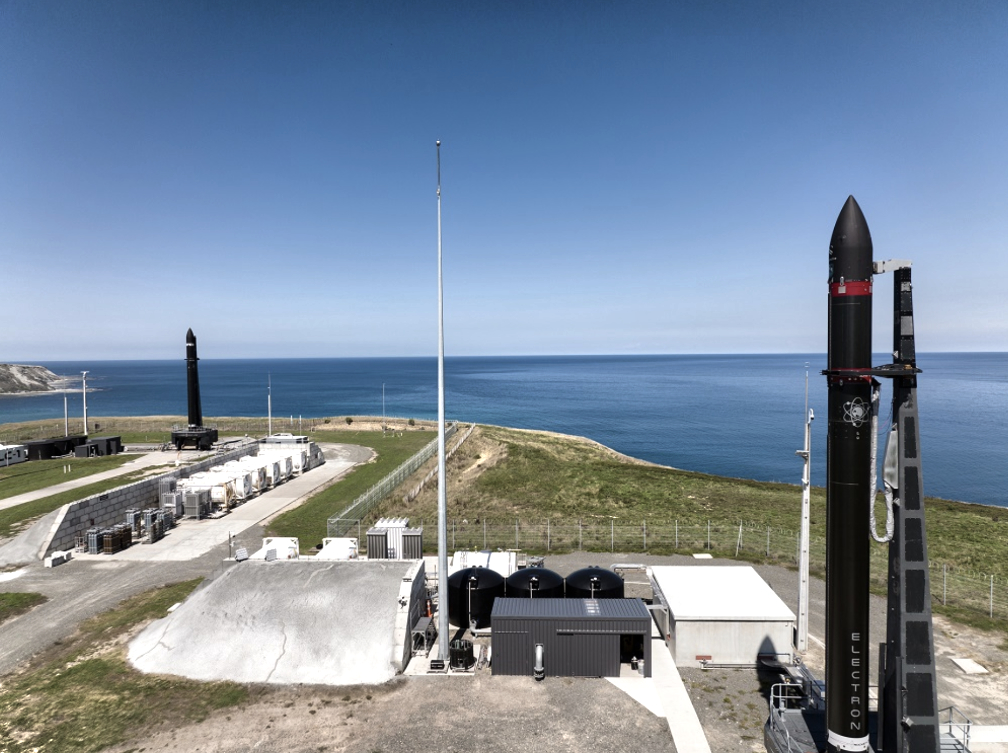
This mission will launch just three months after the ‘No Time Toulouse’ mission, Kinéis’ first launch with Rocket Lab. ‘Kinéis Killed the RadIOT Star’ will be the second of five dedicated Electron launches for Kinéis, a company backed by private and public investors including the French government’s space agency CNES (Centre National d’Études Spatiales) and CLS (Collecte Localisation Satellites) an international space-based solutions provider, to improve global Internet of Things (IoT) connectivity.
Kinéis’ constellation will connect any object anywhere in the world and guarantee the transmission of targeted and useful data to users, in near-real time, with low energy consumption with more powerful 30 kg class smallsats that integrate IoT technology. The constellation also includes a second mission: a ship-tracking Automatic Identification System (AIS). Once deployed, these technologies will allow Kinéis to expand across multiple industries and scale from 20,000 devices connected to millions. The second constellation launch will add an additional five new satellites to its planned 25 in number and will enhance Kinéis’ ability to connect the planet and address essential challenges for humanity, its activities, and its environment.
The ‘Kinéis Killed the RadIOT Star’ launch has been tailored specifically to meet Kinéis’ mission requirements, giving them greater control over launch schedule, orbit, and deployment parameters than would be possible on a larger rideshare mission. Tailored mission parameters for this launch include:
- Instantaneous launch window
- After the first Curie engine burn to circularize the Kick Stage’s orbit, Curie will ignite again for an eight second burn to set a specific argument of perigee, enabling Kinéis to deploy five satellites to a precise location for each one of the five launches,
- All five satellites will be deployed in a precise sequence in singles and as pairs to build out the constellation exactly as Kinéis needs it,
- Finally, Curie will conduct a perigee lowering burn to reduce the Kick Stage’s orbital lifetime to keep space sustainable.
“We’re excited to welcome the Kinéis team on board Electron again as we help them build out their constellation,” said Rocket Lab founder and CEO, Sir Peter Beck. “Dedicated launch is key for the kind of precise orbital deployment requirements many constellation operators need, so we’re proud to make that possible once again.”
“The Kinéis teams are ready to build on the success of the first launch. They have capitalized on this first and delicate technical experience of putting our first five satellites into position and are delivering a real technical performance in managing the five new satellites simultaneously, in addition to the five already in the air,” said Alexandre Tisserant, Chairman of Kinéis. “Rocket Lab’s Electron launcher made a major contribution to this success, thanks to the precision with which it injected our nanosatellites into their positions. The IoT revolution is underway. Thanks to our space-based connectivity, we’ll be able to connect any object anywhere in the world in near real time. Go Kinéis!”
About Rocket Lab
Founded in 2006, Rocket Lab is an end-to-end space company with an established track record of mission success. We deliver reliable launch services, satellite manufacture, spacecraft components, and on-orbit management solutions that make it faster, easier, and more affordable to access space. Headquartered in Long Beach, California, Rocket Lab designs and manufactures the Electron small orbital launch vehicle, a family of flight-proven spacecraft, and the Company is developing the large Neutron launch vehicle for constellation deployment. Since its first orbital launch in January 2018, Rocket Lab’s Electron launch vehicle has become the second most frequently launched U.S. rocket annually and has delivered 190 satellites to orbit for private and public sector organizations, enabling operations in national security, scientific research, space debris mitigation, Earth observation, climate monitoring, and communications. Rocket Lab’s Photon spacecraft platform has been selected to support NASA missions to the Moon and Mars, as well as the first private commercial mission to Venus. Rocket Lab has three launch pads at two launch sites, including two launch pads at a private orbital launch site located in New Zealand and a third launch pad in Virginia.
About Kinéis
Created in 2018, Kinéis is a satellite operator and global connectivity provider. It inherited 40 years of expertise in the Argos system, founded by CNES (French space agency) and historically operated by CLS (Collecte Localisation Satellites). Its mission is to develop reliable technology that provides easy access to useful satellite data. To make life easier for professionals and individuals and encourage them to use its products and services, Kinéis locates and connects objects wherever they are on the planet, in near real time. This way, the company deploys all its technological innovation capabilities to bring together New Space and IoT. In 2020, Kinéis raised 100 million euros from French private and public investors. In 2021, Kinéis generated a turnover of 8.4 million euros (+20% compared to 2020). Kinéis has been awarded the French Tech Next40 promotion 2021, 2022 and French Tech 120 promotion 2023.
