


• Skip to primary navigation
  • Skip to main content
  • Skip to primary sidebar
  • Skip to secondary sidebar
  • Skip to footer
  • NEWS:
  • SatNews
  • SatMagazine
  • MilSatMagazine
  • SmallSat News
  • |     EVENTS:
  • SmallSat Symposium
  • Satellite Innovation
  • MilSat Symposium
  • SmallSat Europe

SatNews

Satellite Industry Intelligence Since 1983

Subscribe
  • LATEST
  • SatNews Events
  • Magazines
  • Calendar
  • Subscribe
  • Missions & Constellations
    • Exploration & Science Missions
    • In-Orbit Servicing & Orbital Operations
    • LEO Constellations
    • Mission Autonomy & Onboard Systems
    • Mission Deployments & Manifests
    • Navigation & PNT
    • SmallSat
    • Spacecraft & Payload Technology
    View All in Missions & Constellations →
    Smart and Elveo Mobile Complete Direct-to-Device Satellite Trials on Philippine Sea RouteSmart and Elveo Mobile Complete Direct-to-Device Satellite Trials on Philippine Sea Route
    EnSilica Reaches Initial Agreement for $80 Million Resilient GNSS ASIC ProgramEnSilica Reaches Initial Agreement for $80 Million Resilient GNSS ASIC Program
    Thales Alenia Space Signs €240 Million Contract With OHB for Sentinel-3NG Topography AltimetersThales Alenia Space Signs €240 Million Contract With OHB for Sentinel-3NG Topography Altimeters
    Scientists and Regulators Weigh 150x Emission Claims Around SpaceX’s One-Million-Satellite Data Center ProposalScientists and Regulators Weigh 150x Emission Claims Around SpaceX’s One-Million-Satellite Data Center Proposal
  • Business
    • Contracts & Commercial Deals
    • Earnings & Financial Reporting
    • Events & Conferences
    • Funding & Venture Capital
    • Market Forecasts
    • Mergers & Acquisitions
    • Personnel Moves & Appointments
    View All in Business & Finance →
    Early Signals, 2016: SpaceX’s First Backer Opened the First SmallSat SymposiumEarly Signals, 2016: SpaceX’s First Backer Opened the First SmallSat Symposium
    A Second LEO Network Has Paying Customers and a Launch ProblemA Second LEO Network Has Paying Customers and a Launch Problem
    RBC Signals Secures $10 Million Strategic Growth Investment Led by Washington Harbour PartnersRBC Signals Secures $10 Million Strategic Growth Investment Led by Washington Harbour Partners
    GomSpace Secures €8 Million Phase 2 Contract for North American Dual-Satellite Lunar Prospecting MissionGomSpace Secures €8 Million Phase 2 Contract for North American Dual-Satellite Lunar Prospecting Mission
  • Defense
    • Counterspace & ASAT
    • Defense Budgets & Procurement
    • ISR & Reconnaissance
    • MILSATCOM
    • Missile Warning & Defense
    • National Security Programs
    • Space Domain Awareness
    View All in Military & Defense →
    GAO Finds Pentagon Lacks Coordinated View of Military Space Supply Chain RisksGAO Finds Pentagon Lacks Coordinated View of Military Space Supply Chain Risks
    Orbital Proximity Incidents Mask Broader Satellite Jamming ThreatOrbital Proximity Incidents Mask Broader Satellite Jamming Threat
    Lite Coms Secures Over $100 Million in Q3 2026 Defense SATCOM OrdersLite Coms Secures Over $100 Million in Q3 2026 Defense SATCOM Orders
    NATO Stands Up Starlift Launch Brokerage to Connect Alliance Demand With Allied SpaceportsNATO Stands Up Starlift Launch Brokerage to Connect Alliance Demand With Allied Spaceports
  • Gov
    • Export Controls & Compliance
    • International Space Agreements
    • National Space Policy
    • Space Law & Treaties
    • Space Sustainability & Debris Policy
    • Space Traffic Management / Debris Removal
    View All in Government & Regulation →
    United States Finalizes 20 Agenda Item Positions Ahead of WRC-27 Spectrum NegotiationsUnited States Finalizes 20 Agenda Item Positions Ahead of WRC-27 Spectrum Negotiations
    FCC Upper C-Band Auction 115 Creates Indirect Spectrum and Market Shifts for SmallSat and LEO OperatorsFCC Upper C-Band Auction 115 Creates Indirect Spectrum and Market Shifts for SmallSat and LEO Operators
    FCC Sets April 27, 2027 Start Date for Upper C-Band Auction, Pressuring BroadcastersFCC Sets April 27, 2027 Start Date for Upper C-Band Auction, Pressuring Broadcasters
    Senate Appropriators Move to Bar Sole-Source Awards Over $100 Million for Space Data Network and SB-AMTISenate Appropriators Move to Bar Sole-Source Awards Over $100 Million for Space Data Network and SB-AMTI
  • Launch
    • Launch Providers
    • Launch Schedule & Calendars
    • Launch Sites & Infrastructure
    • Rocket Technology & Vehicles
    View All in Launch →
    ULA Clears Blue Origin BE-4 Engines, Focuses Vulcan Failure Probe on Core Stage Fuel SupplyULA Clears Blue Origin BE-4 Engines, Focuses Vulcan Failure Probe on Core Stage Fuel Supply
    Google Selects Blue Origin’s New Glenn Rocket for 2029 AI Satellite LaunchGoogle Selects Blue Origin’s New Glenn Rocket for 2029 AI Satellite Launch
    NASA’s Voyager 1 Reaches One Light-Day From Earth at 16.1 Billion MilesNASA’s Voyager 1 Reaches One Light-Day From Earth at 16.1 Billion Miles
    PLD Space Signs First Commercial MIURA 5 Launch Contract With Mitsubishi ElectricPLD Space Signs First Commercial MIURA 5 Launch Contract With Mitsubishi Electric
  • Software
    • Autonomous Ground Operations
    • Data Processing & AI/ML
    • Digital Twins & Modeling
    • Ground Segment & Teleports
    • Mission Planning & Simulation
    • Space Systems Software Engineering
    • Spectrum & Licensing
    View All in Software Automation & Ground Systems →
    Ramon.Space Raises $124 Million Series B to Scale Orbital Computing InfrastructureRamon.Space Raises $124 Million Series B to Scale Orbital Computing Infrastructure
    Gilat Cuts 2026 Growth Forecast to 3% Amid Launch and IFC DelaysGilat Cuts 2026 Growth Forecast to 3% Amid Launch and IFC Delays
    U.S. Navy Expands ALL.SPACE Terminal Fleet to 108 with Follow-On Hydra MAX 2 OrderU.S. Navy Expands ALL.SPACE Terminal Fleet to 108 with Follow-On Hydra MAX 2 Order
    SpaceX Selects Qualcomm to Supply Terrestrial Base Stations for Starlink Mobile NetworkSpaceX Selects Qualcomm to Supply Terrestrial Base Stations for Starlink Mobile Network
  • Services & Apps
    • Climate & Environmental Monitoring
    • Disaster Response & Security Mapping
    • Earth Observation & Imaging
    • Maritime & Aviation Satcom
    • Satellite Communications
    View All in Services & Applications →
    Thales Alenia Space Awarded DGA Contract for French IRIS Military Optical ConstellationThales Alenia Space Awarded DGA Contract for French IRIS Military Optical Constellation
    Ubotica Demonstrates Autonomous Onboard Satellite Scheduling for Maritime SurveillanceUbotica Demonstrates Autonomous Onboard Satellite Scheduling for Maritime Surveillance
    UniSQ Demonstrates Tomographic Spectrometer During KREPE-3 Re-Entry CampaignUniSQ Demonstrates Tomographic Spectrometer During KREPE-3 Re-Entry Campaign
    MDA Space Secures C$100M+ Thales Alenia Space Award for First 66 IRIS² SatellitesMDA Space Secures C$100M+ Thales Alenia Space Award for First 66 IRIS² Satellites

Thales Alenia Space To Provide Comms + PCDU For The HERA Mission

September 15, 2020

Sun and all planets of the Solar System. From left to right: Sun, Mercury, Venus, Earth, Mars, Jupiter, Saturn, Uranus, Neptune, Pluto. The scale of the planets is not absolutely accurate. Some photos of the Planets used thanks to the NASA archive: www.nasa.gov.

Thales Alenia Space has been selected by OHB and the European Space Agency (ESA) to provide the communications system as well as the Power Conditioning and Distribution Unit (PCDU) for the HERA mission.
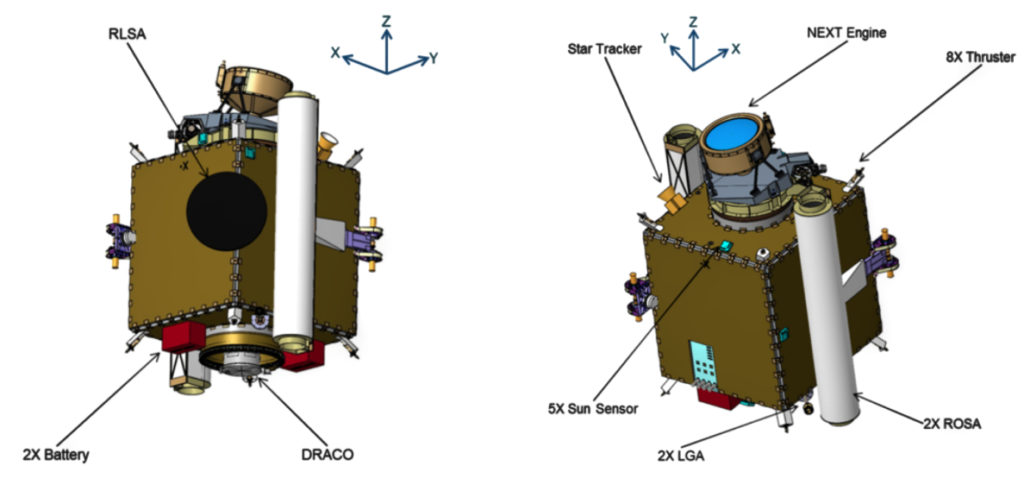
Two different views of the DART spacecraft. The DRACO (Didymos Reconnaissance & Asteroid Camera for OpNav) imaging instrument is based on the LORRI high-resolution imager from New Horizons. The left view also shows the Radial Line Slot Array (RLSA) antenna with the ROSAs (Roll-Out Solar Arrays) rolled up. The view on the right shows a clearer view of the NEXT-C ion engine. Images are courtesy of NASA.

Named after the Greek goddess of marriage, HERA, European contribution to AIDA international cooperation (Asteroid Impact & Deflection Assessment, the first planetary defence mission of humanity) aims to determine if we are capable of deflecting an asteroid and preventing it from hitting Earth.
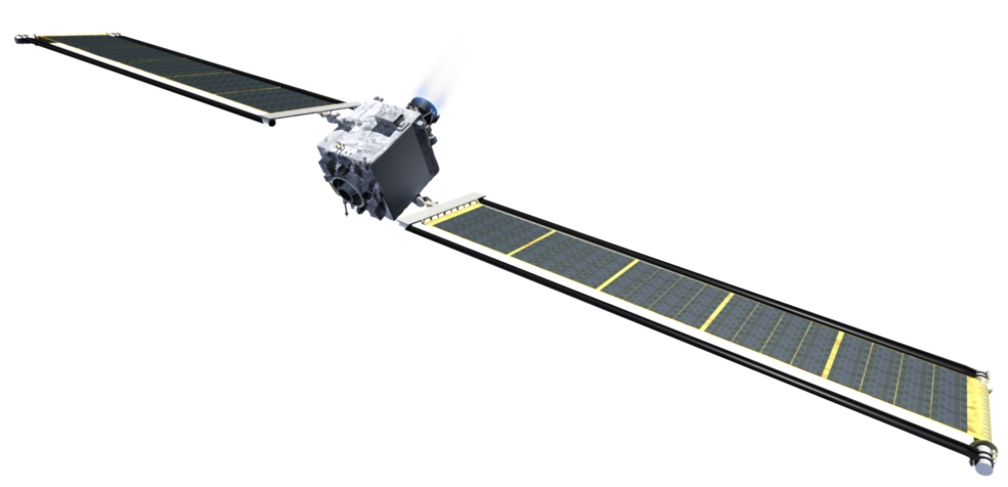
Artistic rendition of NASA’s DART spacecraft is courtesy of the agency.

AIDA consists of two missions, NASA’s Double Asteroid Redirection Test (DART), a kinetic impactor designed to deviate the orbit of the smaller of the two Didymos asteroids, and ESA’s HERA inspector spacecraft, that will rendezvous the Didymos target asteroid about 4 years after the DART impact.
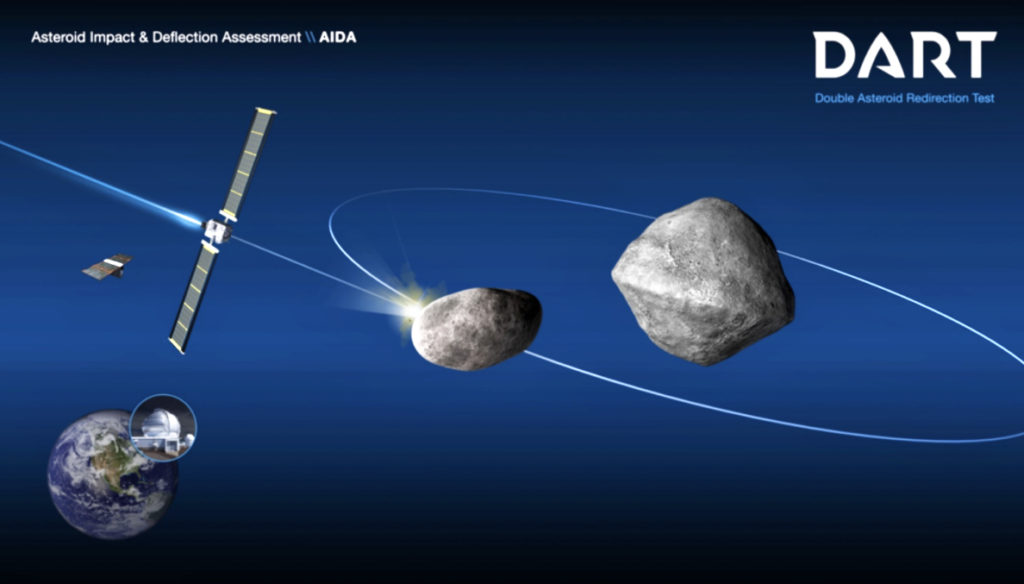
HERA, scheduled for launch in 2024, will travel for the first time in history to explore a binary asteroid system. The systems provided by Thales Alenia Space will be key to the mission, allowing to control and track the spacecraft from a distance up to 500 million kilometer far away, to send all the information gathered by HERA back to Earth and to perform radio science.
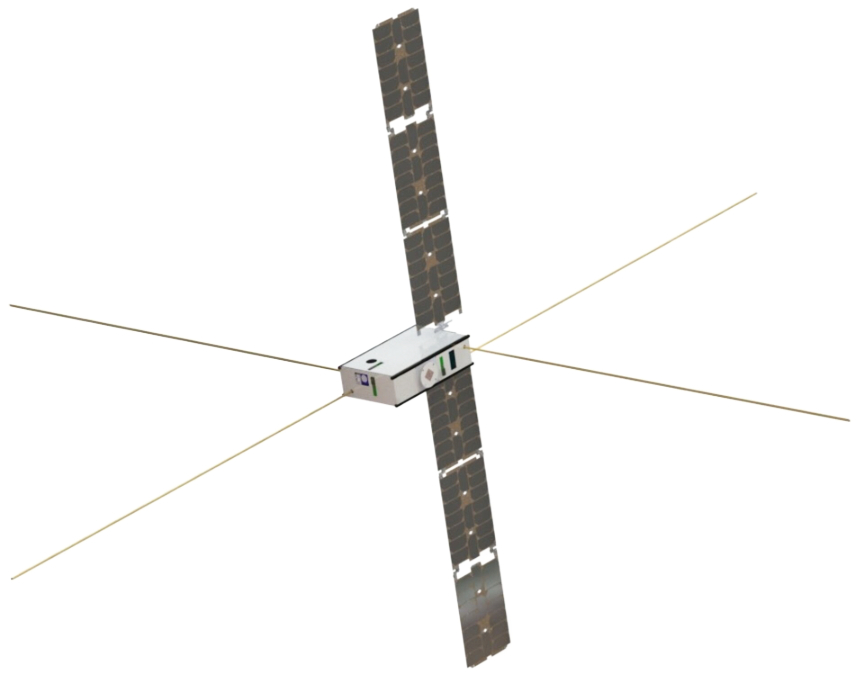
Artistic rendition of the HERA cubesat is courtesy of ESA.

Thales Alenia Space in Spain will be responsible for the X-band Communications System, leading an industrial consortium which includes Thales Alenia Space in Italy, responsible for the state-of-art Deep Space Transponder that, exploiting a flight-proven digital platform, will allow robust communication with the Ground Station and Thales Alenia Space in Belgium, responsible for the Travelling Wave Tube Amplifiers (TWTA), among other companies. Thales Alenia Space in Belgium will also provide the PCDU, the electrical core of the spacecraft.
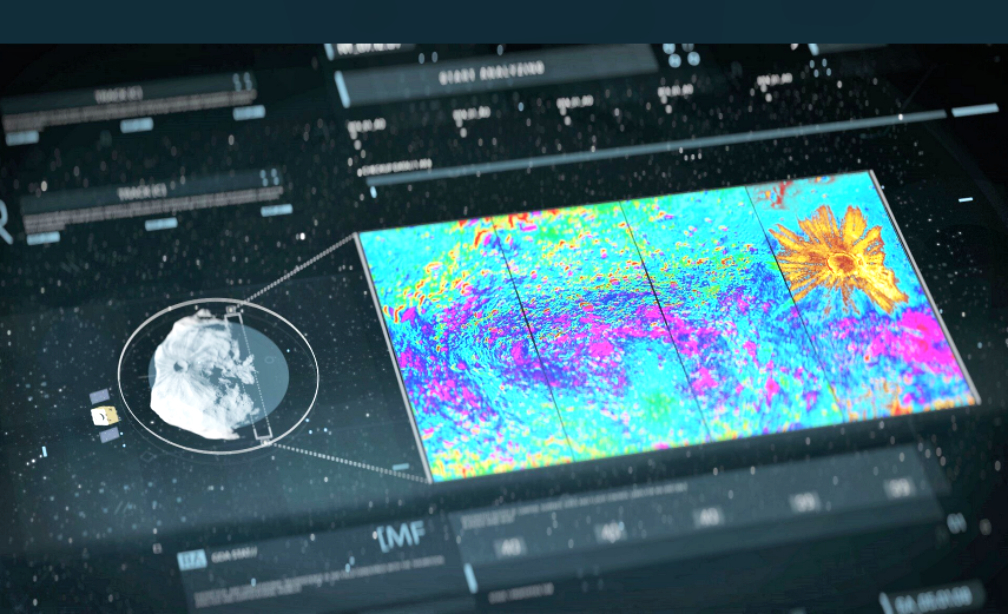
Artistic rendition of HERA scanning Didymoon. Image is courtesy of ESA.

HERA will send key information to Earth on the physical properties of Dimorphos, (including mass, size, shape, volume, density, porosity, size distribution of surface material) to determine the momentum transfer efficiency of the impact and to allow scaling it to different asteroids; details of the crater formed by the impact to improve our understanding of the cratering process; and observations on the subtle dynamic effects that are difficult to detect from ground-based observations.

Executive Comment

Eduardo Bellido

Eduardo Bellido, CEO of Thales Alenia Space in Spain, said, “It is exciting to be part of this historic experiment for humanity to protect the Earth against asteroid collisions. Our technology will deliver essential data to scientists to be able to establish a planetary defence strategy based on asteroids deflection, to prevent the threat of an impact on Earth. Landing on Titan, mapping the Universe with Herschel and Planck, hunting a comet with Rosetta and now preventing Earth against Asteroid, all so amazing and unimaginable challenges our company is so proud to face.”

Saving Our Planet
Asteroids are bodies originated in the young stars nebulae that never grew to planets, formed of rock and metal. Among them, those that have an orbit that brings them close to Earth, known as near-Earth asteroids, pose a risk of hitting the Earth.


There are plenty of such bodies in our Solar system, from tiny little ones measuring a few meters (there’s 40-50 millions of them) up to larger ones, measuring more than 1 km but much more scarce (there’s less than 1000 of them). Neither the smaller near-Earth asteroids nor the larger ones pose a real threat to humanity.


Small asteroids actually hit the Earth quite frequently (every two weeks) with no consequences. The larger ones, although potentially dangerous, are well-known and tracked, and it takes millions of years to have one of them hitting the Earth. Actually, a 10km asteroid impact is the most accepted theory of the Cretaceous extinction around 66 million years ago, ending with three-quarters of the plant and animal species, among others the dinosaurs.


Another famous asteroid impact was Tunguska in Siberia in 1908, presumably belonging to the 30 to 100 meter class, which hit the Earth every 10 years. It is the mid-sized class asteroids of more than 100 meters the ones we need to worry about, such as the asteroid HERA will explore.


There are about 30,000 near-Earth asteroids of the 100 to 300 meter size class, 82% of them still to be spotted, hitting the Earth every 10,000 years. The impact energy of such an asteroid is equivalent to around 50 megatons of TNT, the power of a “Tsar Bomba.” The effect of such an impact would be devastating if it reached a populated area, capable to destroy an entire city or to create a tsunami if it impacted a sea.


The Didymos binary asteroid system is prototypical of the thousands of asteroids that pose a hazardous risk of impact to our planet. Around the main body, 780 meter in diameter (the size of a mountain), orbits a 160 meter moonlet, Dimorphos, similar in size to the great pyramid of Giza. HERA will target this moonlet, which will become the smallest asteroid ever visited by a probe.


The DART spacecraft will be launched in July 2021 and is expected to hit the surface of Dimorphos on September 2022 at a speed of almost 7 kilometers per second, which is expected to modify its orbit around Didymos and create a substantial crater. Dimorphos will thus become the first object in the Solar System whose orbit and physical characteristics have been measurably modified by human effort.


The HERA spacecraft will reach the binary asteroid by the end of 2026, and during 6 months it will perform a detailed study mapping the impact crater caused by DART and measuring the mass and other physical properties of the asteroid to determine the effect of the impact on its orbit. Thus, the data provided by HERA will allow, for the first time, to validate and refine the numerical impact models at the asteroid scale, thus making this deflection technique ready for use for planetary defense if it were ever necessary to safeguard the Earth.

Filed Under: Contracts & Commercial Deals, SmallSat

Primary Sidebar

Coverage

  • Missions & Constellations
  • Business & Finance
  • Military & Defense
  • Launch
  • Software Automation & Ground Systems
  • Government & Regulation
  • Services & Applications

Most Read Stories

  • Blue Origin Reconstructs Launch Complex 36 Tower, Targets November Return to Flight for New Glenn
  • Amazon Navigates Launch Delays with Under 400 Satellites in Orbit Ahead of Nov. 13 Vulcan Return
  • Satellite Bus Maker Apex in Talks to Raise $500M at $4B Valuation
  • Northwood Space Secures $375M Series C at $2B Valuation to Expand Shared Ground Station Network
  • NASA Outlines Artemis IV Starship Refueling Architecture as Launch Estimates Vary

Secondary Sidebar

Footer


Satnews is a leading provider of satellite news, events, publications, research and other satellite industry information in both commercial and military enterprises worldwide.

Stories By Category

  • Business & Finance
  • Government & Regulation
  • Launch
  • Military & Defense
  • Missions & Constellations
  • Services & Applications
  • Software Automation & Ground Systems
  • Spectrum & Licensing
  • Startups & NewSpace Business

About Us

  • Leadership & Editorial Team
  • SatNews History
  • Free Satnews Subscription
  • SatNews Events
  • Magazines

Navigation

  • Latest Stories
  • Magazines
  • Events
  • Contact
  • Cookie & Privacy Policy for Satnews

We use cookies to ensure that we give you the best experience on our website. If you continue to use this site we will assume that you are happy with it.
x
Sign up Now (For Free)
Access daily or weekly satellite news updates covering all aspects of the commercial and military satellite industry.
Invalid email address
Notify Me Regarding ( At least one ):
We value your privacy and will not sell or share your email or other information with any other company. You may also unsubscribe at anytime.

Click Here to see our full privacy policy.
Thanks for subscribing!