

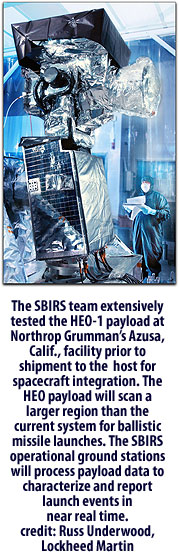
 The Air Force has successfully completed the early on-orbit checkout of the second space based infrared systems (SBIRS) sensor operating in a highly elliptical orbit (HEO) over the northern hemisphere. The second sensor is known as SBIRS HEO-2, which provides performance that is exceeding specifications across the missile warning, missile defense, technical intelligence, and battlespace awareness mission areas. Compared to the legacy Defense Support Program (DSP) infrared sensor, SBIRS delivers about 10x better sensitivity and up to 5x faster revisit capability. SBIRS offers a wide field of view, increased sensitivity, fast revisit rate, and persistent presence. The Air Force Space and Missile Systems Center‘s Space Based Infrared Systems Wing manages the SBIRS program to develop both the elliptical orbiting payloads and geosynchronous orbiting satellites and sensors as well as the ground systems to support mission operations. SMC is a unit of Air Force Space Command.
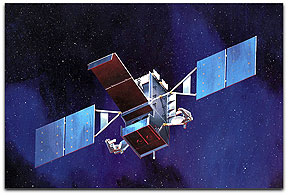
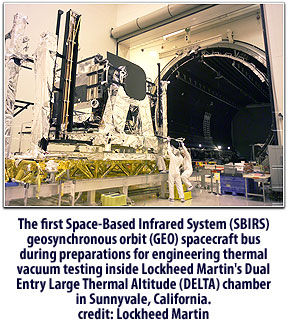 The SBIRS sensor effectively detects heat or hot gasses from missiles and other man-made objects, terrestrial events like volcanic eruptions and wildfires, and weather data from clouds and storms. The sensor is also providing information on static sources of infrared energy such as the flaring of methane gas from oil wells and pipelines. SBIRS HEO is designed to use advanced space sensors and ground systems to provide infrared (heat signature) information from space. The highly elliptical orbiting sensors cover the northern hemisphere for approximately 12 hours a day from egg shaped elliptical orbits reaching 35,000 kilometers above the North Pole. In November 2006, the Air Force announced the successful checkout of the HEO-1 sensor. The extraordinary efforts of the Lockheed Martin, Northrop Grumman, Aerospace, and government team, enabled the SBIRS Wing to successfully transition operations of the first HEO payload to the 11th Space Warning Squadron at Schriever Air Force Base, Colorado in November 2007. By September 2008, alerts from the HEO-1 sensor will be incorporated into the system providing Defense Support Program messaging to warfighters. The HEO-2 sensor will continue engineering testing over several months leading to full operational use of the payload by Air Force Space Command.
