


-
 Private Eyes are Watching You to the Tune of $46 Billion ABI Research foresees the video surveillance market as being ripe for explosive growth—from revenue of about 13.5B/USD in 2006 to a huge increase of 46B/USD in 2013. Some in the industry have likened the possibilities of such a boom to the Gold Rush in California. These figures include cameras, computers and storage, professional services, and hardware infrastructure: everything that goes into an end-to-end security system. This major shift is due to the fact that much of the analog-based industry will shift to digital.
 Video surveillance has greatly expanded to a variety of vertical markets such as retail, education, banking, transportation and corporate business. Systems include new facial recognition software that analyzes shoppers’ behavior within stores, even tracking eyeball movements as shoppers view product displays.
European video surveillance markets are ahead of the curve compared to the North American markets. In fact, some reports indicate that the UK, with its 4.1 million surveillance cameras, is the most monitored society on earth. Big changes are in the works to rectify the gaps in North America and, also to prepare for the upcoming Olympics, in China—New York, New York
Video surveillance has greatly expanded to a variety of vertical markets such as retail, education, banking, transportation and corporate business. Systems include new facial recognition software that analyzes shoppers’ behavior within stores, even tracking eyeball movements as shoppers view product displays.
European video surveillance markets are ahead of the curve compared to the North American markets. In fact, some reports indicate that the UK, with its 4.1 million surveillance cameras, is the most monitored society on earth. Big changes are in the works to rectify the gaps in North America and, also to prepare for the upcoming Olympics, in China—New York, New York
-
Adobe Is Pumped Up. Adobe Systems Inc. has reported financial results for its Q1 ended February 29, 2008, with 37 percent year-over-year revenue growth. In the first quarter of fiscal 2008, Adobe achieved revenue of $890.4 million, compared to $649.4 million reported for the first quarter of fiscal 2007 and $911.2 million reported in the fourth quarter of fiscal 2007. Adobe’s first quarter revenue target range was $855 to $885 million. During the first quarter, Adobe repurchased 33.3 million shares of its outstanding common stock, at a cost of $1.25 billion.
Plus, Adobe is stating their Adobe Flash Media Rights Management Server software is now available. This is a new, scalable content protection solution that helps safeguard video content created for Adobe Flash technology against misuse. Aimed at broadcasters and media companies who are looking to deliver and protect video that can be viewed online and offline, the new server integrates into existing and emerging media delivery workflows, including Adobe Media Player and video applications that run on Adobe AIR software—San Jose, California
-
 But Does It Beep When It Backs Up!We know you don’t have a lot of time, and when you have finished your 14th hour of work at your home office or wherever, the last thing on your mind is backing up your digital photos, music, documents or other types of files. Research conducted by Consumer Electronics Association (CEA) indicates that the average American has 1,800 digital files, totaling 310 billion digital files nationwide. With another 1,060 being added per user in 2008, the total number is expected to hit just under 500 billion by the end of the year. Nearly one in three consumers don’t see the need to back up their files, and almost a quarter (22 percent) say they aren’t backing up files because it’s too time consuming.
Research results indicate that consumers are satisfied with their storage options. Eight out of 10 reported using their home computer as their primary long-term storage option. For back-up, over three quarters of people surveyed (77 percent) burn their files onto a CD or DVD. Over a quarter (29 percent) of those surveyed copy their files onto more than one device, such as having a file on a computer and a portable MP3 player.
However, here are a few helpful tips: if you are saving content onto a CD, DVD, USB Flash Drive or other removable device, keep an extra copy off-site; use an online backup service to protect your content from disasters and/or hardware failures; scan and clean your backup drives as viruses can spread to removable drives and other network connections, damaging your music and photos; and regularly defrag your hard disk drive to ensure your computer is running faster for longer with less wear and tear. Establish a regular back-up schedule. Many external hard-drives come with software that can assist in the back-up process and help maintain a consistent schedule to ensure data gets saved even if you forget. Companies specializing in the digital storage market are ramping up to encourage more careful handling of files, and of course, offering their services—Arlington, Virginia
-
Bummer for the Dish Most everyone knows of the great race of the HD TV satellite companies. A major setback has occurred to Dish Network when the high-def expansion plans didn’t exactly go as… planned. A satellite that promised to increase HD capacity failed to reach the proper orbit. Instead of going higher, the Dish Network satellite hit a lower orbit, thus decreasing the number of HD channels that it can now transmit. Dish isn’t going to sit idly by, but will attempt to correct the orbit using rockets, which will increase the costs drastically—Englewood, Colorado
-
A new video technology is en route from Atlanta from a company called Clearleap. Sure, you’ve heard this all before… however, the technology has definitely caught the attention of Trinity Ventures of Menlo Park, California, and Noro-Moseley Partners of Atlanta, as all parties have now closed the first round of venture capital funding to the tune of 9M/USD. Trinity Venture’s General Partner Fred Want and Alan J. Taetle, General Partner at Noro-Moseley Partners, have been named to the company’s Board of Directors. Clearleap develops and markets technologies to expand consumer options for “what’s on TV” and they work with video content owners as well as satellite, cable and IPTV companies.

-
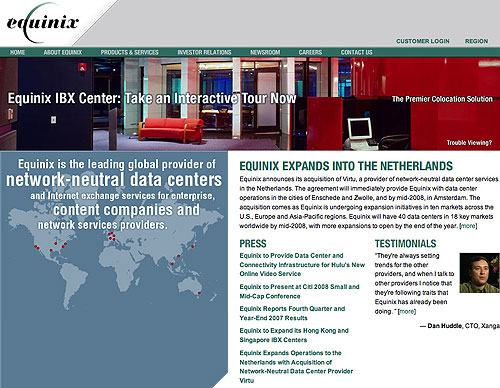
Equinix, Inc. is providing Hulu, with their Equinix Internet Business Exchange (IBX) centers for the delivery of Hulu’s free streaming service. Hulu offers a selection of hit shows, clips, movies, and more at Hulu.com and other destination sites online, including AOL, Comcast’s Fancast.com, MSN, MySpace and Yahoo! Hulu’s selection of premium programming is provided by leading content companies, including FOX, NBC Universal, MGM, Sony Pictures Television, Warner Bros. Television Group and many others. Hulu will use Equinix’s data center environment to directly connect with an aggregation of network service providers that link to end-users. Equinix’s centers offer immediate and direct access to a critical mass of leading carriers, ISPs, and network service providers within the same physical location. Equinix’s centers will also provide Hulu with a secure and redundant physical infrastructure with a strong track record of uptime. Power operations at each center include a high-performance backup system that guarantees uninterrupted power even in the event of utility power disruption. Security features include interlocking “mantrap” doors, multiple layers of biometric hand-geometry scanners controlling access, as well as 24-hour security officers and hundreds of surveillance cameras—Foster City, California
-
The pay direct-to-home (DTH) TV industry is characterized by two broad growth patterns: maturing markets with decaying rates and high growth/emerging markets. So reports In-Stat in their latest research report. In mature markets, growth will come from premium services (HD and DVR/PVR), while emerging/high growth markets will experience a period of relatively robust subscriber acquisition. This will likely be followed by consolidation and a gradual decay in the growth rate, the high-tech market research firm says. Their research found the following: The growing number of premium services and related boxes are creating a favorable product mix with higher ASPs and DTH set-top box unit shipments in 2008 are expected to eclipse 80 million, growing to a peak of 83.5 million in 2010. The research, entitled “World Report on Digital Satellite Set-Top Boxes” (#IN0804064ME), covers the worldwide market for digital satellite set-top boxes. It provides worldwide and regional forecasts for unit shipments, average selling prices, and revenue by set-top type, including DVR and HD models, through 2012. It includes extensive analysis of regional markets, standards, distribution, and technologies. For more information on this research, or to purchase it online, please visit www.instat.com/catalog/mmcatalogue.asp?id=162.

-
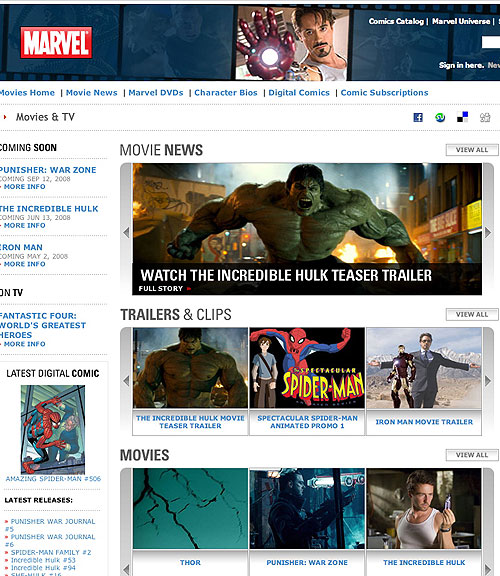
Marvel Studios has entered into its first basic cable distribution agreement with FX for the company’s self-produced movies. This is a five picture deal, and FX will have the rights to the studio’s upcoming feature films that include Iron Man and The Incredible Hulk, with the remaining films to be named at a later date. Iron Man is expected to arrive in theaters on May 2nd and The Incredible Hulk on June 13th. This agreement with FX does not include broadcast TV or Canadian rights or the second, free, TV window.
-
Satellite Information Services Ltd. has been selected as the preferred bidder for the Outside Broadcasts division of BBC Resources Ltd. The BBC announced SIS has been selected, following a rigorous evaluation process, which examined bids from financial and industry buyers. The BBC will transfer the staff and business to SIS later this year, including the fleet of television production units, plus
sound, support and communications vehicles and award winning special cameras. The transfer would mean that SIS will be covering major sporting events including the Beijing Olympics for BBC television in August. This brings together the largest OB provider in the United Kingdom with the operator of the biggest satellite uplink fleet in Europe and follows the recent announcement of the strategic alliance between SISLink, the broadcasting division of SIS, and Intelsat, the leading provider of fixed satellite services worldwide, which enabled SIS to gain access for the first time to the USA—London, United Kingdom
-
At the McGraw-Hill Companies’ 2008 Media Summit in New York, held March 12th through 13th, the keynote speaker was Robert A. Iger, President and CEO of The Walt Disney Company. He had some rather interesting things to say… for example, the Disney deal with Apple‘s iTunes is a good business. Iger indicated more than 4 million movies have been sold in the past 1-1/2 years and, on the television streaming side, 40 to 50 million episodes have been purchased. According to Mr. Iger, it’s not that consumers are watching all of this content on their iPods, but are, rather, downloading these views in addition to watching them on TV. Cannibalization does not seem to be a problem for Disney and he sees electronic delivery growing with the technology and screen viewing improves. The Disney leader also stated the company sees the digital business as a revenue generator, with revenues from this section of their business to grow to between 750M/USD to 1B/USD during 2008, with the broadband-enabled computer becoming one of Disney’s major entertainment vehicles.

-
A port for Android? Yes, quite true—Webtide has just developed the first web and application server that has been designed specifically to operate on Google‘s Android mobile platform. This is a port of Jetty (an open-source web container) and is named i-Jetty for the Android open source software stack that also includes a full OS, middleware and key apps, all based on Linux and Java. This servlet from Webtide will allow users to modify and save changes, view and listen to multimedia files and to make phone calls. These features will provide users with the ability to access the information on their phones from more familiar web browsers. Google developed Android collectively as part of the Open Handset Alliance, which is comprised of a group of more than 30 mobile and technology companies working to open up the mobile handset environment. You’ll be able to glom onto i-Jetty via this link—Manhattan Beach, California

-
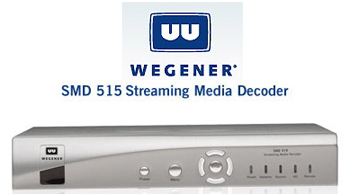
Wegener Corporation is in receipt of an order totaling over 1.6M/USD from Conklin-Intracom for SMD 515 IPTV set top boxes to support the IPTV offerings of multiple telco operators. This order includes a combination of WEGENER’s SMD-515 set tops and remote controls for premium IPTV services, including: HD programming, video on demand and integrated personal video recording (PVR). WEGENER’s SMD-515 IPTV set top supports MPEG-4/h.264 and MPEG-2 decoding in standard definition and high definition video formats with optional digital video recording capability. WEGENER SMD-515 SD/HD/PVR MPEG-2/MPEG-4 set top boxes, as a part of Conklin-Intracom‘s fs|cdn integrated middleware and conditional access IPTV solution, are in commercial deployment by Telcos and operators in the US and internationally. fs|cdn leverages the interactive capabilities of next generation communications networks to enable IPTV services and cutting-edge on-screen applications employing a unique architecture, combining middleware and conditional access, to enable operators cost-efficient scaling from 100 to 100,000 end-users—Duluth, Georgia
PRIVACY POLICY
digiGO!™—The Digital World… does not sell or trade subscribers’ names or personal information to any interested parties.
DISCLAIMER
digiGO! and its agents and distributors used all best efforts to collect and prepare the information published herein. However, digiGO! does not assume, and hereby disclaims, any and all liability for any loss or damage caused by errors or omissions, whether such errors or omissions resulted from negligence, accident, or other causes.
Copyright 2006—2008 digiGO! | High Sierra Media Group (HSMG) & SatNews Publishers. All rights reserved.
