

On Sept. 23, 2026, NASA selected the Probe far-Infrared Mission for Astrophysics (PRIMA) as the inaugural mission within its new Probe Explorer astrophysics program line.
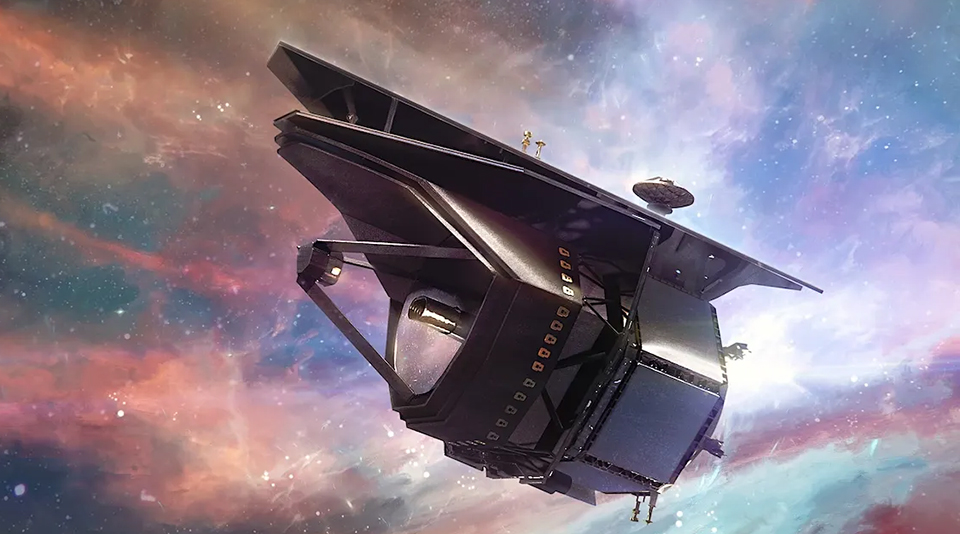
The decision authorizes the far-infrared space telescope project to enter Phase B formulation, establishing baseline technical design, instrument suite integration, and cost architecture ahead of a targeted 2033 launch.
Probe Explorer Program Context and Portfolio Balance
The selection of PRIMA establishes a middle-tier mission class designed to bridge the structural cost gap between small Explorer-class missions and multi-billion-dollar flagship observatories such as the James Webb Space Telescope and the upcoming Nancy Grace Roman Space Telescope.
With an individual cost cap capped near the billion-dollar threshold, Probe Explorer missions allow NASA’s Astrophysics Division to address high-priority scientific questions identified in the National Academies’ Decadal Survey without straining broader agency science budgets. Establishing a recurring Probe-class procurement framework provides institutional predictability for university research laboratories and industrial prime contractors developing specialized space astronomy hardware.
By authorizing PRIMA as the first Probe Explorer entry, NASA fills a critical observational gap in far-infrared astronomy that has remained vacant since the retirement of the European Space Agency’s Herschel Space Observatory and NASA’s Spitzer Space Telescope.
Optical Architecture and Cryogenic Instrumentation Specifications
PRIMA is designed as an unshielded far-infrared space observatory centered around a 1.8-meter primary mirror assembly.
The spacecraft payload incorporates two primary scientific instruments engineered to capture far-infrared electromagnetic emissions spanning wavelengths between 24 and 235 microns. The instrument suite features an imaging polarimeter alongside a high-resolution spectrometer capable of isolating faint spectral line signatures across distant astronomical targets.
Because background thermal radiation from spaceflight hardware can obscure delicate far-infrared signals, the 1.8-meter primary optics and science instrument suite will be cryogenically cooled to extreme low temperatures. The active sub-kelvin cryogenic cooling architecture minimizes thermal noise, providing the high signal-to-noise ratio necessary to capture low-intensity far-infrared photons emitted from cold cosmic gas clouds.
Scientific Objectives and Astrophysical Targets
Operating across the 24-to-235 micron spectral range enables PRIMA to penetrate dense interstellar dust lanes that block visible and ultraviolet light.
The observatory’s primary science goals center on tracing the growth of supermassive black holes and mapping planet-forming disks around young star systems. By measuring dust polarimetry and molecular gas spectra, PRIMA will trace how cosmic magnetic fields influence star formation within cold molecular clouds.
Additionally, the observatory will examine water vapor distribution and elemental abundances across protoplanetary disks, providing observational data on the chemical precursor environments that foster planetary system formation.
Phase B Formulation Milestones and Development Schedule
Moving into Phase B of development allows the PRIMA project team, led by NASA’s Jet Propulsion Laboratory and principal investigator institutions, to finalize engineering trade studies, mature cryogenic cooler subsystems, and establish key hardware subcontractor networks.
Over the next two years, the mission team will complete system requirements reviews and preliminary design milestones, preparing the space telescope for formal confirmation into Phase C manufacturing ahead of its scheduled 2033 launch window.
