

RENENS, Switzerland — Satellite payload developer SWISSto12 has completed the Critical Design Review (CDR) for the dual-band S- and Ka-band active phased array antennas destined for UNIVITY’s 5G non-terrestrial network (NTN) demonstration satellites, the company announced on Monday, Nov. 9, 2026.
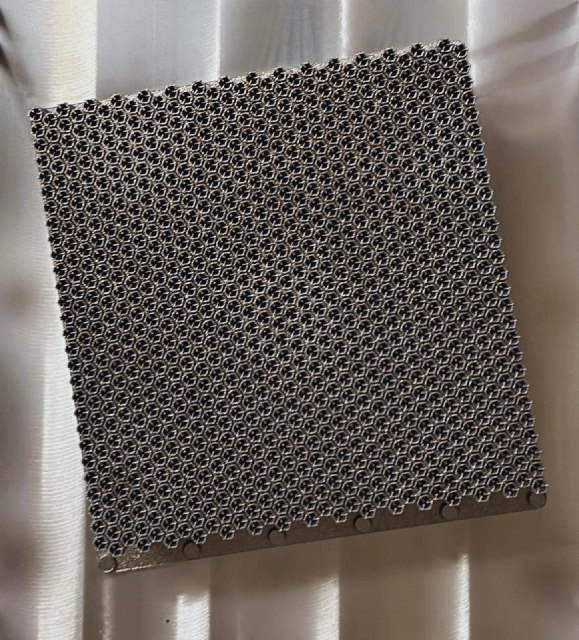
Passing the milestone clears the antenna subsystems for flight hardware production, advancing UNIVITY’s planned constellation toward providing combined satellite broadband and direct-to-device connectivity from a unified spacecraft bus.
Shared Space Infrastructure and Spectrum Convergence
The antenna systems form a core component of UNIVITY’s uniShape demonstration initiative, backed institutionally by the French Space Agency (CNES) and the France 2030 investment plan. The mission targets a shared, neutral-host orbital infrastructure in very low Earth orbit (VLEO) that allows commercial telecommunications operators to deploy branded 5G broadband and direct-to-device coverage using their existing terrestrial spectrum allocations. The demonstration builds on early orbital validation conducted when UNIVITY launched its initial regenerative 5G payload aboard an orbital transfer vehicle.
HummingLink 3D-Printed Antennas and Beamforming Specifications
Manufactured at SWISSto12’s facility in Switzerland under its HummingLink product line, the dual-band suite incorporates vertically integrated radio frequency (RF) hardware:
- S-Band Direct Radiating Array: Operates as an active direct radiating array (DRA) engineered for direct-to-device connectivity, linking unmodified commercial 5G smartphones directly to orbital nodes.
- Ka-Band Direct Radiating Array: Functions at 26 GHz to deliver high-capacity user broadband services and feeder links.
- Additive Manufacturing: Employs proprietary 3D printing to fabricate passive radiating front ends with integrated miniaturized, low-loss filters, paired with in-house beamforming printed circuit boards (PCBs) and digital control electronics, expanding on SWISSto12’s additive manufacturing capabilities developed for sovereign and commercial payloads.
Hardware Production and Environmental Verification
“Reaching Critical Design Review in less than one year was possible due to SWISSto12’s proprietary and differentiated payload and antenna technology and a vertically integrated delivery model,” said Emile de Rijk, CEO and founder of SWISSto12. “It’s a significant milestone for the program and the start of the next phase as we move into hardware production and an extensive verification and acceptance campaign.”
With CDR approval finalized, SWISSto12 will initiate flight-model assembly and environmental acceptance testing ahead of UNIVITY’s planned prototype satellite launches.
