

Targeting strict size, weight, power, and cost (SWaP-C) constraints across aerospace and defense platforms, micro electro-mechanical systems (MEMS) developer Silicon Sensing Systems Ltd launched its next-generation CRG21 gyroscope on Wednesday, July 22, 2026.
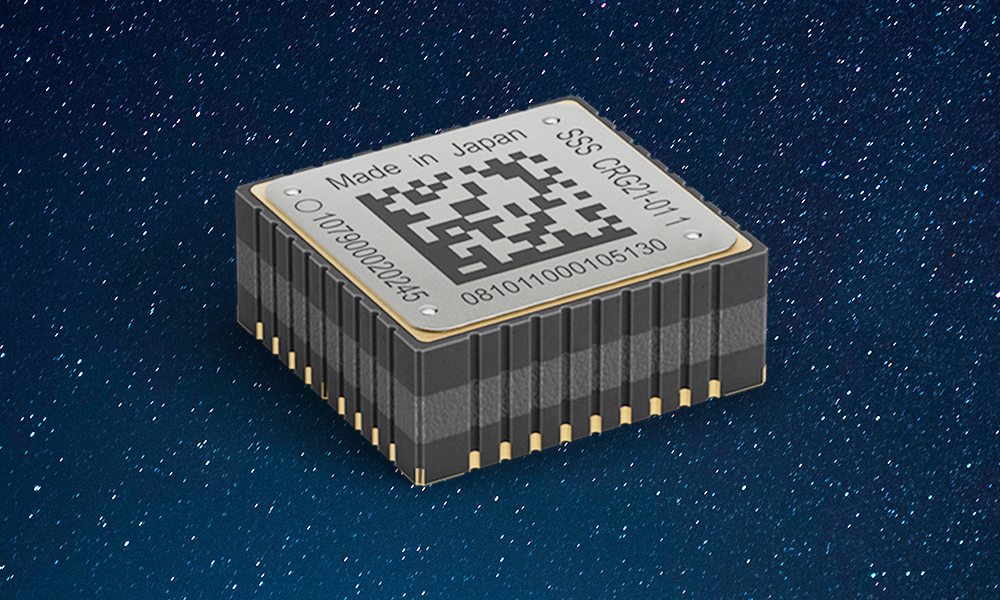
The fully integrated, single-axis digital rate sensor is engineered to operate in high-shock and intense vibration environments while serving as a direct form, fit, and function replacement for the company’s previous-generation CRG20 gyro.
Manufacturing Heritage and Industrial Context
Silicon Sensing—a joint venture between Collins Aerospace and Sumitomo Precision Products established in 1999—developed the CRG21 to address demanding inertial sensing requirements in harsh operational domains. The architecture expands upon the company’s high-volume production capabilities, which recently surpassed the milestone of 30 million delivered MEMS sensors across global markets.
The introduction follows a broader commercial push into spaceborne and defense inertial applications, supported by the firm’s published technical framework for space-rated MEMS sensor selection and an expanded North American distribution infrastructure for tactical-grade inertial components.
Sensor Dimensions and Technical Specifications
The closed-loop digital gyroscope integrates single-chip electronics within a micro-scale footprint to streamline retrofitting and system assembly:
- Form Factor: Compact physical enclosure measuring 9.5 mm x 9.0 mm x 3.4 mm, matching the mounting footprint of the CRG20 for drop-in replacement.
- Thermal Range: Operational temperature survivability certified from -40°C to +105°C.
- Noise and Bias Stability: Engineered for low-noise performance, maintaining angular random walk stability and consistent bias performance across wide thermal gradients.
- Configuration Flexibility: Manufactured in multiple dynamic rate ranges and bandwidth options to support varied control loop speeds.
- Mechanical Ruggedization: Built to resist high structural shock loads and sustained vibration without signal degradation.
Leadership Rationale on Product Evolution
“CRG21 builds on the capabilities that made our CRG20 the gyro of choice for several critical aerospace, defence, industrial and automotive programmes, extending its outstanding resistance to shock and vibration,” stated Kevin Swain, Head of Sales and Business Development at Silicon Sensing Systems Ltd.
Retrofit Potential and Subsystem Integration
By maintaining an identical physical pinout and footprint to legacy hardware, the CRG21 eliminates the requirement for non-recurring engineering (NRE) redesigns of printed circuit board (PCB) assemblies in existing guidance, orientation, and stabilization systems. The sensor is intended to reduce overall system costs across space, defense, automotive, and industrial platforms where compact digital rate sensing is required under hostile physical conditions.
