

On Friday, July 10, 2026, shares of AST SpaceMobile Inc. headed toward their sharpest weekly decline in more than a month following public statements from Federal Communications Commission (FCC) Chairman Brendan Carr.
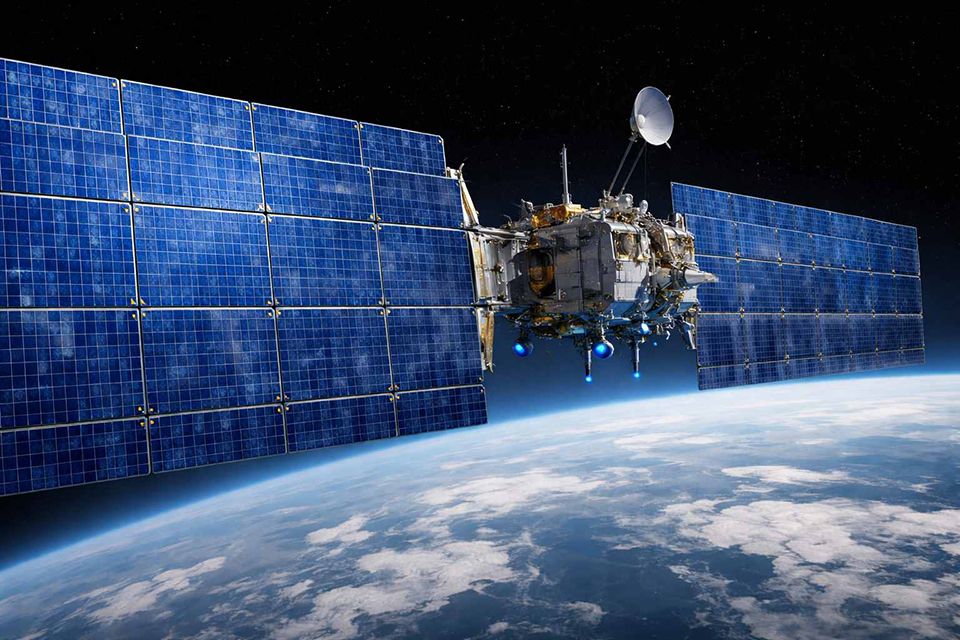
The regulator highlighted intensifying multi-player competition within the space-based direct-to-device segment, driven by rapid network expansions from Space Exploration Technologies Corp. (SpaceX) and Amazon.com Inc.
Direct-to-Device Architectural Comparison
The ongoing infrastructure race involves structurally distinct approaches to delivering commercial space-based cellular broadband to unmodified smartphones:
- AST SpaceMobile: Utilizing large, low-Earth orbit (LEO) phased array antennas measuring roughly 2,400 square feet, the network relies on existing mobile satellite spectrum partnerships with traditional wireless carriers to enable 4G LTE and 5G connections.
- SpaceX: Deploying direct-to-cell capabilities integrated within its Starlink constellation using new airwaves in cooperation with T-Mobile, targeting broad consumer availability.
- Amazon: Moving to incorporate Globalstar’s mobile-satellite-services spectrum licenses and orbital infrastructure into its Project Leo constellation to add direct-to-device capabilities.
August Constellation Deployment Schedule
Despite recent public market volatility, AST SpaceMobile is advancing its hardware rollout timeline. The company confirmed that its BlueBird 11 satellite has completed transit from its Midland, Texas manufacturing facility to Cape Canaveral, Florida, in preparation for a deployment window scheduled for the first half of August.
The upcoming launch will also include the BlueBird 12 and BlueBird 13 satellites. These next-generation block spacecraft feature expanded phased arrays engineered to support dual-way voice, data, and video services while delivering up to twice the peak data speeds achieved by initial experimental versions.
