

Brian Hughes has officially been appointed as the new senior director of launch operations for NASA, taking on the de facto role of Director at the Kennedy Space Center in Cape Canaveral, Florida . Sworn in on May 8, 2026, Hughes assumes direct responsibility for the agency's primary launch hub during a period of unprecedented operational tempo.
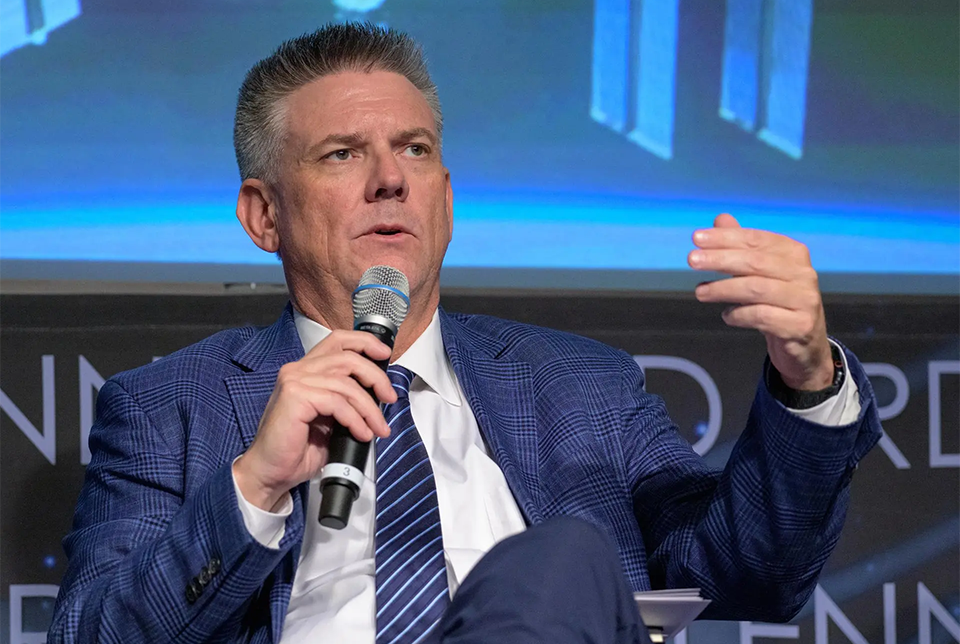
In this newly structured leadership position, his purview also extends to managing operations at NASA’s Wallops Flight Facility in Virginia, aligning the strategic objectives of both major spaceports under a single executive authority . The appointment comes at a highly critical juncture for the United States space program, as the agency aggressively accelerates both its civil exploration initiatives and commercial spaceflight operations.
Hughes, who previously served as NASA’s chief of staff, brings a substantial background in government and strategic leadership to a role specifically designed to navigate the intense logistical complexities of an increasingly crowded launch manifest . His placement reinforces the agency's shifting priorities to strengthen leadership across its expanding spaceport and launch infrastructure network.
Scaling Infrastructure for Commercial Partners
As the commercial space sector rapidly matures, the Kennedy Space Center is facing surging demand from prominent industry partners, notably including high-cadence operators like SpaceX and Blue Origin. The facility is fundamentally transitioning into a high-capacity, multi-user spaceport, a massive undertaking that requires significant upgrades to legacy infrastructure that, in some cases, dates all the way back to the Apollo and Space Shuttle eras.
Hughes is immediately tasked with addressing these physical infrastructure challenges and facilitating the massive capital investments necessary to continuously support higher launch cadences. By ensuring that critical facilities such as commercial launch pads, sophisticated propellant delivery systems, and massive vehicle assembly buildings are properly optimized for modern, rapidly reusable launch vehicles, NASA aims to alleviate the operational bottlenecks that threaten to slow down both commercial and vital government operations.
This strategic focus is essential to mitigate the broader industry challenges surrounding the heavy-lift launch gap, directly ensuring that American space superiority is maintained through diverse, reliable, and cost-effective access to orbit. Working with industry and local leadership is a stated priority for executing the nation’s broader space policy objectives “.
Aligning Kennedy and Wallops Operations
A central component of Hughes’s expansive new mandate involves the deep strategic and operational alignment between the Kennedy Space Center in Florida and the Wallops Flight Facility in Virginia . While Kennedy undeniably remains the primary global hub for heavy-lift vehicles, complex planetary missions, and crewed orbital flights, Wallops provides incredibly crucial capacity for managing small and medium-class rocket launches . By bringing both of these distinctly different spaceports under a unified operational leadership structure, NASA firmly intends to streamline the complex launch approval processes, optimize the allocation of limited resources, and provide commercial launch providers with far more flexible and resilient pathways to orbit . This deliberate consolidation of launch authority is explicitly designed to bring together all essential stakeholders across NASA's entire launch network .
The goal is to work intimately and effectively with private industry leaders, local government officials, and other federal regulatory agencies to safely and efficiently maximize the national launch rate . As the global space economy continues its rapid expansion, this cohesive and modernized approach to spaceport management will be absolutely vital for maintaining a robust, resilient, and highly responsive launch infrastructure capable of supporting the next generation of civil, commercial, and national security space missions .
