

Antaris, a Los Altos-based pioneer in software-defined space missions, announced on March 31, 2026, the successful first close of a 28 million dollar Series A funding round. The investment was led by WestWave Capital, with significant participation from Lockheed Martin Ventures and strategic backing from Planet Ventures.
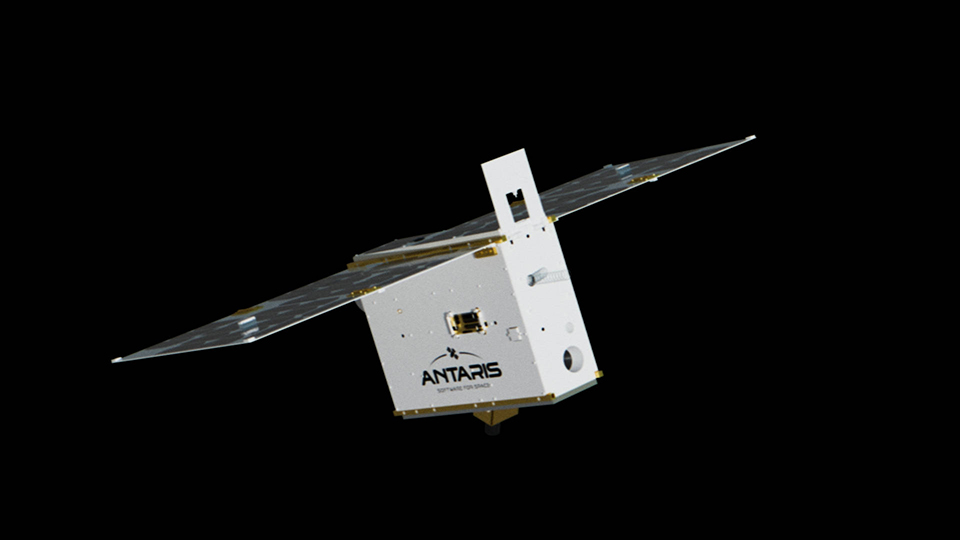
This capital injection marks a major milestone for the company as it seeks to replace traditional, hardware-heavy satellite development cycles with its AI-native Antaris Intelligence platform.
The funding follows a breakout year for Antaris, characterized by increasing demand from both commercial operators and the U.S. Department of Defense for ISR (Intelligence, Surveillance, and Reconnaissance) and communications satellite missions. The company intends to use the new capital to scale its engineering and product teams and to accelerate the deployment of its autonomous on-orbit operations technology.
Core Technology: TrueTwin and Full Mission Virtualization
At the heart of the Antaris offering is its TrueTwin simulation environment. This “Full Mission Virtualization” platform allows satellite operators to design, build, and “fly” an entire mission virtually before a single piece of hardware is manufactured. By creating a high-fidelity digital twin of the satellite, engineers can:
- Predictive Design: Use AI to model how specific component choices will affect mission performance over time.
- Anomaly Detection: Train machine learning algorithms to identify and resolve potential hardware failures in a simulated space environment.
- Constellation Orchestration: Automate the complex coordination required for multi-satellite fleets to work in unison.
This software-first approach is designed to drastically reduce time-to-orbit and lower the overall lifetime operating costs for mission owners. By virtualizing the ground segment alongside the spacecraft, Antaris provides a unified interface that bridges the gap between terrestrial cloud computing and orbital operations.
Expanding Global Footprint and Strategic Partnerships
Antaris is rapidly expanding its reach beyond the United States, positioning itself as a key partner for nations seeking sovereign space capabilities. In February 2026, the company signed a Memorandum of Agreement (MOA) with SARsatX to develop a 16-satellite SAR (Synthetic Aperture Radar) constellation for the Kingdom of Saudi Arabia. This project emphasizes localized manufacturing and software-driven autonomy, allowing the Kingdom to manage its own Earth observation assets.
In addition to its work in the Middle East, Antaris is actively exploring entry into the Japanese space market. This expansion is supported by a strategic partnership with Infostellar, announced in January 2026, which integrates cloud-native ground services directly into the Antaris mission planning platform. This integration allows operators to automate ground station scheduling and data downlinks globally, further streamlining the transition to autonomous space operations.
Market Context: The Shift to Software-Defined Space
The investment from Lockheed Martin Ventures underscores a broader defense industry trend toward resilient and flexible space architectures. As orbital environments become increasingly contested, the ability to rapidly update satellite software and reconfigure mission parameters from the ground is becoming a strategic necessity.
“We are now in a position to push the boundaries of AI-native mission design,” said Tom Barton, CEO and Co-Founder of Antaris. “This investment validates our vision for software-defined space missions, giving customers the speed and confidence they need to succeed in both contested and commercial space.“
