

Exactly 100 years ago today, on March 16, 1926, Dr. Robert H. Goddard launched the world’s first liquid-fueled rocket in Auburn, Massachusetts. Today, L3Harris Technologies (NYSE: LHX) marks this centennial by accelerating the next generation of propulsion technologies—moving beyond liquid oxygen and gasoline to the nuclear and electric systems required for sustained human presence in cislunar space and deep-space transit to Mars.
The Foundation of the Artemis Generation
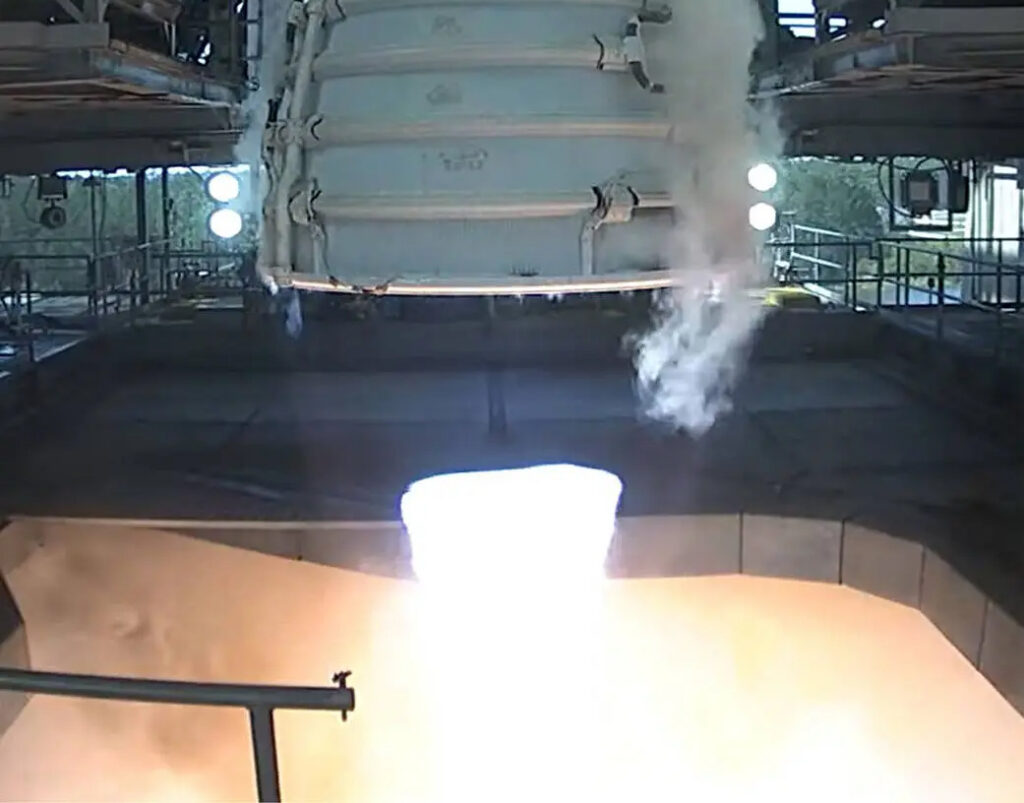
L3Harris, through its Aerojet Rocketdyne segment, remains the industrial backbone of NASA’s Artemis campaign. The company is currently managing the production and refurbishment of the RS-25 engines that power the Space Launch System (SLS) core stage. While the first four Artemis missions utilize upgraded legacy engines from the Space Shuttle program, L3Harris is already hot-fire testing brand-new RS-25 units at NASA’s Stennis Space Center. These new production models leverage additive manufacturing (3D printing) to reduce costs by 30% while maintaining the 512,300 lbs of vacuum thrust required for heavy-lift deep space missions.
Scaling the Gateway: AEPS and Solar Electric Propulsion
As the industry pivots toward the Lunar Gateway—a staging post for Mars—L3Harris has transitioned its focus to high-efficiency in-space maneuvering. In late 2025, the company delivered three Advanced Electric Propulsion System (AEPS) thrusters to NASA.
These 12-kilowatt Hall thrusters represent the most powerful electric propulsion ever flown, designed to maintain the Gateway’s unique Near-Rectilinear Halo Orbit (NRHO) using a fraction of the propellant required by chemical systems.
- Fuel Efficiency: AEPS is 5 to 10 times more efficient than chemical engines.
- Maneuverability: Enables orbit transfers and precise station-keeping for the Gateway’s Power and Propulsion Element (PPE).
- Sustainability: Facilitates long-duration cargo transport to Mars ahead of crewed arrivals.
The Nuclear Frontier: NTP and NEP
Looking toward the next century of rocketry, L3Harris is leading research into Nuclear Thermal Propulsion (NTP). Unlike Goddard’s original gasoline-fueled design, NTP uses a nuclear reactor to heat liquid hydrogen, expanding it through a nozzle to create thrust.
“As we honor Dr. Goddard’s legacy, we are mindful that the jump from chemical to nuclear propulsion will be as transformative as his first flight,” said Kristin Houston, President of Space Propulsion and Power Systems at L3Harris. “Nuclear propulsion is the only technology that can reduce Mars transit times by up to 40 percent, significantly lowering the radiation exposure for our astronauts.”
The Return of “Rocketdyne”
This centennial comes during a period of significant corporate restructuring. In January 2026, L3Harris announced the sale of a 60% majority stake in its Space Propulsion and Power business to AE Industrial Partners for $845 million. The deal, expected to close in the second half of 2026, will see the business rebranded as “Rocketdyne”—reviving the historic name as a standalone entity focused on scaling RL10 and AEPS production for the commercial and sovereign space sectors.
Artemis II and Beyond
L3Harris is currently preparing for the “Artemis II” crewed mission, which will be the first flight to use the company’s mission-critical avionics and RS-25 engines to carry humans into the lunar vicinity in over 50 years. Following the 2026 spin-off, the newly independent Rocketdyne will prioritize the localization of advanced engine components and the development of 100kW Nested Hall Thrusters for the NASA NextSTEP program.
