

• Skip to primary navigation
  • Skip to main content
  • Skip to primary sidebar
  • Skip to secondary sidebar
  • Skip to footer
  • NEWS:
  • SatNews
  • SatMagazine
  • MilSatMagazine
  • SmallSat News
  • |     EVENTS:
  • SmallSat Symposium
  • Satellite Innovation
  • MilSat Symposium
  • SmallSat Europe

SatNews

Satellite Industry Intelligence Since 1983

Subscribe
  • LATEST
  • Missions & Constellations
    • Exploration & Science Missions
    • In-Orbit Servicing & Orbital Operations
    • LEO Constellations
    • Mission Autonomy & Onboard Systems
    • Mission Deployments & Manifests
    • Navigation & PNT
    • SmallSat
    • Spacecraft & Payload Technology
    View All in Missions & Constellations →
    Blackwave Expands COPV Production to the United StatesBlackwave Expands COPV Production to the United States
    Defense Economics and the European SmallSat MarketDefense Economics and the European SmallSat Market
    The FCC Must Choose: Enforce the Rules or Preserve LEO CompetitionThe FCC Must Choose: Enforce the Rules or Preserve LEO Competition
    Syntiant and Novi Space Successfully Demonstrate Low-Power AI Inference in OrbitSyntiant and Novi Space Successfully Demonstrate Low-Power AI Inference in Orbit
  • Business
    • Contracts & Commercial Deals
    • Earnings & Financial Reporting
    • Events & Conferences
    • Funding & Venture Capital
    • Market Forecasts
    • Mergers & Acquisitions
    • Personnel Moves & Appointments
    View All in Business & Finance →
    SES jumps deeper into MEOSES jumps deeper into MEO
    Defense Economics and the European SmallSat MarketDefense Economics and the European SmallSat Market
    SpaceX Accelerates Record-Breaking IPO Following Trillion-Dollar xAI MergerSpaceX Accelerates Record-Breaking IPO Following Trillion-Dollar xAI Merger
    Laser Communications and the Rise of Orbital Data CentersLaser Communications and the Rise of Orbital Data Centers
  • Defense
    • Counterspace & ASAT
    • Defense Budgets & Procurement
    • ISR & Reconnaissance
    • MILSATCOM
    • Missile Warning & Defense
    • National Security Programs
    • Space Domain Awareness
    View All in Military & Defense →
    Defense Economics and the European SmallSat MarketDefense Economics and the European SmallSat Market
    Firefly Aerospace Supports U.S. Space Force VICTUS DIEM ExerciseFirefly Aerospace Supports U.S. Space Force VICTUS DIEM Exercise
    Dual-Use by Design: Telesat Lightspeed and the End of Civilian Telecom in LEODual-Use by Design: Telesat Lightspeed and the End of Civilian Telecom in LEO
    ThinKom Showcases Modular MILSATCOM Architecture for Contested EnvironmentsThinKom Showcases Modular MILSATCOM Architecture for Contested Environments
  • Gov
    • Export Controls & Compliance
    • International Space Agreements
    • National Space Policy
    • Space Law & Treaties
    • Space Sustainability & Debris Policy
    • Space Traffic Management / Debris Removal
    View All in Government & Regulation →
    The FCC Must Choose: Enforce the Rules or Preserve LEO CompetitionThe FCC Must Choose: Enforce the Rules or Preserve LEO Competition
    Space Force Reassigns Final GPS III Mission to SpaceX Following Vulcan AnomalySpace Force Reassigns Final GPS III Mission to SpaceX Following Vulcan Anomaly
    NASA Realignment ‘Ignition’ Accelerates Shift Toward Commercial Lunar EconomyNASA Realignment ‘Ignition’ Accelerates Shift Toward Commercial Lunar Economy
    SpaceX and GSO Giants Clash Over FCC Spectrum Sharing Rules and Power LimitsSpaceX and GSO Giants Clash Over FCC Spectrum Sharing Rules and Power Limits
  • Launch
    • Launch Providers
    • Launch Schedule & Calendars
    • Launch Sites & Infrastructure
    • Rocket Technology & Vehicles
    View All in Launch →
    Defense Economics and the European SmallSat MarketDefense Economics and the European SmallSat Market
    Space Force Reassigns Final GPS III Mission to SpaceX Following Vulcan AnomalySpace Force Reassigns Final GPS III Mission to SpaceX Following Vulcan Anomaly
    China satellite investment soars as SpaceX sparks race for spaceChina satellite investment soars as SpaceX sparks race for space
    L3Harris Honors Goddard Centennial with Advances in Nuclear and Electric PropulsionL3Harris Honors Goddard Centennial with Advances in Nuclear and Electric Propulsion
  • Software
    • Autonomous Ground Operations
    • Data Processing & AI/ML
    • Digital Twins & Modeling
    • Ground Segment & Teleports
    • Mission Planning & Simulation
    • Space Systems Software Engineering
    • Spectrum & Licensing
    View All in Software Automation & Ground Systems →
    NexSat Space Systems Debuts with ACE ‘Invisible’ Aero-Conformal AntennaNexSat Space Systems Debuts with ACE ‘Invisible’ Aero-Conformal Antenna
    Laser Communications and the Rise of Orbital Data CentersLaser Communications and the Rise of Orbital Data Centers
    ThinKom Showcases Modular MILSATCOM Architecture for Contested EnvironmentsThinKom Showcases Modular MILSATCOM Architecture for Contested Environments
    Kymeta Sets Roadmap for KuKa 8 Series Multi-Band TerminalsKymeta Sets Roadmap for KuKa 8 Series Multi-Band Terminals
  • Services & Apps
    • Climate & Environmental Monitoring
    • Disaster Response & Security Mapping
    • Earth Observation & Imaging
    • Maritime & Aviation Satcom
    • Satellite Communications
    View All in Services & Applications →
    The FCC Must Choose: Enforce the Rules or Preserve LEO CompetitionThe FCC Must Choose: Enforce the Rules or Preserve LEO Competition
    CubeSpace Challenges Vertical Integration with Record ADCS Production MilestoneCubeSpace Challenges Vertical Integration with Record ADCS Production Milestone
    OrbitsIQ Global and Wrocław Tech Validate E-SSA Waveform for Space-Based IoTOrbitsIQ Global and Wrocław Tech Validate E-SSA Waveform for Space-Based IoT
    Marlink Reports 50% Surge in GNSS Interference Impacting Global ShippingMarlink Reports 50% Surge in GNSS Interference Impacting Global Shipping
  • SatNews Events
  • Magazines
  • Calendar

Orbital Data Centers: Data or Debris?

March 15, 2026

Chris Forrester — Normally, analysts at investment banks focus their research on listed businesses and issue their advice and recommendations to clients on the basis of ‘Buy’, ‘Sell’ or ‘Hold’ for shareholders. But a valuable note from senior analyst Nick Jones at BNP-Paribas Equity Research looks specifically at the potential impact – and benefits or risks – from the growing enthusiasm for orbital data centers.
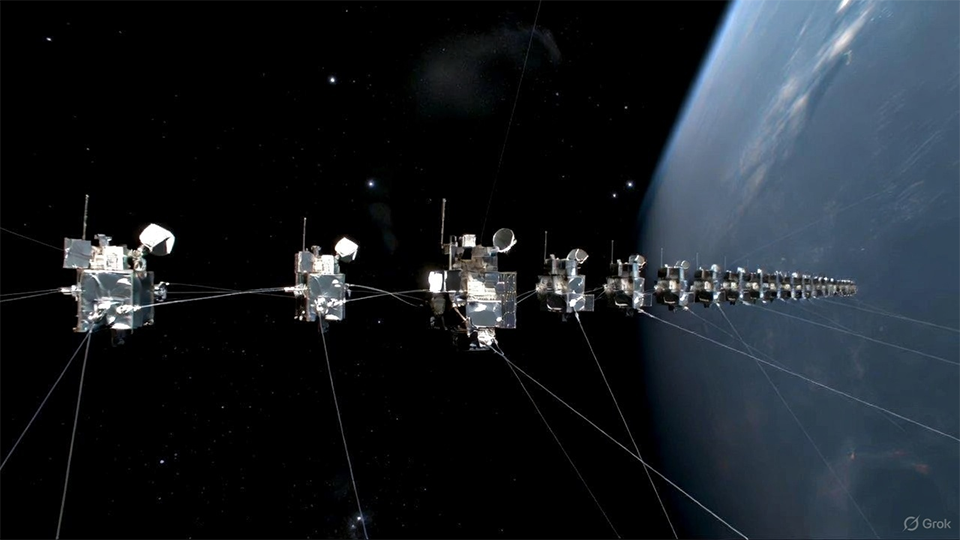
The bank’s research specifically mentions three large listed companies (Alphabet, Amazon and Meta Platforms) but pulls no punches in its ‘bottom line’ warning, saying that these three businesses could be at the “bleeding edge” of developments.

Nick Jones also suggests that with current launch costs ranging from $1.5-$3.6K per Kg, the bank estimates costs would need to fall below ~$300 per Kg for orbital data centers to become economically viable – particularly as the cost of terrestrial data center infrastructure continues to decline.

“At current launch prices alone, deploying 1 GW capacity into low Earth orbit would cost more than $100 billion, compared to about $50 billion total investment to build a 1GW terrestrial data center, with some estimates as low as ~$35 billion,” says the bank.

Indeed, BNP-Paribas cautions that it does not see current plans for orbiting data centres as being viable solutions at least in the near-to-medium term. “[The schemes] to replace terrestrial data centers, due to the significant launch costs, as well as higher hardware costs associated with space-grade systems, including specialized electrical infrastructure and thermal management. We estimate launch costs for a 1GW data center would be approximately $30-$75 billion, in addition to our estimated $50 billion of costs to construct the satellite fitted with data center components and solar panels.”

However, there’s a potential upside: “Our analysis suggests that, long-term, the CapEx and OpEx dynamics could bring the economics of orbital data centers closer to parity with terrestrial facilities, provided that innovation continues in ground-link, cooling, and solar-power technologies. In our view, the primary advantage of locating data centres in space would be the comparatively lower barriers to expanding capacity, since they could sidestep many of the regulatory, zoning, and land-acquisition constraints that affect ground-based sites,” the bank’s note suggests.

Not mentioned by the bank’s report is SpaceX and Elon Musk’s enthusiasm for orbiting data-centres. Musk is – seemingly – committed to the concept. His proposed ‘merger’ between SpaceX and xAI and the upcoming Initial Public Offering (IPO) for SpaceX being talked about for around June, could provide the impetus and cash to build and start launching orbital data centers.

By any measure these schemes are very early in the development and Musk – and others – could well test their thoughts with an orbiting vehicle or two. But as Reuters pointed out back in January, the possibility of hundreds of solar-powered satellites working in a network but using the freezing cold of outer space to cool each craft, could – in time – save money.

“Engineers and space specialists caution that commercial viability remains years away, citing major risks from space debris, defending hardware against cosmic radiation, limited options for in-person maintenance, and launch costs. Deutsche Bank expects the first small‑scale orbital data‑center deployments in 2027–28 to test both the technology and the economics, with wider constellations — potentially scaling into the hundreds or thousands— emerging only in the 2030s if those early missions work,” said the Reuters report.

And Musk has some key advantages. His rockets are relatively cheap to launch. His satellites are relatively cheap to build. His Starlink system is already in place. And his ambition is considerable. “It’s a no-brainer building solar-power data centers in space … the lowest-cost place to put AI will be space, and that will be true within two years, three at the latest,” Musk said at the World Economic Forum in Davos in January.

Sources suggest that an IPO valuing SpaceX/xAI at more than $1 trillion and the funds could then be in place. And Musk’s arch-rival Jeff Bezos is also backing “giant gigawatt data centers” in orbit which could beat the cost of their Earth-bound peers within 10 to 20 years by tapping uninterrupted solar power and radiating heat directly into space.

Indeed, Nvidea is also enthusiastic. its Starcloud‑1 satellite, launched on a Falcon 9 in November 2025, carries an Nvidia H100 – the most powerful AI chip ever placed in orbit – and is training and running Google’s open‑source Gemma model as a proof of concept. The company ultimately envisions a modular “hypercluster” of satellites providing about five gigawatts of computing power, comparable to several hyperscale data centers combined, says Reuters.

However, Sam Altman of OpenAI more or less says ‘fuhgeddaboudit’. Altman says it is “ridiculous…we are not there yet”.

Few doubt that this is something of a race to space. Professor Josep Jornet, a computer and electrical engineering professor at Northeastern University and satellite researcher, sums up the dilemma, saying: “I don’t think we’ll have an operative data center in space in the next couple of years, but we’ll start seeing some of the building blocks tested in the next couple of years.”

Filed Under: Market Forecasts Tagged With: Featured

Primary Sidebar

Coverage

  • Missions & Constellations
  • Business & Finance
  • Military & Defense
  • Launch
  • Software Automation & Ground Systems
  • Government & Regulation
  • Services & Applications

Most Read Stories

  • SpaceX Prepares for Record-Breaking $1.75 Trillion Confidential IPO Filing in March
  • The Iran Precedent: Operation Epic Fury and the Law of Armed Conflict in Space
  • AST SpaceMobile Encapsulates BlueBird 7 Satellite for Inaugural New Glenn Mission
  • Rheinmetall Withdraws From Mynaric Bidding Process; Rocket Lab Acquisition Clears Major Competitive Hurdle
  • L3Harris Unveils XL-300P: The First P25 Handheld with 5G and Satellite Direct-to-Device Connectivity

Secondary Sidebar

Footer


Satnews is a leading provider of satellite news, events, publications, research and other satellite industry information in both commercial and military enterprises worldwide.

Stories By Category

  • Business & Finance
  • Government & Regulation
  • Launch
  • Military & Defense
  • Missions & Constellations
  • Services & Applications
  • Software Automation & Ground Systems
  • Spectrum & Licensing
  • Startups & NewSpace Business

About Us

  • Leadership & Editorial Team
  • SatNews History
  • Free Satnews Subscription
  • SatNews Events
  • Magazines

Navigation

  • Latest Stories
  • Magazines
  • Events
  • Contact
  • Cookie & Privacy Policy for Satnews

We use cookies to ensure that we give you the best experience on our website. If you continue to use this site we will assume that you are happy with it.
x
Sign up Now (For Free)
Access daily or weekly satellite news updates covering all aspects of the commercial and military satellite industry.
Invalid email address
Notify Me Regarding ( At least one ):
We value your privacy and will not sell or share your email or other information with any other company. You may also unsubscribe at anytime.

Click Here to see our full privacy policy.
Thanks for subscribing!