

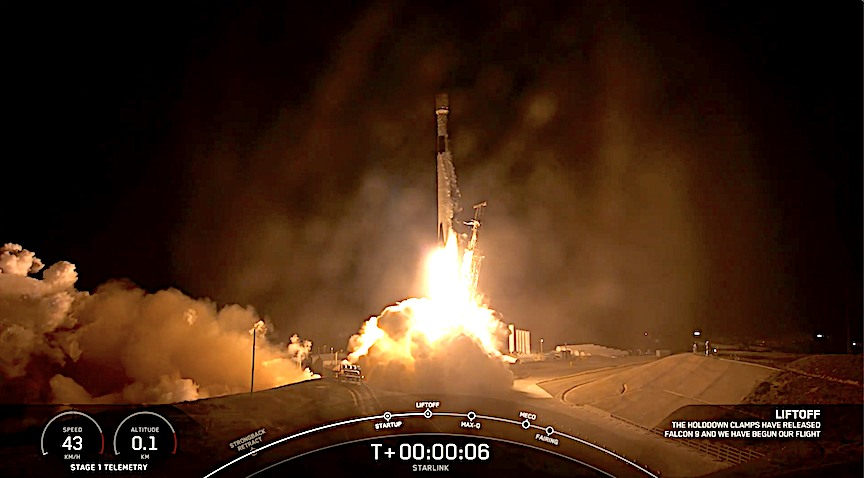
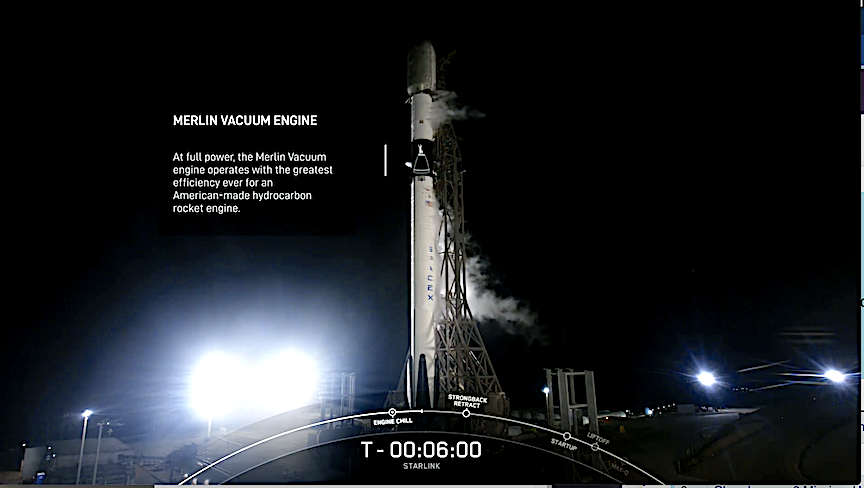
On Tuesday, January 2 at 7:44 p.m. PT, Falcon 9 launched 21 Starlink satellites to low-Earth orbit from Space Launch Complex 4 East (SLC-4E) at Vandenberg Space Force Base in California.
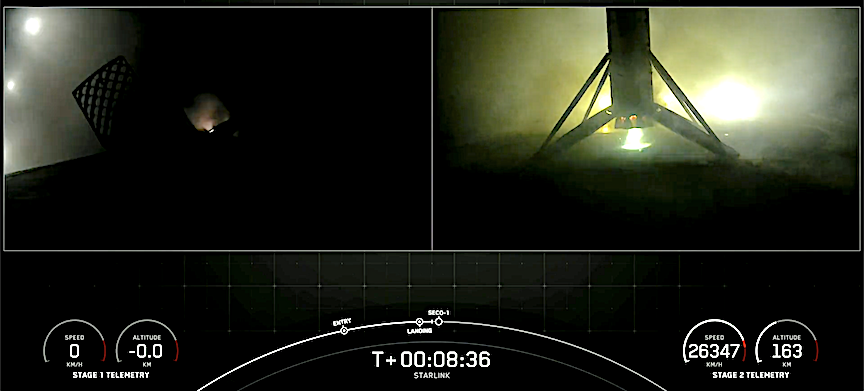
This was the first flight for the first stage booster supporting this mission tail number B1082, which landed on the droneship, ‘Of Course I Still Love You.’
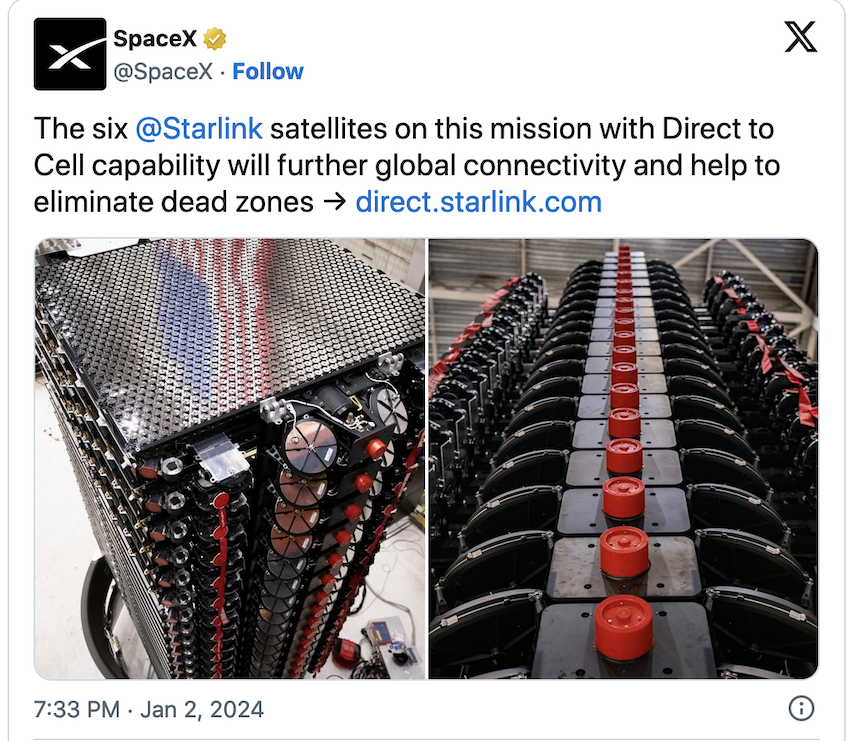
This launch included the first six Starlink satellites with Direct to Cell capabilities that enable mobile network operators around the world to provide seamless global access to texting, calling, and browsing wherever you may be on land, lakes, or coastal waters without changing hardware or firmware. The enhanced Starlink satellites have an advanced modem that acts as a cellphone tower in space, eliminating deadzones with network integration similar to a standard roaming partner.
During and August 2022 event featuring SpaceX founder Elon Musk and T-Mobile CEO and President Mike Sievert, Musk called the new addition “a massive game changer” that would help eliminated dead zones across the globe.
“This really is a big deal,” Musk said during the presentation. “Even if an entire region or country lost connectivity because of a severe hurricane or floods or fires or tornadoes, earthquakes… even if all the cell towers were taken out, your phone would still work.”
Global cellular providers using Direct to Cell to gain reciprocal access in all partner nations include T-Mobile in the U.S., Rogers in Canada, KDDI in Japan, Optus in Australia, One NZ in New Zealand, Salt in Switzerland, and Entel in Chile and Peru.
UPDATE #4 SpaceX plans Tuesday launch of 21 Starlinks including six Direct to Cell satellites
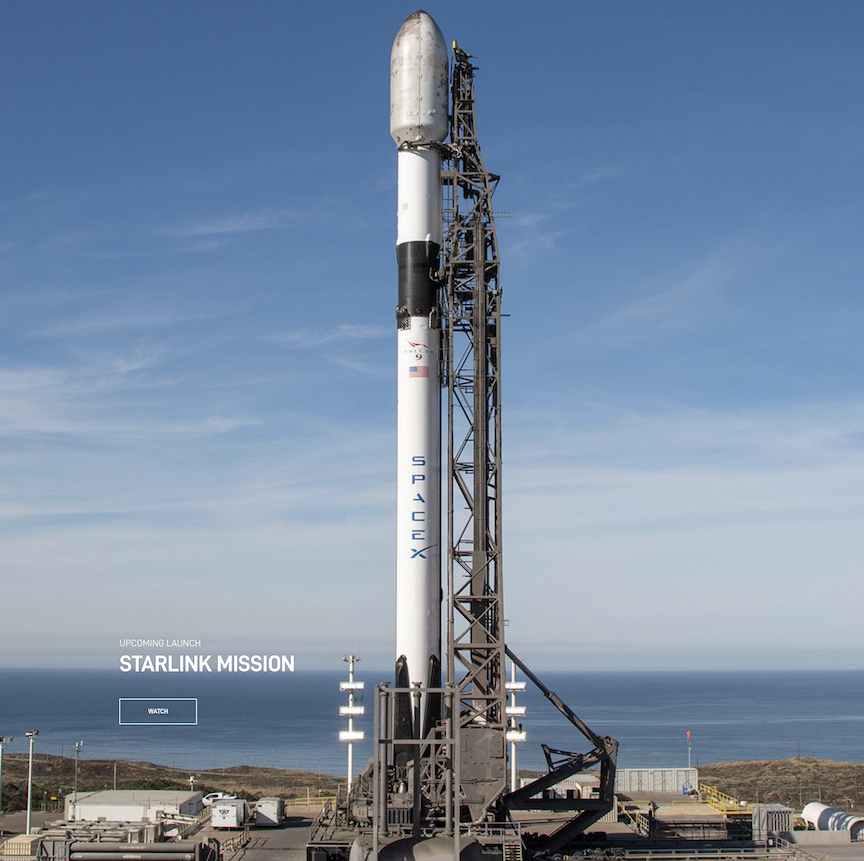
UPDATE 4: SpaceX is now targeting Tuesday, January 2 for a Falcon 9 launch of 21 Starlink satellites to low-Earth orbit from Space Launch Complex 4 East (SLC-4E) at Vandenberg Space Force Base in California. The four-hour launch window opens at 6:13 p.m. PT. If needed, additional opportunities are also available on Wednesday, January 3 starting at 5:51 p.m. PT.
A live webcast of this mission will begin on X @SpaceX about fifteen minutes prior to liftoff. Watch live.
This is the first flight for the first stage booster supporting this mission. Following stage separation, the first stage will land on the Of Course I Still Love You droneship, which will be stationed in the Pacific Ocean.
This launch will include the first six Starlink satellites with Direct to Cell capabilities that will enable mobile network operators around the world to provide seamless global access to texting, calling, and browsing wherever you may be on land, lakes, or coastal waters.
UPDATE #3 SpaceX extends delay of Starlinks launch with the first six Direct to Cell capabilities
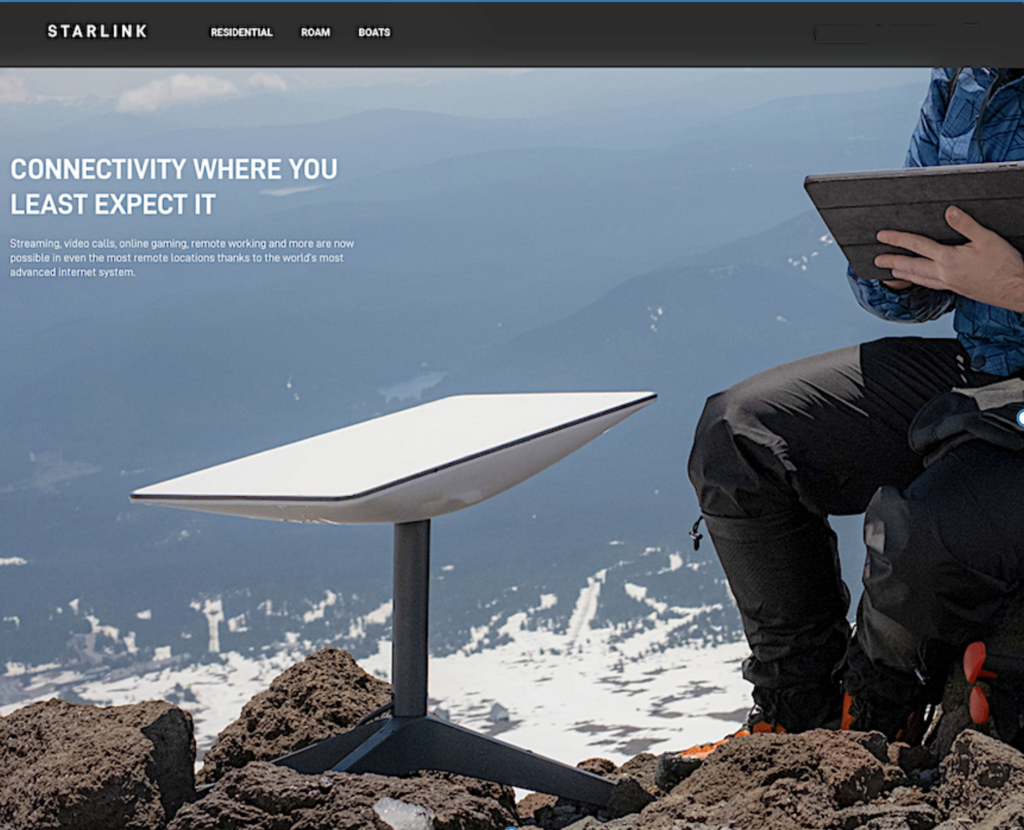
UPDATE #3: SpaceX is targeting Thursday, December 28 for a Falcon 9 launch of 21 Starlink satellites to low-Earth orbit from Space Launch Complex 4 East (SLC-4E) at Vandenberg Space Force Base in California. Liftoff is targeted for 9:09 p.m. PT, with backup opportunities available until 12:32 a.m. PT on Friday, December 29. If needed, additional opportunities are also available on Friday, December 29 starting at 8:48 p.m. PT.
A live webcast of this mission will begin on X @SpaceX about fifteen minutes prior to liftoff. Watch live.
This is the first flight for the first stage booster supporting this mission. Following stage separation, the first stage will land on the Of Course I Still Love You droneship, which will be stationed in the Pacific Ocean.
This launch will include the first six Starlink satellites with Direct to Cell capabilities that will enable mobile network operators around the world to provide seamless global access to texting, calling, and browsing wherever you may be on land, lakes, or coastal waters.
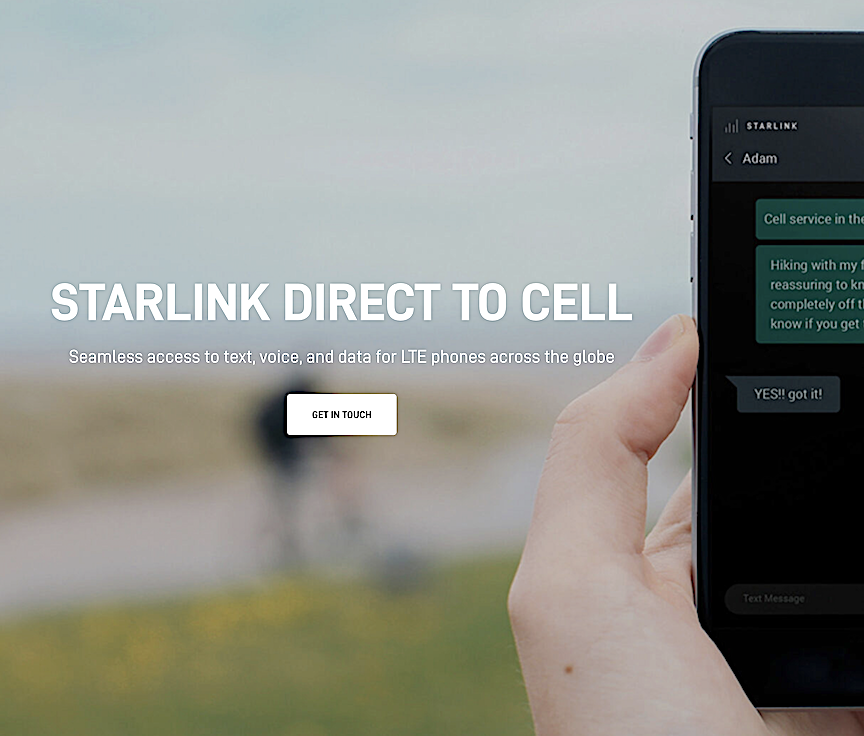
UPDATE #2: SpaceX is targeting Friday December 15 for a Falcon 9 launch of 21 Starlink satellites to low-Earth orbit from Space Launch Complex 4 East (SLC-4E) at Vandenberg Space Force Base in California. Liftoff is targeted for 12:30 a.m. PT, with backup opportunities available until 12:37 a.m. PT. If needed, additional opportunities are also available on Friday, December 15 starting at 9:19 p.m. PT.
The launch will include the first six Starlink satellites that feature direct-to-cell capabilities. SpaceX stated that the new function “will enable mobile network operators around the world to provide seamless global access to texting, calling and browsing… on land, lakes or coastal waters.”
Weather may be preventing the launch of Starlinks from Florida, but SpaceX is targeting Thursday, December 14 for a Falcon 9 launch of 21 Starlink satellites to low-Earth orbit from Space Launch Complex 4 East (SLC-4E) at Vandenberg Space Force Base in California.
Liftoff is targeted for 9:04 p.m. PT, with backup opportunities available until 12:37 a.m. PT on Friday, December 15. If needed, additional opportunities are also available on Friday, December 15 starting at 9:19 p.m. PT. 737 rockets have launched from Vandenberg SFB, California.
The forecast calls for a temperature of 58°F, scattered clouds, 40% cloud cover and a wind speed of 1mph.
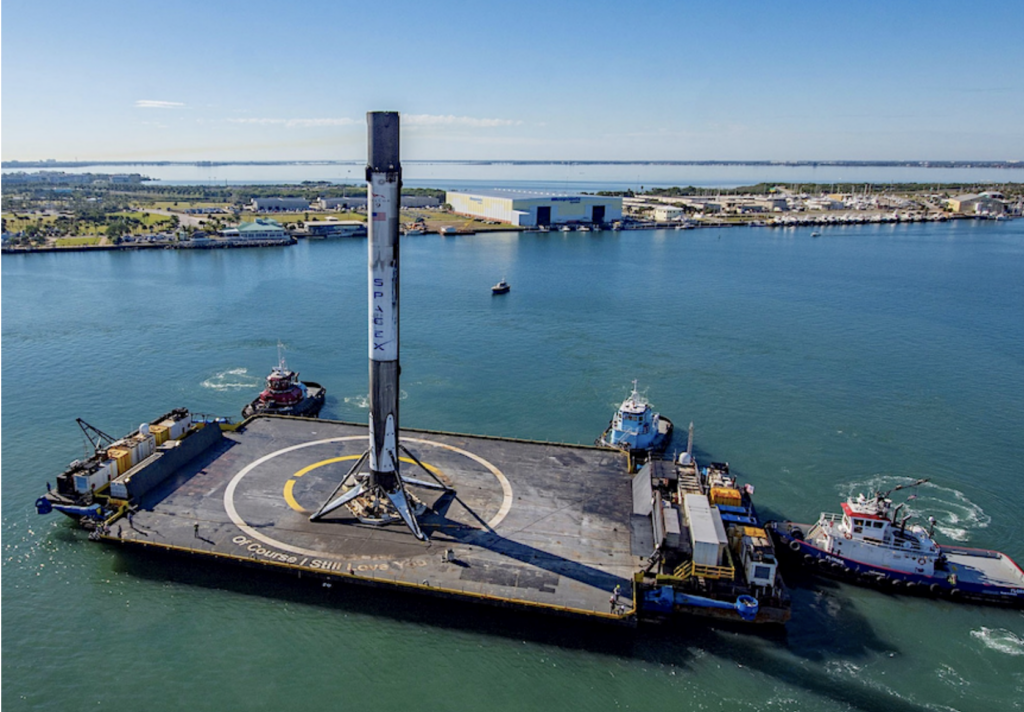
At a cost of $52,000,000 the launch may take place from 9:04 p.m. – 1:24 a.m. PST(11:59 p.m. – 4:24 a.m. EST, 0459-0924 UTC). The Falcon 9’s first stage booster will land on the drone ship ‘Of Course I Still Love You’ in the Pacific Ocean.
The second autonomous spaceport drone ship (ASDS) barge, Of Course I Still Love You (OCISLY) services launches in the Pacific Ocean and was the site of the first landing of a SpaceX Falcon 9 first stage during CRS-8, the launch of a Dragon spacecraft to the International Space Station. SpaceX commissioned the building of ASDS to allow for recovery of rocket first-stages at sea for high-velocity missions that do not carry enough fuel to return to the launch site after lofting spacecraft onto an orbital trajectory.
